


By Thato Didbeng
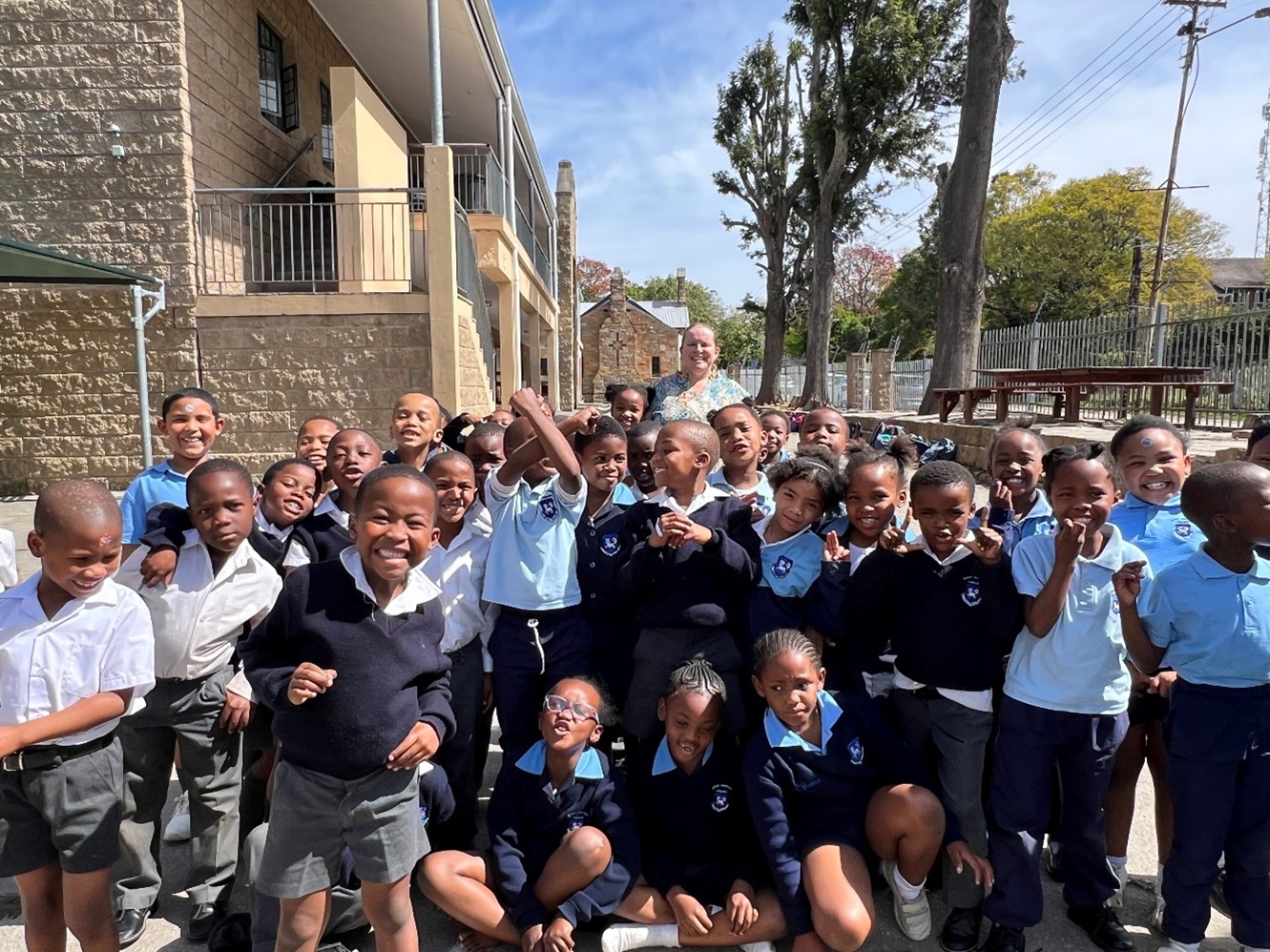
There’s a buzz of excitement in the Good Shepherd Primary School Grade 1 classroom as Vice Principal and teacher Susan Green flicks on the projector, splashing colourful letter-sound combinations across the wall. Her learners, most of whom speak isiXhosa or Afrikaans at home, belt out the English sounds with glee.
Just a year ago, more than half of these children couldn’t recognise a single letter sound. This is the magic unfolding in four local English-medium, fee-exempt primary schools.
GADRA Education’s QondaRead program is turning the tide for learners from non-English speaking backgrounds, propelling them to meet, and often surpass, national literacy benchmarks in just one school year. With 81% of South African Grade 4 pupils struggling to read for meaning, this homegrown initiative offers a scalable blueprint that could transform foundational literacy education nationwide.
Born from six years of painstaking research at GADRA’s renowned Whistle Stop School, QondaRead tackles the tangled web of linguistic, cultural and socio-economic challenges learners face in English Language of Learning and Teaching (LoLT) schools. Here, isiXhosa and Afrikaans are the home languages of most, making the leap to English reading a daunting climb.
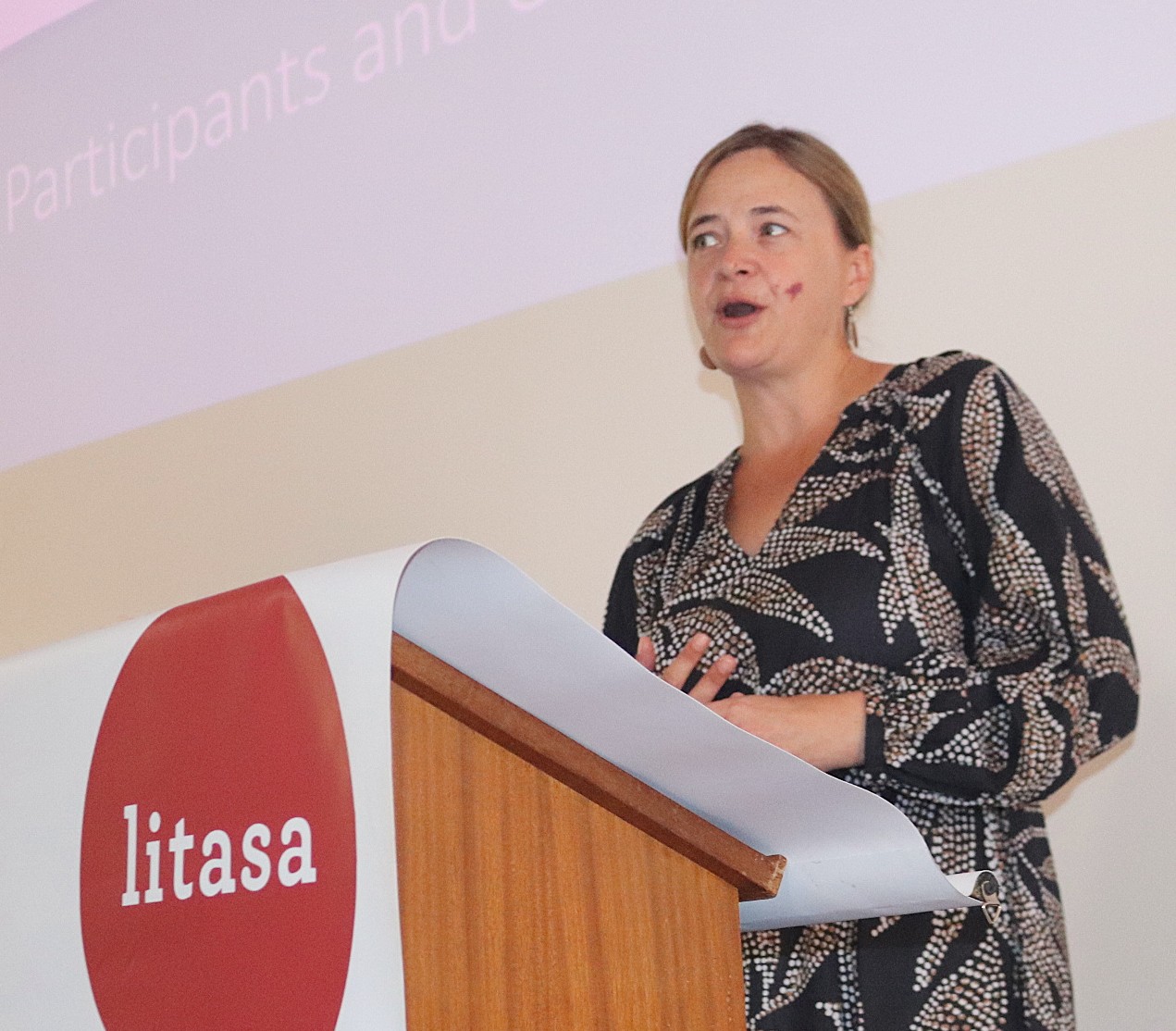
“We want to give every child the chance to access literacy, regardless of their background or the resources of their school,” explains Kelly Long, GADRA’s dynamic primary school manager. “The reality is that many teachers themselves feel underprepared when teaching reading. We saw an opportunity to combine structured literacy resources with hands-on teacher development.”
At its heart, the program is elegantly simple, but profoundly effective, forged from years of trial, reflection and innovation with kids from local classrooms.
Dedicated teachers guide their class through phonics, bridging languages and building confidence. Classrooms come alive with data projectors beaming PowerPoint lessons. The meticulously sequenced phonics curriculum, perfectly aligned with national standards, is delivered alongside culturally resonant graded readers.
These books – 24 titles per grade, with eight copies each – draw from the children’s everyday lives while gently expanding their horizons with fresh ideas and vocabulary. Add in instructional videos, fun games, worksheets, and posters, and QondaRead provides a toolkit that’s as engaging as it is educational.
It’s also budget-friendly. Reaching 900 learners through 25 teachers in every fee-exempt English-medium school in Makhanda, the materials are built to last five years, serving 175 kids per set. That drops the cost to R126–R172 per learner, depending on the grade level.
The program takes administrative pressure off of teachers. And because it is precision-engineered, teachers can run it without constant support from GADRA. For all these reasons, Long feels confident about its scalability.
For Grade 1 teacher Robyn Nel at Ntaba Maria Primary, the transformation has been remarkable. She first encountered the program through a GADRA Education and Rhodes University workshop. “I was intrigued by the program’s potential to enhance reading skills among young learners, especially with the diversity of language backgrounds in my classroom,” she says.
The evidence
After just one year, the data is rigorously backed by statistical analysis, including tests showing an impact equivalent to jumping ahead by a full year or more of typical learning.
In January 2024, 52% of Grade 1 learners across four schools – Good Shepherd, George Dickerson, Ntaba Maria, and St Mary’s – couldn’t identify even a single letter sound, and 92% scored below 20 letter-sounds per minute. By November, under 2% remained at zero, and 29% had reached the national benchmark of 40 per minute or more, a category that was empty at the year’s start. Improvements were statistically significant across all schools, with large effect sizes in three and a moderate one in the fourth.
Grade 2? Equally thrilling. Three participating schools met or exceeded the Department of Basic Education’s benchmark of 30 words correct per minute (WCPM) for Oral Reading Fluency (ORF), while the fourth came close. Good Shepherd Primary led the pack, with learners reading an average of over 40 words per minute by year’s end, a dramatic leap from their January average of under 12 words. St Mary’s showed the most significant gain, improving by 30 words per minute off a low base. Again, huge effect sizes, indicating substantial educational value.
In Grade 3, learners at Good Shepherd and Ntaba Maria surpassed the critical 50 words-per-minute threshold needed for reading comprehension. Good Shepherd learners averaged 68 words per minute – well into fluent reading territory.
Compared to programs like Funda Wande, QondaRead’s outcomes stand out, with stronger statistical significance and larger effect sizes suggesting its English-focused model delivers dramatically outsized benefits in multilingual contexts. Of course, the programs differ in scale and focus, making direct comparisons complex.
The broader impact shows up in citywide assessments. In 2025’s Grade 4 Reading Comprehension Study, 51% of learners in English-medium fee-exempt schools could read for meaning, up from just 31% the previous year. Meanwhile, isiXhosa-medium schools in the same socio-economic bracket remained stuck at 25%.
“When I look at these results, I get so excited, and it makes me so happy because I just feel like I’m doing something right,” says a Grade 2 teacher at George Dickerson, where learners started the year with some of the lowest literacy scores in the district.
Can QondaRead work for African languages?
When English-medium schools outperform isiXhosa-medium ones in South Africa – despite most learners in the former not speaking English at home – several factors explain the disparity. English reading instruction draws on decades of refined research, abundant teacher-training materials, graded readers, phonics programs, and assessment tools, equipping educators with stronger pedagogical knowledge and professional development.
Socio-economic and environmental factors exacerbate the gap, Long says. English-medium schools tend to boast better resources, smaller classes, libraries, and digital tools, and because English is a dominant global language, learners are immersed in written English via signs, media, and online content.
IsiXhosa-medium learners, by contrast, seldom encounter printed isiXhosa beyond the classroom, stunting print exposure and vocabulary growth. Rooted in the historical marginalisation of African languages, these systemic imbalances create an uneven playing field.
Teaching reading in African languages like isiXhosa also suffers from underdeveloped curricula and scarce resources, often forcing teachers to adapt English materials without proper support or training.
Academics like Wits University’s Prof Leketi Makalela also point to a misalignment between literacy instruction and the logic of African languages, which, unlike English, are rooted in rich morphological structures that require a different approach to teaching foundational literacy skills.
“The failure to recognise this has perpetuated systemic underperformance, as instructional methods borrowed from West Germanic languages are [epistemologically]incompatible with African languages. This is not a simple matter of ‘more’ resources, but rather a matter of ‘better’ resources,” Makalela argues.
Kelly Long says that the adaptation of QondaRead’s curriculum for African Languages is feasible. With sufficient understanding of the issues and innovative minds, the model’s universal elements – such as mapped PowerPoint lessons with embedded videos, curriculum-aligned content in small chunks, forced vocabulary integration, and contextually relevant materials – can be tailored for isiXhosa home language literacy, reducing teacher prep and admin burdens without relying on scripted lessons, she says.
This supports the call for mother-tongue-based bilingual education (MTBBE), but suggests that the weak African language reading for meaning scores (both locally and nationally) need to be addressed through adaptable models like QondaRead.
QondaConnect
Long reports that GADRA Education is already using what they know about the pedagogical and curriculum approach of QondaRead to extend to subjects like Intermediate Phase Natural Sciences via a linked program called QondaConnect.
“We use the concept of mapped PowerPoint lessons with embedded videos and carefully curriculum-aligned lessons with built-in vocabulary teaching and learning, and contextually relevant material,” she says. “We package each lesson in small chunks at a time. They are not scripted lessons, but high-quality, fully-prepared lesson resources that don’t require a teacher script.”
This removes the preparation and admin burdens from stressed teachers. “The content needs to be changed for whatever subject (like Social Studies, isiXhosa home language), but the model is fairly universal,” Long adds.
As the school day ends at Good Shepherd Primary, Susan Green watches her Grade 1 learners pack away their readers – real books with colourful pictures, not the photocopied sheets they once used.
Teachers like Susan Green and Robyn Nel are the heartbeat, bolstered by QondaRead’s wraparound support: initial training, baselines, one-on-ones, and follow-ups for seamless integration.
“We don’t just want children to learn how to read,” Kelly Long says, watching from the doorway. “We want them to love reading. That’s what will change the trajectory of their education.”
Additional reporting by Rod Amner.
THE MODEL
- 6 years of embedded, practice-based research at Whistle Stop School – iterative development through classroom implementation.
- Materials evolved from observing what worked with isiXhosa/Afrikaans-speaking learners learning English.
- Strong emphasis on contextual relevance and lived experiences.
THE GAINS
- Grade 1 Letter-sound fluency: Gains of 21 to 32 sounds per minute, with statistically significant improvements (p < 0.001) and moderate to large effect sizes (Cohen’s d = 0.73–1.88).
- Grade 2 Reading speed: Three schools met the 30 words-per-minute benchmark, with significant gains (p < 0.001) and large effect sizes (d = 0.90–1.18).
- Grade 3 Comprehension threshold: Two schools exceeded 50 words per minute, with significant gains (p < 0.001) and moderate to large effect sizes (d = 0.66–1.85).
