





By Rochlique Lackay
Zuzukuphila Ngema still remembers the panic. It was his first politics tutorial at Rhodes University, and the reading assignment sat open on his desk – a wall of English words so dense he couldn’t find a way through. Back home in rural KwaZulu-Natal, his teachers had explained complex concepts in isiZulu, the language that made sense in his mouth and his mind. At Rhodes, that comfort had vanished.
“It was really horrible,” Ngema recalls. “You read a sentence, then there’s a big word, so you go to the dictionary. Then there’s another big word. It’s frustrating.” He spent hours on the essay. He failed anyway.
The Politics Department allows students to submit assignments in isiZulu, but that didn’t help. Ngema’s problem wasn’t writing – it was understanding the required English texts in the first place. “I asked myself, ‘Am I dumb?'” he says. Then he wrote a journalism assignment in his home language and passed easily. “That’s when I realised: the language is the problem, not me.”

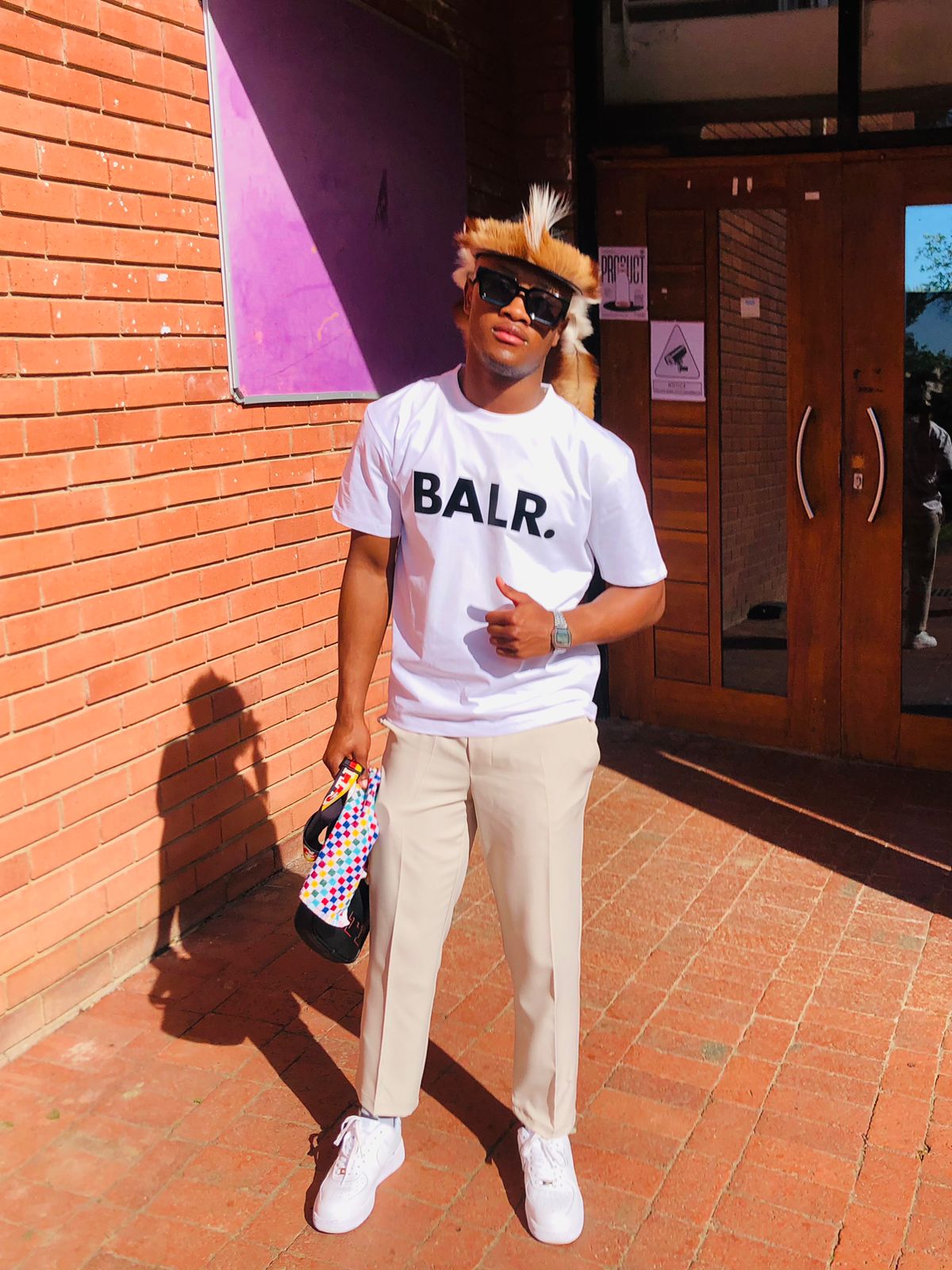
Every year, thousands of South African students face what Ngema faced. They arrive at universities where English dominates – a language that isn’t theirs. What should be an academic challenge becomes a daily battle with vocabulary, comprehension, and confidence. For many, the struggle isn’t about intelligence or work ethic. It’s about trying to learn advanced concepts in a language they’re still learning to speak.
In South Africa, language is more than a teaching tool. It’s a gatekeeper that determines who succeeds and who falls behind.
The statistics exam that wasn’t about statistics
When Simphiwe Kholifuthi sat down for her first statistics exam, she knew the maths cold. She’d followed every lecture, understood the concepts, and practised the problems. Then she opened the exam paper.
The questions were written in long, complicated English sentences. “I could see it was probability,” she recalls, “but I didn’t know for what, because of how it was written.” Multiple choice questions she could manage – those required minimal reading. But the written problems? She failed the course.
“It was less about my statistics knowledge and more about my English,” Kholifuthi says. “If it were in my home language, I would have passed.”
Research confirms what students like Kholifuthi already know. A 2024 study led by Lwazi Mthembu at the Durban University of Technology found that first-year students from under-resourced schools often arrive at university ill-prepared for English-only instruction. Many never had books at home. They learned to read on social media. The gap between their English proficiency and university expectations can be vast.
At Rhodes, a survey of over 300 first-year Journalism and Media Studies students found that one in four identified language as their main academic challenge. Forty per cent grew up without books at home, leaving them underprepared for the reading and writing that university demands.
The problem spans every discipline. A 2021 study by Du Plooy, Stander, and Scheckle at a TVET college found that students with weak English struggled in science and technical courses – not because they didn’t understand the concepts, but because they were unable to decode the language in which those concepts were taught.
As researchers Xulu-Gama and Hadebe put it, admitting students to university without addressing language barriers doesn’t provide real access to learning. It just postpones failure.
The silence in the lecture hall
For Ngema, the language barrier extends far beyond reading assignments. It shapes how he navigates academic spaces, the questions he asks, and whether he chooses to speak at all.
“At the beginning of the lecture, I understand what’s going on,” he says. “But as time goes on, I lose focus.” He’s scared to ask questions because he’s not fluent in English. The fear of being corrected – or worse, laughed at – keeps him silent. That silence, he knows, makes learning even harder.
Both Ngema and Kholifuthi believe small changes could make an enormous difference. Tutors who speak their home languages, for instance. “A Zulu tutor could explain the content in isiZulu, and I would understand better,” Ngema suggests. Kholifuthi argues that exams should test knowledge, not English proficiency.
These aren’t radical proposals. They’re practical adjustments that could help thousands of students succeed. Yet they remain largely absent from South African universities, where English still dominates despite policies that promise multilingual support.
The gap between policy and practice
On paper, South African universities recognise the problem. Rhodes University’s 2019 Language Policy explicitly aims to make learning “accessible and fair” by supporting isiXhosa and promoting the use of multiple languages. The document acknowledges what students already know: language shapes who has the opportunity to learn.
But policy and practice remain far apart. English dominates most academic spaces, including lectures, textbooks, tutorials, and exams. Students like Ngema and Kholifuthi get support only after they’ve failed, a pattern that frames them as the problem rather than the system that failed them.
Research shows that alternatives work. Studies by Yafele and Makalela demonstrate that using home languages alongside English improves both confidence and comprehension. At the University of Cape Town, lecturers who taught mathematics bilingually found it helped students grasp complex concepts that had seemed impenetrable in English alone.
The challenge isn’t whether multilingual teaching works; it’s why universities haven’t implemented it more widely. Cost? Lecturer capacity? Resistance to change? The answers matter because right now, students are paying the price for a system that privileges one language over the knowledge those students bring.
Not dumb, just locked out
After failing his politics tutorial, Ngema considered quitting. The failure felt personal, like proof that university wasn’t meant for people like him. Then came the journalism assignment in isiZulu – and suddenly, he could think clearly, write confidently, articulate complex ideas. The concepts that seemed impossible in English made perfect sense in his own language.
“It’s not about being dumb,” Ngema insists. “It’s about learning in a language you’re not used to.”
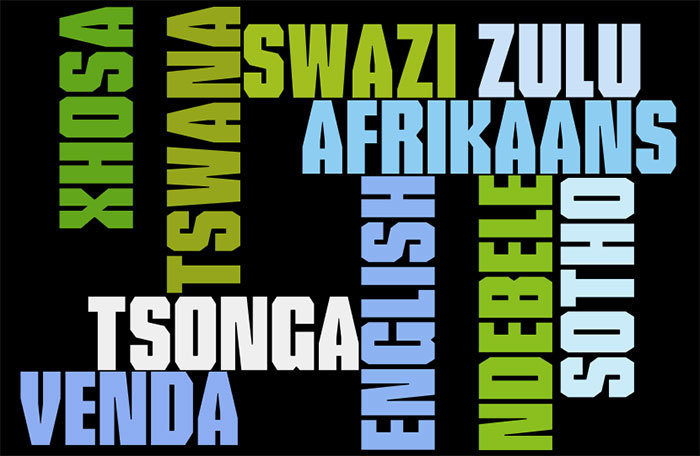
That distinction matters. When talented students fail due to language barriers, South Africa doesn’t just lose their potential—it reinforces a system where educational access depends on the language you happen to have learned at home. English proficiency becomes a proxy for intelligence, and students from isiZulu, isiXhosa, Sesotho, and other language backgrounds find themselves locked out of opportunities they’ve earned.
The solution isn’t to abandon English – students need it for global participation. But it can’t be the only language that unlocks academic success. Until South African universities match their multilingual policies with multilingual practice – home language tutors, bilingual teaching, assessments that test knowledge rather than English fluency – students like Ngema and Kholifuthi will continue to mistake systemic barriers for personal inadequacy.
The question isn’t whether these students can learn. They’ve proven they can. The question is whether South African higher education will finally let them learn in languages they understand.

