


By Andile Mbesa
The metallic rhythm of crutches echoes through the stairwell, each tap growing louder, more insistent. I lean over the balcony, excitement and relief flooding me after waiting anxiously. “Hey Monica,” I call down, and there she is — maroon-rimmed glasses catching the light, metal crutches with plastic handles supporting her frame, looking up with a smile that somehow carries both weariness and determination.
This is not the Monica Mulawa who ran track, dominated the hockey field, or jogged every day to achieve what she calls a state of mental clarity. That Monica exists now only in memory. “Whenever I see someone running, I look the other way,” she tells me, her head turning sharply as if demonstrating the avoidance. It’s been a year since the injury, and surgery waits at the end of exams — six weeks more on crutches, then 10 months of rehab before she can play sports again.
But if life took away her daily outlet for thoughts and feelings, it gave her something else: a classroom full of young minds who need someone who understands what it means to miss something essential.
The party that changed everything
Surprisingly, Mulawa’s teaching path begins at her father’s retirement party. She was in Grade 11, and people from his past came to speak, family, former students, colleagues. They described a man she didn’t recognise.
“It was as if I was listening to a description of someone completely different,” Mulawa says, adjusting her glasses. “I didn’t know my father’s past. He doesn’t talk about his past like that.”
Her father is an isiXhosa teacher, someone the community calls “Tishala Tishala” with respect and affection. But Mulawa had lived with him for 17 years without really knowing him. She’d stayed with her grandparents initially, then moved in with her parents and siblings, but saw her father only in morning departures and evening returns. No conversations about school. No questions about friends or life or dreams.
“Both my parents are very traditional,” she explains without bitterness, just observation. “They didn’t attend school things for me. They saw my report and signed it, signed my homework. But that was it.” She had her twin brother, so she convinced herself she didn’t need them. If she needed something, she went to him. Her parents were providers, ensuring everyone had food, shelter, and physical needs. But the relationship part? That was absent.
After the retirement party, something shifted. Monica began initiating conversations with her father, which were random initially, just trying to know the person everyone else seemed to understand. “I learned their interests rather than them learning my interests,” she says. “Sometimes you just have to be that adult who does that.”
Now she calls him to share her university marks. He doesn’t ask what she does on Saturday nights — he doesn’t know that information — but it’s better than before. She’s built something where there was nothing, one conversation at a time.
“I don’t know if I’ll be that kind of parent,” she admits quietly.
The teacher’s daughter who didn’t know teachers
The irony isn’t lost on Mulawa; she’s studying to become a teacher, following in her father’s footsteps, but she never saw him teach. She had never witnessed his classroom presence or heard directly from his students what kind of educator he was. By the time she started university, he’d already retired.
“I do not believe that I got my inspiration to be a teacher from him,” she says firmly, “because I didn’t see him as a teacher. I never got to be in his school environment.”
So where did the calling come from? Covid-19 lockdown, 2020. Mulawa had matriculated with dreams of architecture, excelling at EGD and planning buildings with clean lines and structural integrity. But university had to wait. A former teacher asked if she could help their children with homework during those suspended months when the world held its breath.
“What started out as just helping turned into something else,” Mulawa explains. “I grew a heart for it.”
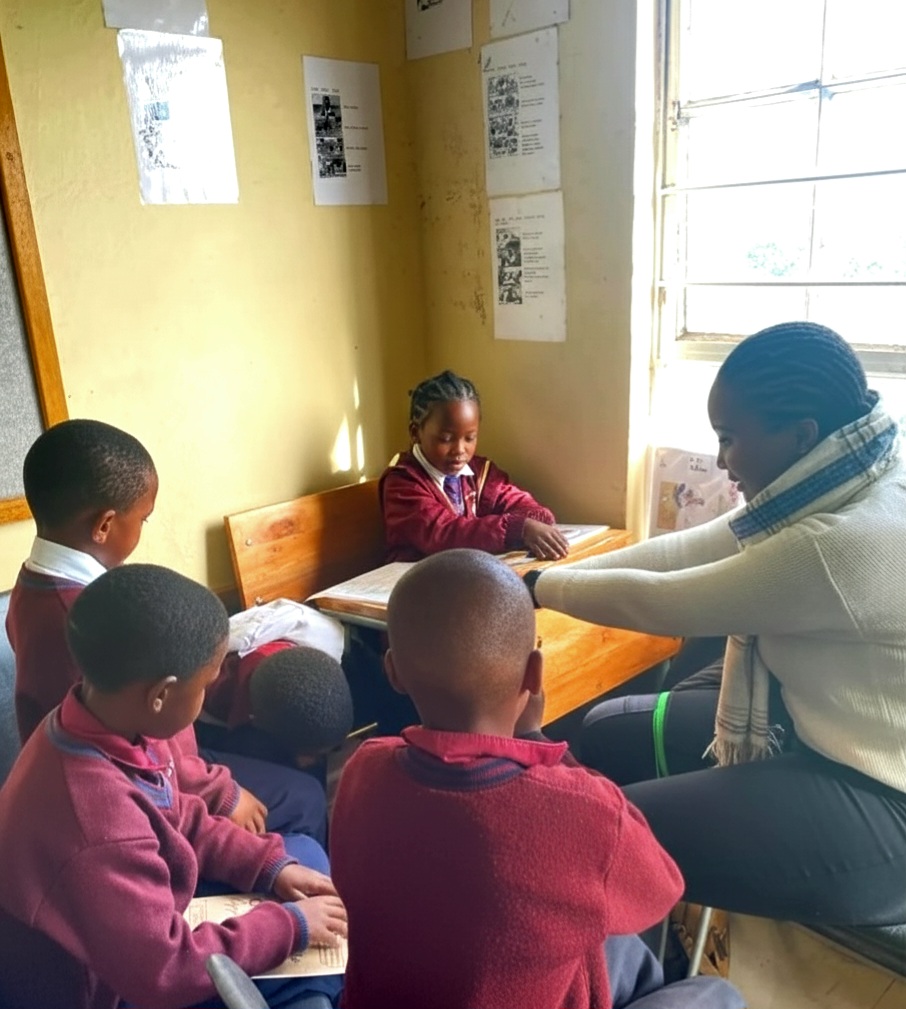
Without formal qualifications, without training, she began teaching. And she was good at it — naturally gifted at transferring knowledge from one mind to another. The academic improvement was noticeable enough that her former school hired her. She returned a year after leaving, not as a student but as a teacher, educating peers and former schoolmates.
The teachers called her “a natural”. Perhaps it was in her blood, not inherited through conversation or mentorship, but through something deeper, something that skipped the relationship and went straight to the calling.
The mind needs to move
“They’re missing out on the world,” Mulawa says about people who avoid exercise. For her, daily activity wasn’t about building muscles, though she was a top-performing hockey player. It was about training her mind. “I think one of the greatest human feelings is accomplishment. When you finish what you set out to do, it’s a nice feeling.”
She misses that feeling, not the physical activity itself, but the mental outlet, the way movement cleared her thoughts. She’s accepted the injury and is looking forward to being fine again. But when she sees someone running, she still looks the other way.
This understanding translates directly into her teaching philosophy. “A child needs to move, and it’s so much fun for them,” she explains. “You don’t write a test after break time because they’re on this high after they have played so much.” Foundation phase learners can’t concentrate before break; they just wait to move, run, and climb. Then phys ed comes, and suddenly there’s excitement and restored focus.
Maybe losing movement makes her a better teacher for recognising its necessity in others.
Theory without practice
Mulawa started studying at Rhodes in the second term of her second year, which meant skipping the teaching practice module. She’s doing it this year instead. “At first, I was sad, my degree was getting longer. But it’s actually turned out to be for my good.” She’s learning third-year content before practicals, bringing more knowledge to real classrooms.
But she frowns when discussing the curriculum, the first time in our interview. “We are learning too much theory but not how to practically apply the theory in a classroom setting.” The gap between what student teachers learn and what they face in real classrooms frustrates her. She already knows she can teach; she proved it before enrolling. She needs practical training, but instead, she feels she’s drowning in theory disconnected from practice.
Teaching for understanding
“We need to teach for understanding rather than memorisation,” Mulawa says. She talks about early childhood development and cognitive stages, tools she believes can address South Africa’s literacy crisis, where 80% of Grade 4 learners cannot read for meaning.
She knows the question hovering over every education student: “Why would you want to be a teacher in this economy?” Teachers are underpaid and overworked. Her response is simple: “Someone has to.”
Her goal extends beyond English instruction, she wants students to be “more connected socially by translating certain concepts in all South African languages.” It’s ambitious, but Mulawa has never let her current position limit her future goals.
What parents don’t teach you
When Mulawa talks about not knowing if she’ll be “that kind of parent” — the kind who provides but doesn’t connect — there’s something profound in the admission. She’s breaking a cycle she didn’t even know existed until her father’s retirement party forced recognition.
Her parents are “alright people” she emphasises. This isn’t about blame. It’s about patterns and how traditional upbringing can create emotional distance even in the same house. As long as you have what you need physically, the thinking goes. As long as you’re fed and sheltered.
But Mulawa knows now that children need more. They must be asked about their day, friends, and thoughts. They need conversations, not just provisions. She learned this not from her parents but from their absence, from having to initiate a relationship at 17, from understanding that sometimes you have to be the adult who bridges the gap.
Maybe this is another reason teaching chose her: she understands what happens when adults don’t show up emotionally for children. She knows what it’s like to be looked at but not seen, to have your homework signed but your inner world ignored.
When she stands in front of her future classroom, she’ll remember. When a child seems withdrawn or disconnected, she’ll recognise it. Not because her training taught her, but because she lived it.
The crutches are temporary
Throughout our conversation, Mulawa adjusts her position, trying to find comfort in a body that won’t co-operate. Surgery waits at the end of exams. Six weeks on crutches, then months of rehab. It’s a matter of time, she says.
The crutches are temporary. The calling isn’t.
Watching her navigate the stairs earlier, I thought about how we all move through the world on different supports. Monica has metal crutches with plastic handles. Other students have family wealth or emotional connection, or simply the luck of healthy bodies. What matters isn’t the support, it’s what you build while being supported.
Mulawa is building something her father built, though she never witnessed the construction. She’s becoming a teacher not because she saw the blueprint but because something in her recognised the work needed to be done. In a country desperate for educators who view their work as an essential service rather than a fallback career, who understand that children need movement, connection, and understanding rather than memorisation, Mulawa represents stubborn hope.
She grew a heart for this work before getting a degree. She learned relationships by their absence and decided she wouldn’t repeat the pattern. She lost her daily mental outlet and found new ways to channel her thoughts into growing young minds.
As our interview ends, the metallic rhythm begins again, slower going up than coming down, but steady. Persistent. Like someone who knows the climb is difficult but has already decided it’s worth it.
The crutches are temporary. But what Monica is building — both in herself and in the minds she’ll teach — that’s permanent. That’s the kind of structure that outlasts buildings, the kind of architecture that reshapes futures.
