





Person of interest: Unathi Sonwabile Koboka
Occupation: Station Manager
Workspace: Rhodes Music Radio/RMR
Human of Makhanda: 2
Anyone familiar with her would know that she’s strong yet gentle and is a dynamite with a powerful spark.
I started our conversation with a rather difficult question: “Who is Unathi Sonwabile Koboka?” When she responded by saying, “Unathi is a mother, a daughter, a sister. I’m a community developer, a station manager, an audio engineer and a voiceover artist. That’s Unathi, but in terms of character, I am the type of person who is either easy for you to deal with or difficult for you to deal with because those who get me, get me; and those who don’t, don’t.” She gazed for a moment and continued. “I’m not the type of person to be bothered by those who don’t. I move with those who do. I’m also a seemingly sensitive, tough cookie,” she added.
Raised in a family household in Gqeberha, Koboka is the second last of four children. She shared that after her parents’ separation when she was 13, she began to develop a special bond with her mother. “I suppose I get my heart from my mother,” she said. She opened on how the divorce affected their childhood, and said, “When my parents got divorced, it wasn’t like they got divorced. We all got divorced. There was no other relationship with my father.” She continued to explain that this distance affected their exposure to African spirituality, as there were no longer any direct relations with her paternal family. After years of studying religious education and attending a Catholic School, Koboka’s lack of exposure to African Spirituality during that time deepened her inquisitiveness in adulthood. “I found out later, as I grew, there were differences about me because I had a curiosity outside of Christianity. I’ve done my holy communion in a Catholic Church, and I’ve done my confirmation at a Methodist Church. I’ve gone through those things, but for me, it always seemed like there was something else missing.”
She stated that she began to recognise early behaviours from her youth that aligned with African Spirituality. Koboka said, “I have a special love for candles. For me, there’s always been something healing about a lit candle, and I’ve always had one since childhood. I’ve also always enjoyed my own space and being alone.”
“Religion is something that you can choose, but to be an African is not something I can choose; it’s just something that I am. And so, what goes with that is way beyond the religion that I practice. It’s also a way of life because there are certain things we do as Africans,” said Koboka.

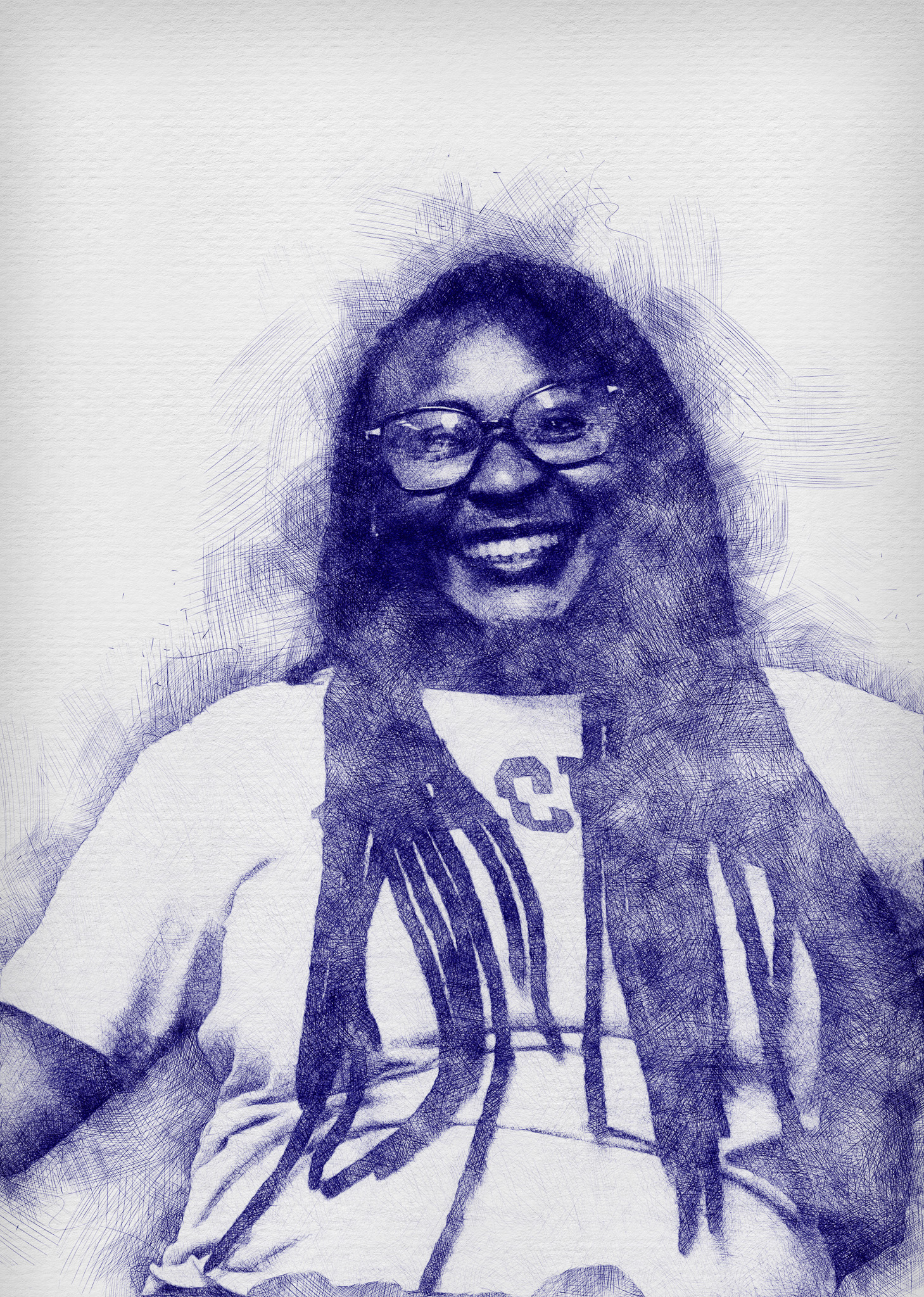
She mentioned that the basis of her “tough-girl energy” stemmed from her upbringing. “I’ve never been the girly girl because I grew up with boys, whether it was my brothers or cousins,” she shared with a smile. Our conversation went on for a while before we touched on her career, and when we finally did, I discovered that sometimes, it’s not the person who finds the role, but the right role chooses who it belongs to.
Koboka’s story highlighted that her leadership skills, intellectual curiosity, and ambition for broadcasting surpassed the profession; for her, it was impact driven. Koboka’s interest in audio and sound engineering led her back to Walter Sisulu University to pursue a qualification in Versatile Broadcasting. “When we got there, we could choose to specialise in presenting or the engineering element of broadcast”, she said. Koboka shared that it was an easy decision, as she had a clear idea of her broadcasting goals. However, as time progressed, she had new insights. “I was there for the voice, which is presenting, but I quickly realised that if I only understand the presenting side of things, then when I need technical things, I don’t know how to do them, making me rely on other people to do them. In my head, I knew exactly what I wanted and every time I needed someone to do it, it didn’t come out the way I imagined it.” Eager to learn the engineering aspect of broadcasting, Koboka challenged herself to learn this skill through a friend.
Two years later, Koboka seized a learnership opportunity that led to lifelong friendships and professional growth at Radio Active Productions Publishing. “My brothers went for an interview I didn’t know about, and they came back and told me that it was actually more my kind of thing than theirs.” Unfortunately for Koboka, when she heard this news, the intake for interviews was already closed. After several calls, an exception was made, and she became a prospect for the role. “The interview felt like a conversation, and they told me on the spot that they were impressed and wouldn’t let me go.” She said one of the exciting discoveries she had made was that she would finally delve into voiceovers. Koboka said during her first week at Radio Active Production Publishing, she had been exposed to the media space as a translator, engineer and voiceover artist. “I graduated from the learnership, and they hired me. I then worked there until I came here, and that too was through them.”
Landing the Rhodes Music Radio Station Manager role, Koboka said she secured the job immediately at the interview venue on her birthday in 2022. “I did the interview, which was one question essentially, because after Michael Owen asked me the first question, which I took like 15 minutes to answer, he already knew they would hire me.” She further explained that when she arrived at Rhodes Music Radio Station at Rhodes University, she was handed a bulky set of keys, wondering where the people were. Koboka was tasked with reviving the station in 6 months, which she successfully completed in one month. “I told them that I’d have the station up and running by September, and they said a month would be impossible. All I said was that they should let me decide on that,” she said. Koboka said she had received support from her colleagues at Radio Active Productions Publishing, as she had no budget to work with during this process. As the town’s only radio station, RMR plays a crucial role in amplifying the concerns and voices of community members. For Koboka, the real reward goes beyond her duties but lies in the impact she has. “To me, it’s all about making the power of being a Station Manager work,” she said.
Concluding our conversation, I posed a question: “What’s one piece of advice that you give to every student who walks into the station?” She stopped briefly, and I had anticipated something profound; she responded bluntly yet directly. “Subayi nonsense yomntu.”

