


There are pink sashes all over town to mark Breast Cancer Awareness month. Preventing breast cancer starts with knowledge but here in the Eastern Cape cancer prevention is hampered by unequal access to the things that make a real difference – screening facilities, awareness programmes and representation in medical research. Boiketlo Lamula talked to a researcher working to change that.
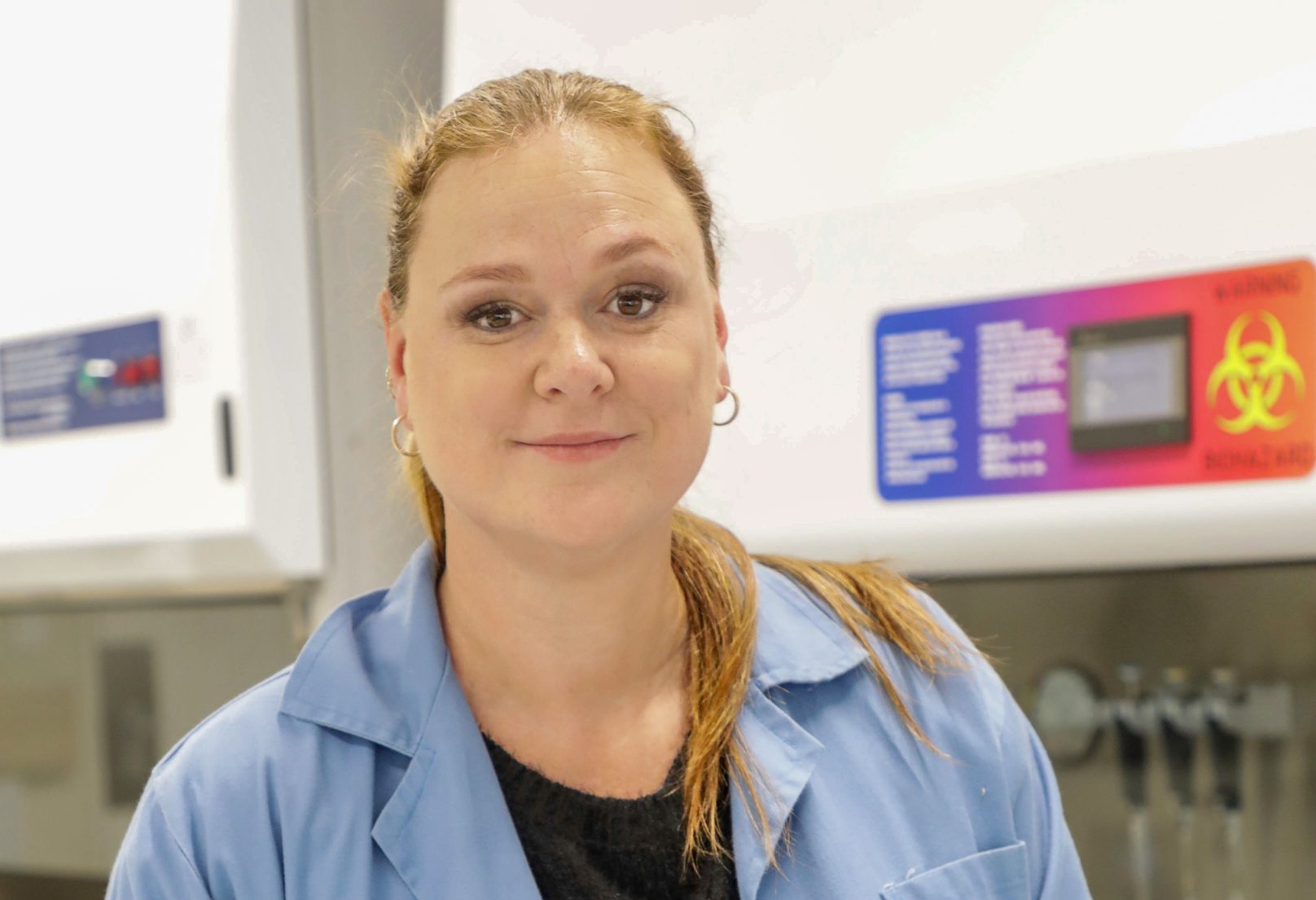
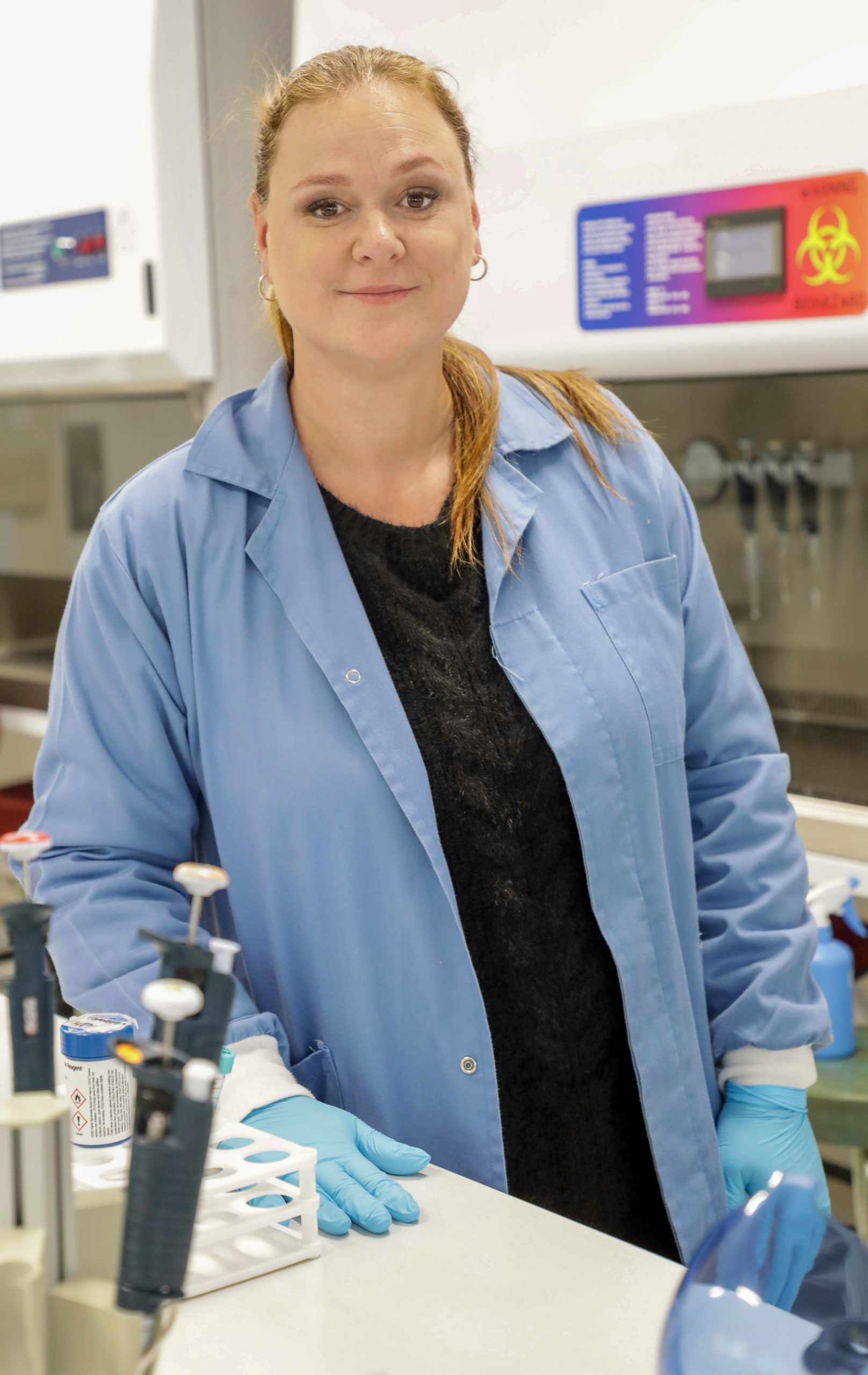
Professor Jo-Anne de la Mare is collaborating with other researchers and universities around South Africa seeking a solution to triple-negative breast cancer (TNBC). This type of breast cancer is more prevalent among women of African descent, and is a more aggressive form of the disease with an earlier onset.
Triple-negative breast cancer (TNBC) is an aggressive type of breast cancer where the cancel cells lack receptors for estrogen, progesterone and the HER2 protein. This absence means that treatments that target these receptors, such as hormone therapy and certain targeted drugs, are not effective, and the cancer is more likely to grow and spread quickly. TNBC accounts for about 10–15% of all breast cancers and is more common in women under 40, Black women, and those with a BRCA1 mutation
De la Mare heads the team carrying out pre-clinical drug discovery research at the Female Cancers Research at Rhodes University (FemCR2U) laboratory in the department of biochemistry, microbiology and bioinformatics.
A cancer survivor herself, she did not choose to pursue research in a cancer that she was diagnosed with, melanoma. She has chosen instead to focus on the most prevalent cancer in women in both South Africa and the world – breast cancer – and the deadliest cancer in women worldwide and the most prevalent female cancer in the Eastern Cape – cervical cancer. De la Mare is tackling this disproportionate incidence and poorer clinical outcome, particularly in TNBC, alongside a further challenge. With no medical school or an affiliated tertiary hospital, medical researchers at Rhodes University find it difficult to locate the necessary black African female cancer samples.
Most of the commercially available cell lines used in drug discovery efforts are from Caucasian women from America or Europe, with few cell lines derived from black women and no cell lines derived from South African women.
No known cure
Currently, TNBC has no known cure. Like all other cancers, it is caused by uncontrolled, rapid growth of cells in the body, eventually manifesting as tumours. What makes it possible to successfully treat other breast cancer types with the currently available drugs is that the cells have the necessary target proteins on their surfaces for the molecules of these drugs to bind to them and inhibit cell proliferation. The problem with TNBC is that it lacks these therapeutic protein targets and early detection is often the only hope for patients.
However, for women in the Eastern Cape, lack of accessible screening programmes means that by the time cancers like TNBC get detected, the disease may be in its third and fourth stage when it becomes difficult or impossible to treat.
De la Mare witnessed this when she worked with a rural hospital for her cervical cancer research. There were days when none of the patients with suspected cervical cancer arrived at the hospital clinic. Why? Because it was raining. “A simple reason like that,” she said. “The rain was preventing people from getting the help that they need. By the time someone reaches the hospital or clinic, they would have had to walk for kilometres and then pay for taxis to take them the rest of the way.”
So Breast Cancer Awareness Month is an important way of reminding South African women, particularly those in resource-limited settings, to check for any unusual growths in their breasts and to visit a healthcare provider early if they notice any abnormalities.
De la Mare is a passionate advocate for home breast self-exams as this helps prevent late diagnoses. In Makhanda, clinical screening comes with a hefty price tag. People without medical aid or wads of cash have to travel to public hospitals in Gqeberha or East London to obtain a mammogram. This requires a doctor’s letter and, because the service is oversubscribed, it is generally reserved for suspected cases of breast cancer. At every step, access to essential cancer preventative measures is unequal. So learning to self-examine is an essential life-saving tool.
Little-known facts
Males can also develop breast cancer. It is far less common, accounting for just under 2% of cases in South Africa. Nonetheless, men should also be aware that early detection saves lives.
The risk for breast cancer increases with age, which is why doctors recommend mammograms starting at 40, but TNBC tends to manifest earlier, affecting women in their 20s and early 30s.
Also, it does not only affect cisgendered women. Transgender women have also been found to be susceptible because of the extra hormones that they are exposed to.
The same goes for menopausal women who undergo hormone replacement therapy (HRT). This is because hormones like oestrogen and progesterone can fuel the proliferation of cells. The risks associated with treatment depend on the type and strength of HRT and its duration.
De la Mare recommends that patients speak to their doctor about the associated risk of developing breast and other cancers, especially if their family has a history of cancer.
