





By ‘Maleruo Leponesa
Grocott’s Mail, in collaboration with Makana Tourism, has embarked on a journey to express and educate through the voices of experts, highlighting the relationship between tourism and heritage. Our recent publication about Fort Selwyn confirmed that historical sites deserve to be preserved.
Grocott’s Mail had a conversation with Dominic Thorburn, a former member of the Aesthetics Committee during the 2010s, to learn from his experience about the importance of preserving historic landmarks.
According to Thorburn:
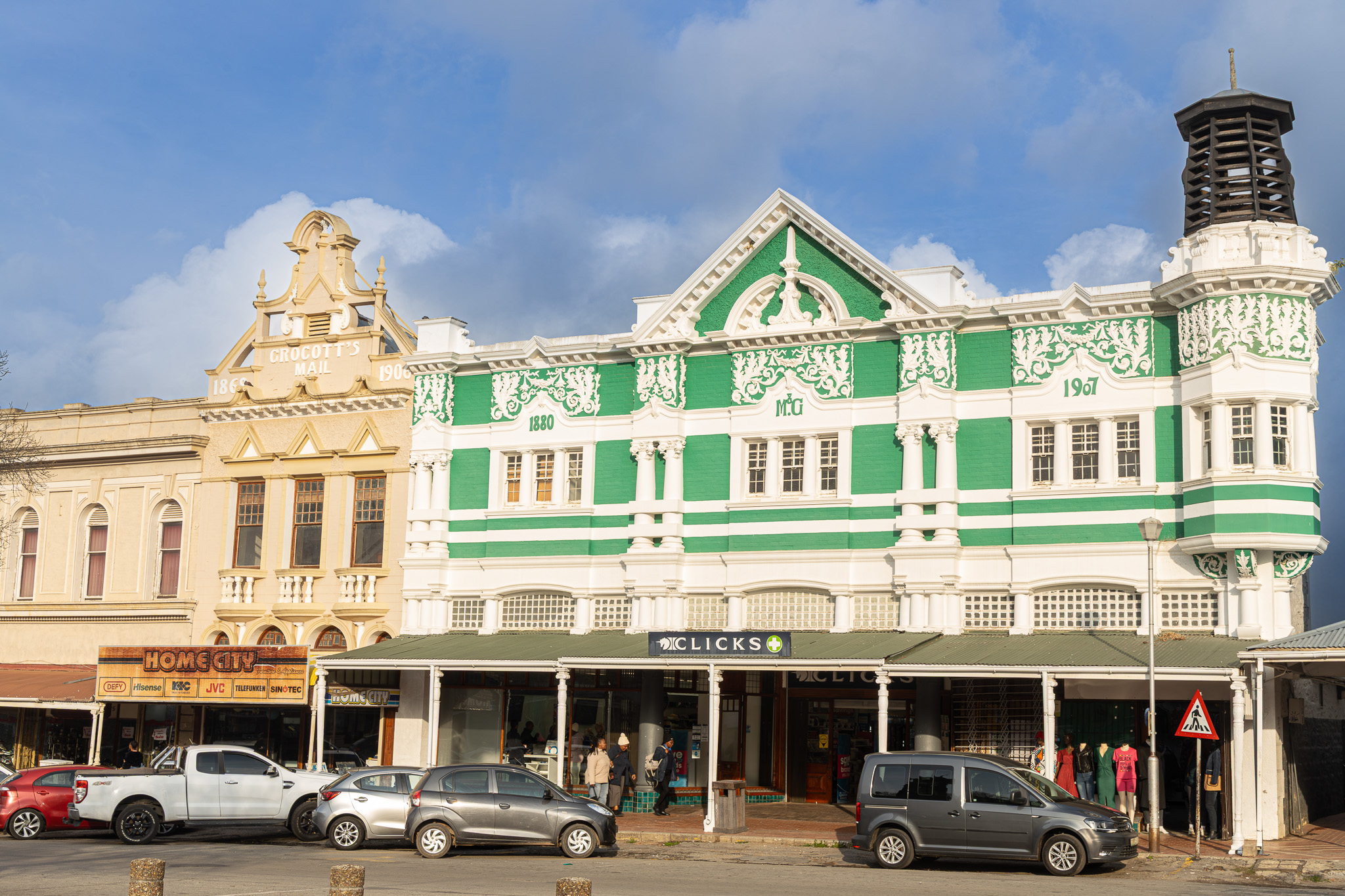
“It is very important to preserve our historic built environment and heritage sites because this directly affects the economy of Makana. One of the few industries the town has is cultural tourism, which has taken a significant knock recently with the decline of aesthetics and historic architecture and heritage monuments, in addition to the demise of infrastructure and services and resultant bad press.
Historic and cultural tourism brings visitors and supports the hospitality industry and related businesses; Rhodes Economics Department has done significant research in this area.”
He further indicated:
“Unfortunately, there does not appear to be political will to actively preserve this aspect of the town, despite its economic benefit—possibly due to the perception that it is merely colonial heritage.
The reality is that the entire frontier history is of value, and the potential to capitalise on it and simultaneously acknowledge indigenous histories, including oral history, is enormous. It is a lost opportunity—not only for dialogue but also income generation. This was recognised by the previous Aesthetics Committee, and research and initiatives were also undertaken by Professor Julia Wells, who was in the History Department. Egazini- the Battle of Grahamstown is of significance here.”
When asked about specific initiatives undertaken during his time on the Aesthetics Committee, Thorburn listed the following:
- Ensuring the designated Heritage Precinct of the town was preserved and monitored for bylaw compliance of building and signage regulations (now completely ignored and unregulated despite existing laws).
- Meeting with the business sector to explain the bylaw regulations and the importance of compliance. Cooperation from business owners was crucial due to the knock-on effects on the economy.
- Meeting with signage companies to ensure they understood and applied the bylaws.
- Assisting residents and businesspeople with free consultation on signage, building renovations, and painting.
- Approving historic and aesthetic building plans for old and new developments that impact the heritage and built environment of the city.
- Ensuring signage and entrances to the town were clean, presentable, and attractive to visitors. This involved liaising with relevant municipal departments (now virtually neglected).
- Requesting residents and businesspeople to take care of their property verges.
- Designing aesthetically pleasing town signage indicating important places, guest houses, and B&Bs. These were monitored by the municipality, and revenue was collected from featured businesses. Many of these signs have since been vandalised, rusted, or knocked down—few remain.
- Preventing the spread of illegal billboards and ad hoc pegged signage, which contributed to visual pollution and degraded the town’s aesthetic. He noted:
“One only has to look at towns like Graaff-Reinet and Stellenbosch to see how this should be managed.”
On another note, Deon Malan, a local contractor, offered to renovate Fort Selwyn free of charge. Unfortunately, up to this date, his efforts to reach out to stakeholders to proceed with the work have not been successful.
“Reason for wanting to do work free of charge to Fort Selwyn….. Living in Makhanda, you quickly learn that things don’t just happen. We make them happen. So when Jock approached me, I was happy to help. After some follow-up with Jock afterwards, it was then told that we wouldn’t be allowed to do the work due to red tape. If the need arises, I would be more than happy to give a helping hand to take the Fort back to its previous beauty,” Malan said, when asked what motivated his decision to volunteer for the project.
He concluded by saying, “I have love for this town, and I wanted to give back to the community by renovating Fort Selwyn because it is one of many tourist attractions here in Makhanda,”
Efforts to get comment from the Eastern Cape Department of Sports, Recreation, Arts and Culture were unsuccessful.

