


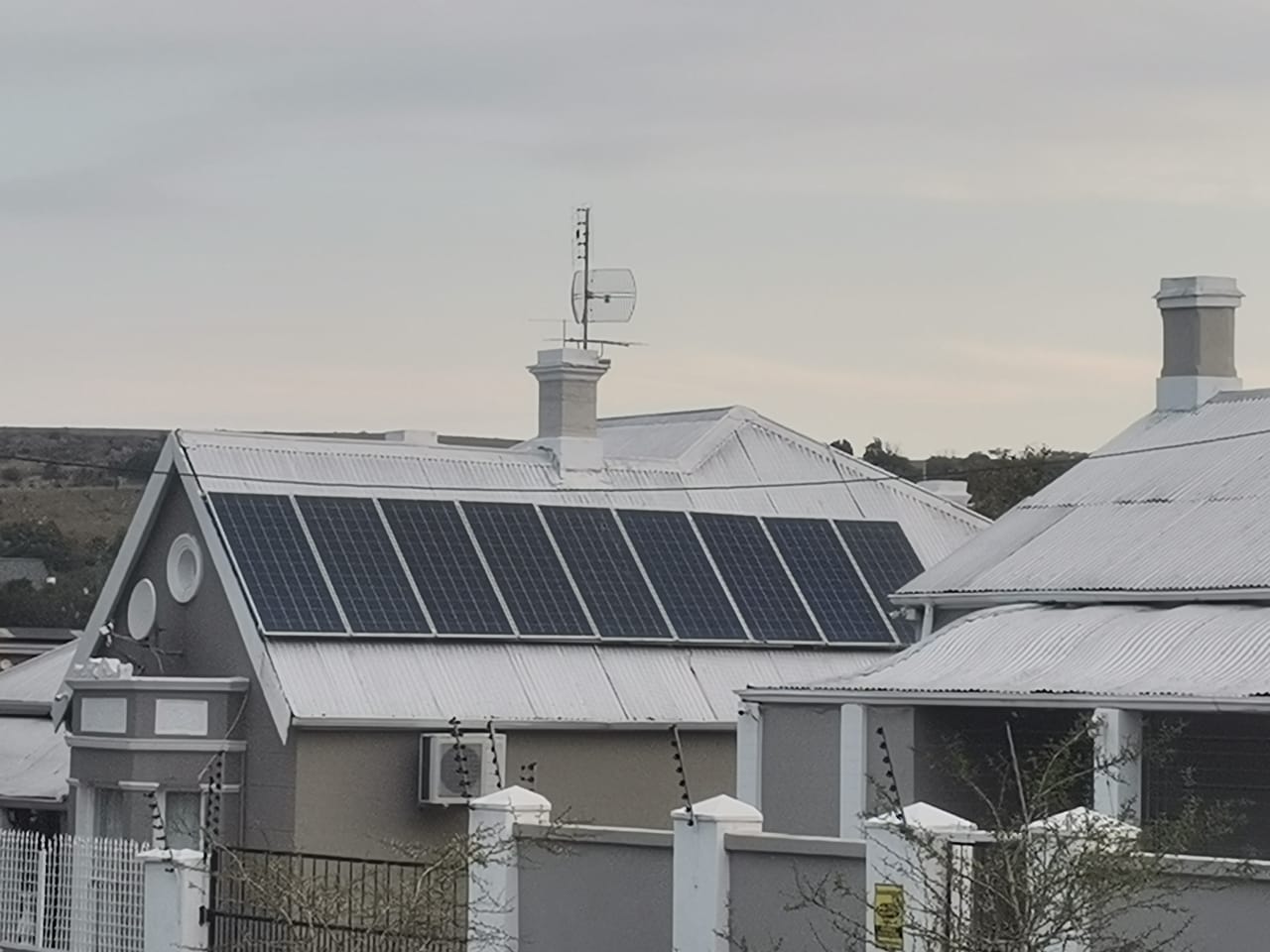
By Asemahle Vumsindo
Makana Municipality has taken its formal steps towards allowing residents and businesses with rooftop solar panels to feed excess power back into the grid, but only if they register and comply with new rules.
The municipality’s Infrastructure Development Portfolio Committee on 18 September 2025 considered a report from the deputy director: electrical services, recommending the adoption of net billing rules. These rules will now be tabled before the full council for approval.
What net billing means
Net billing is a system that allows so called “prosumer” households or businesses that both consume and generate electricity to be credited for electricity they export to the grid. The credit is applied to their monthly municipal bill, but no cash is paid out. Any unused credits can roll over to future months, but not into a new municipal financial year.
Under the proposed Makana framework, prosumers will:
- apply and register their solar systems with the municipality
- pay connection fees, including for a new bi-directional meter
- install systems compliant with safety and technical codes
- sign a connection and billing agreement with the municipality before being allowed to export electricity
Protecting both residents and municipal revenue
Export tariffs, the rate residents are credited per unit which they send back to the grid will be based on the municipality’s avoided costs of purchasing energy, and not on retail tariffs. In other words, exporting power won’t be a money-making revenue for households, but will still help by reducing their bills. Residents will still pay for imported energy (electricity used when their solar does not cover their needs), fixed charges for grid maintenance and administration, and one-off fees for metering and network connection.
According to the draft rules, tariffs must be cost-reflective, transparent, and non-discriminatory. The municipality is also required to conduct a cost-of-supply study before finalising tariffs, which will then be submitted to NERSA (the National Energy Regulator for South Africa) for approval.
Safety and compliance
The rules emphasise safety: only registered systems with compliance certificates will be allowed to connect. The municipality may disconnect systems that pose a risk to the grid, and unregistered connections will be liable for fines. Distributors, including Makana, are required to maintain a register of all prosumers, report data to NERSA every six months, and provide application processes and technical standards publicly, including online.
Why now?
Makana’s move comes after NERSA published draft net billing rules in April 2023, following growing pressure to bring order to South Africa’s rapidly expanding solar sector.
Across the country, more than 137 000 households have installed solar, with about 1 000 new systems coming online every month. In Makhanda, installers estimate dozens of new systems have been set up in the past year as residents battle both Eskom load-shedding and Makana’s local cable theft and infrastructure breakdowns.
What this means for residents
For residents who have already installed solar without applying, the municipality says it wants to “correct things” and bring systems into compliance rather than punish early adopters. However, new applications will now be strictly regulated, and connection without approval could result in fines.
Municipal energy manager Johnson Sitelo has previously said the long-term aim is to make it possible for households to help stabilise the grid. “The regulations are there as safety precautions for the homeowner, the municipal workers, and the municipal network. This framework will also allow us, in future, to make use of excess solar power to reduce the impact of load-shedding.”
