





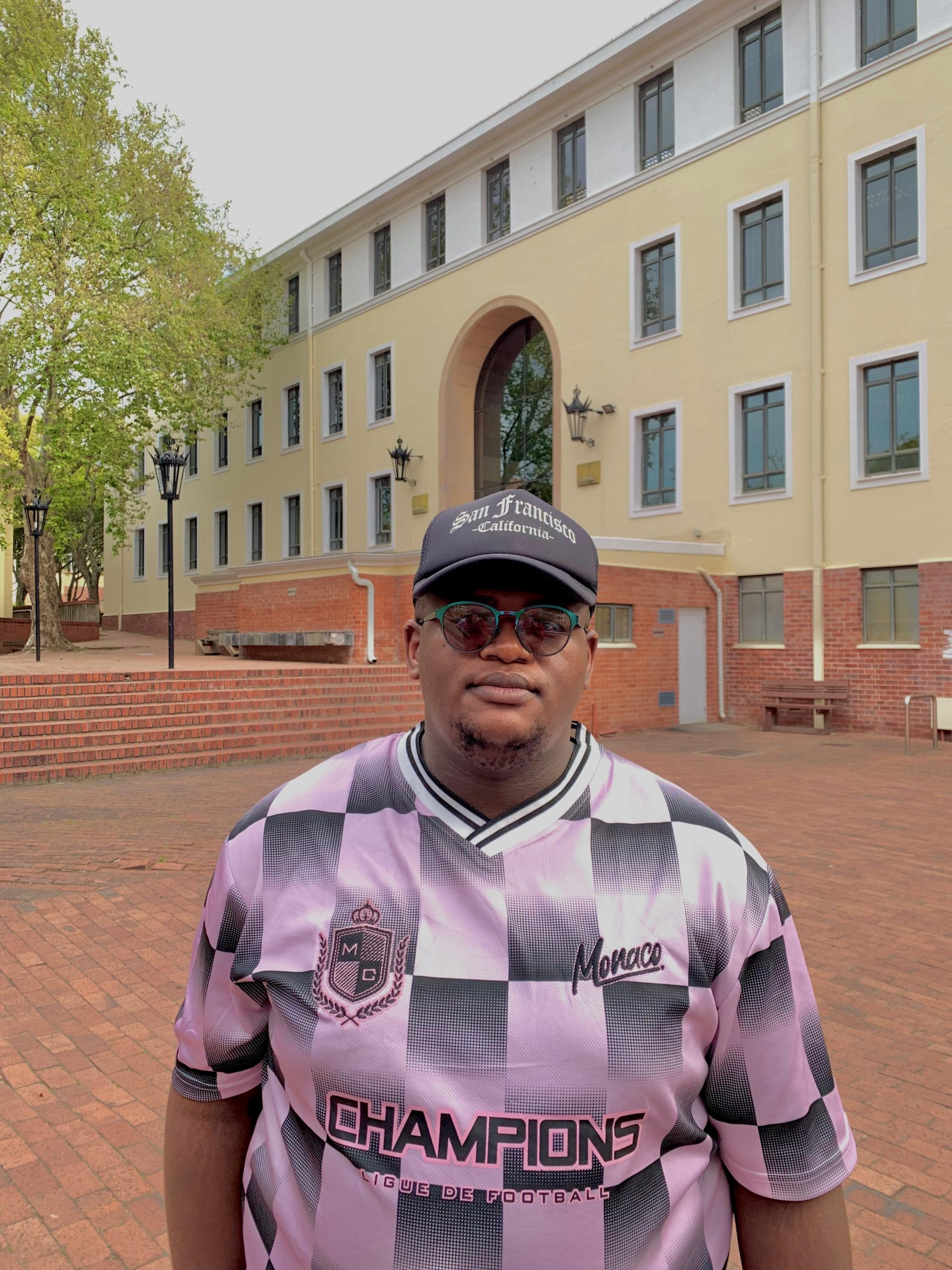
By Ndapewa Tafeni and Solethu Madzwila
When Liseko Mawonga visited a local pharmacy last year, he saw an elderly man receiving pills at the counter.
“Two pills twice a day,” the pharmacist said.
The old man responded in isiXhosa: “Andimva noba uthini ngoku”.
Then, he simply walked away.


At that moment, Mawonga, an Anthropology Honours student at Rhodes University, realised that language is a key determinant of whether people access health care.
This prompted Mawonga’s research project, shows that local health care is not just about finding a clinic or affording medicine – language gaps often leave the town’s most vulnerable patients without proper treatment.
“Typically, when we look at health care, we focus on economics or socio-economic factors. But my work looks solely at language,” Mawonga says. “South Africa has many official languages, and policy says they should all be used when accessing health care services. But if you look at places like Makhanda, there are so many languages being spoken, and not everyone can be understood.”
Over two months, Mawonga spent time in Settlers Hospital, observing how people communicate. He found that while isiXhosa is Makhanda’s dominant language, patients still face challenges even within the same language.
“In isiXhosa, we have many dialects. So, the way you describe your pain determines the quality of care. If you can’t articulate yourself well, then your access to health care is affected,” Mawonga explains.
Patients who struggle to express themselves often rely on others to step in.
“I noticed that older people would bring their grandchildren to translate, or someone sitting next to them would quickly jump in to help,” he says. He calls these people “ad hoc interpreters,” ordinary citizens who act as translators without formal training.
While South African health policy promises language support in clinics and hospitals, Mawonga argues that the reality on the ground is very different. “On paper, the Eastern Cape Department of Health says if you can’t speak the dominant language, you should notify the clinic, and someone will be provided. But in reality, health care is understaffed and doesn’t have resources. So, people depend on whoever is around to interpret for them,” he says.
For Mawonga, language is not just about words; it is about dignity, trust, and access. “Language facilitates health care,” he says, “If you arrive and can explain your pain clearly, you are more likely to get the right help. If you can’t, then your health care is interrupted.”
“Language is more than a communication tool; it’s more than speaking. Language can facilitate or hinder access,” Mawonga says.

