





By Sayuri Persotham
Whether an afternoon stroll through the Botanical Gardens or an early morning jog past SAC, Makhanda’s residents capitalise on the city’s scenic exercise routes. However, its valley landscapes and infrastructural issues make exercising decidedly more difficult for the elderly.
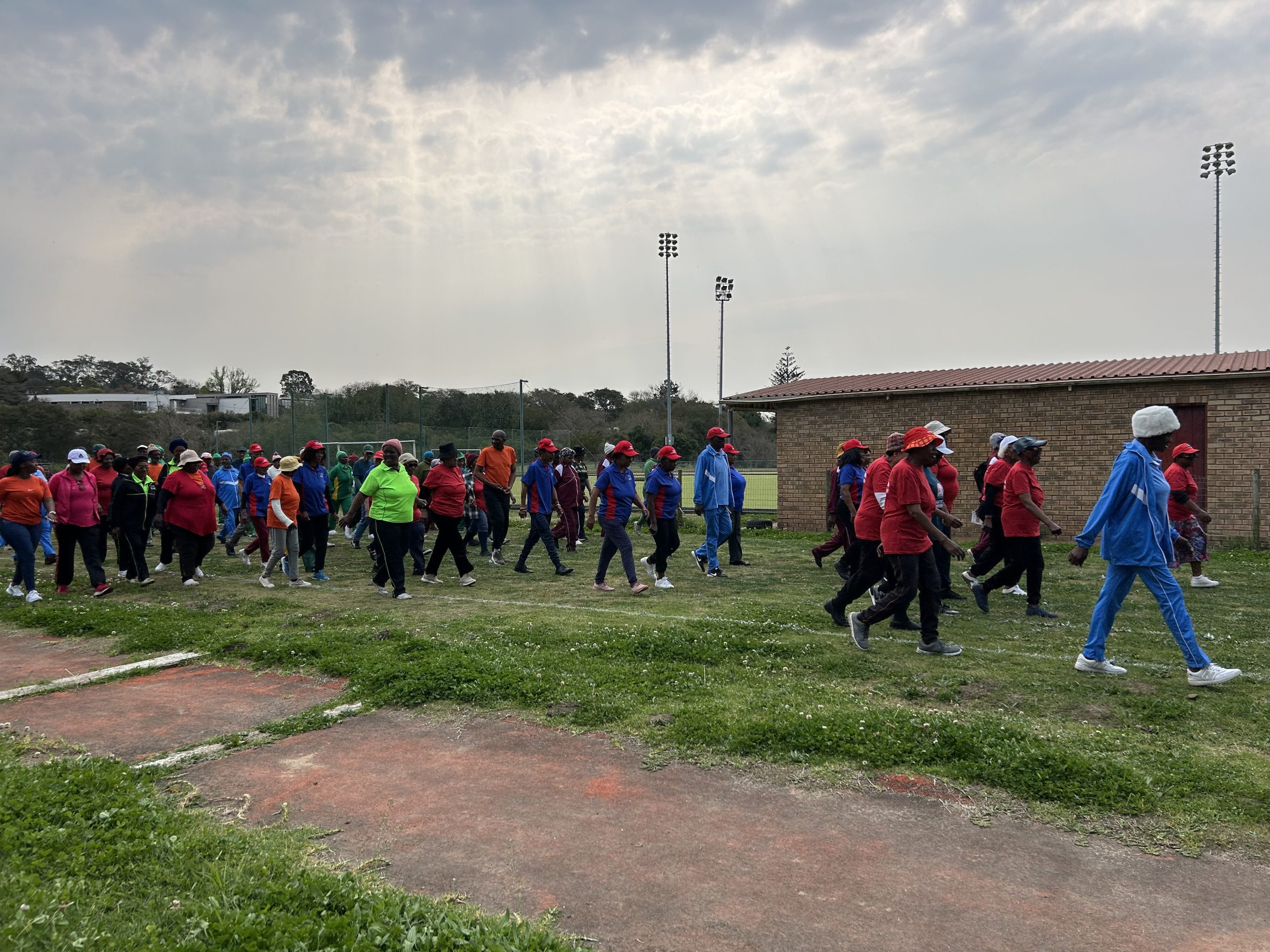
In view of addressing these challenges, Makhanda hosted the annual Golden Games for Older Persons event on Thursday, 28th August, on the Astro Fields of Rhodes University. Falling under the Active Aging Programme initiated by the Department of Social Development, the event aims to be more inclusive of the Eastern Cape’s vulnerable groups. The Golden Games seek to promote the health and well-being of older persons through recreational sporting activities.

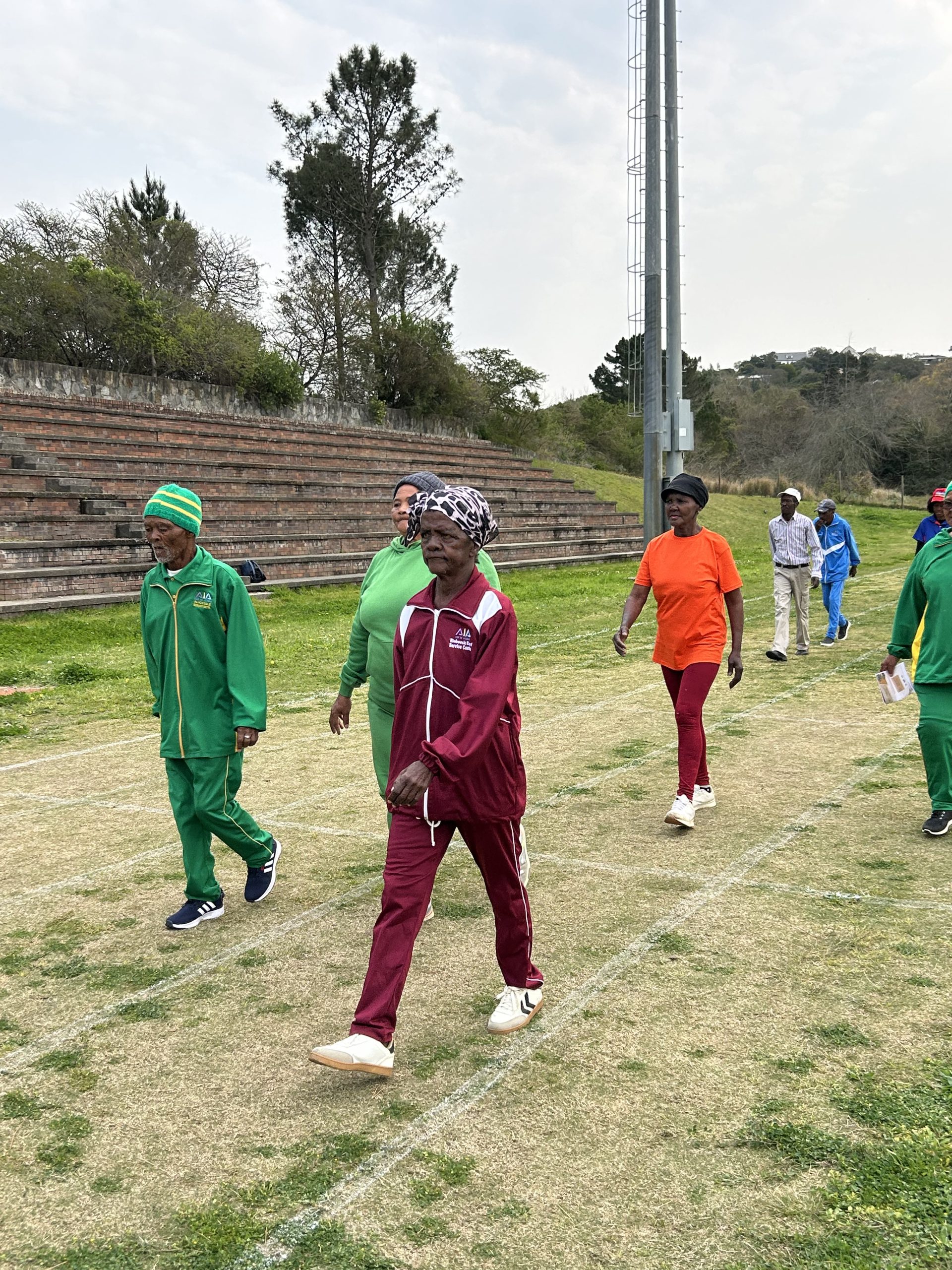
Stretching across the Makana district, older persons aged 60 and upward came together to partake in active aging games. The World Health Organisation defines active ageing as “the process of optimising opportunities for health, participation, and security in order to enhance the quality of life as people age” (2002). This fosters social bonding and reduces the risks of isolation, stress, and other health risks amongst society’s older members.
Participation in the Golden Games spanned the regions of Riebeeck East, Alicedale, Port Alfred, Kenton on Sea, Klipfontein, and rural areas, among others. Senior citizens enjoyed Makhanda’s sunny weather while engaging in various outdoor games, including 100-800m runs, relay, juskei, and other ball games such as throwing and soccer.
The older persons sat arranged in their color-coded groups, resembling a rainbow across the stands. Their cheers were loud and excitable, full of youthful enthusiasm. 63-year-old Patricia Madusha-Tokwe from Masele praises the games as an opportunity “to enjoy life even in old age”. She further explains, “We can enrich our bodies, gain the strength to exercise and lead healthy lifestyles amid all the conditions we older folk face.” 65-year-old Ernest Khalani from Riebeeck East reiterates the improved physical and mental states of participants, saying, “[The games] help us cope better with everyday life, supporting our health and longevity”.
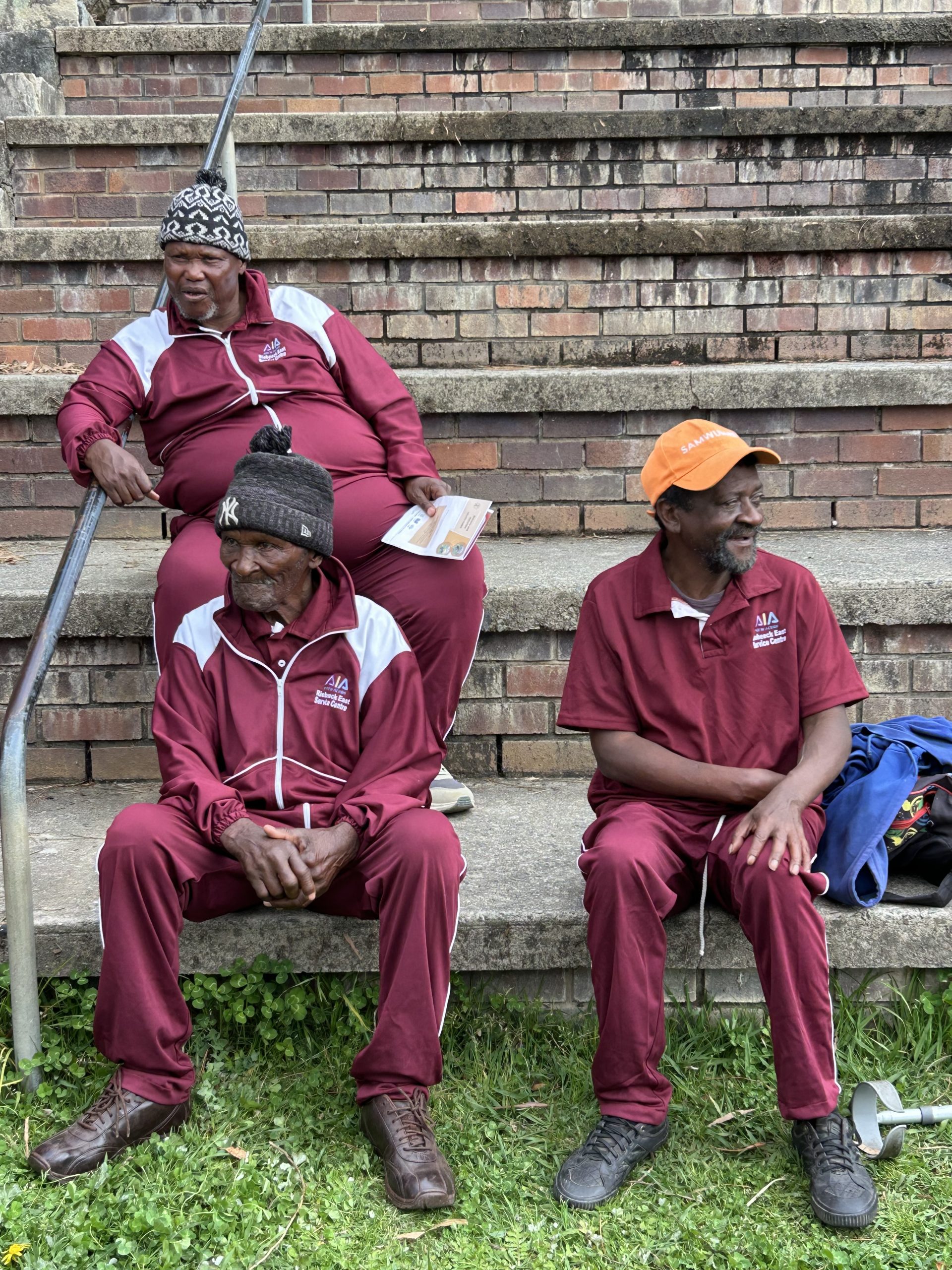
Chairperson of the Makhanda Older Persons Forum and event coordinator, Harry Porthen, attributes the games’ success to the support of local stakeholders. “Before COVID, the games were running very smoothly. The department was involved in every aspect of facilitation”. According to Porthen, the main challenge in 2025 appears to be securing consistent government funding in order to support the continuance of the Golden Games. Porthen further emphasizes the need for donations to ensure its annual progression: “You see people coming onto the fields with bottled water? We’ve gone into the community and given out letters to approach them for help.” Porthen credits various stakeholders, including the Makana Municipality, Star Bakery, and Rhodes University, for the event’s efficient implementation.
The rallying community efforts add color to the golden years of our elderly. Therefore, the annual Golden Games tradition must be maintained—not only to promote active ageing, but to celebrate the foundations of our communities.
References:
World Health Organization (WHO), 2002. *Active Ageing: A Policy Framework*. Geneva: WHO. Available at: https://extranet.who.int/agefriendlyworld/wp-content/uploads/2014/06/WHO-Active-Ageing-Framework.pdf (Accessed: 31 August 2025).

