


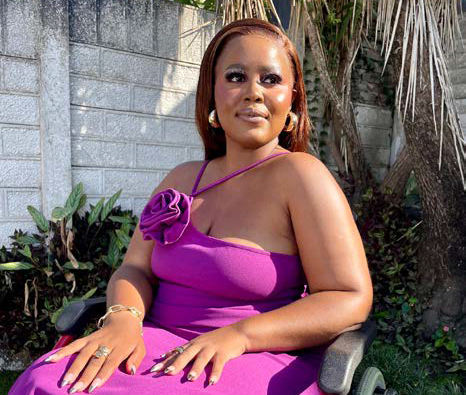
By Thembelihle Ngcai
An economy that sidelines disabled women is an economy choosing to limit its own future. When I speak about disability, I know my words often pass through the filter of those hesitant about being wrong — people cautious about “saying the wrong thing.”
That’s fine. I am not here to trap anyone; I am here to challenge us all to see differently. Much of my work is, in truth, an ode to disabled leaders who have lit my path in South Africa — leaders whose legacy is felt in every corner of this country. Nelson Mandela himself lived with the effects of injury and illness in his later years. It shaped his leadership, though our public imagination rarely frames him as “disabled.”
That omission matters. It reminds us that disability is not absence; it is presence, power, and perspective.
If the G20 has come to South Africa to learn, then the lesson is already unfolding in front of them: South Africa is different. Different in a way that holds the weight of deep inequalities — cultural, economic, and systemic — yet still moves forward. That forward motion is not accidental. It is carried by people who have never had the same luxuries or safety nets as others, yet they build regardless.
I rarely speak about numbers — not because they aren’t important, but because I am a social justice leader and storyteller, and I believe the most transformative lessons live in the stories we choose to centre. Here are three truths that social justice activism and storytelling offer the economy:
- Successful economies are increasingly shaped by social entrepreneurs — individuals and communities who solve social challenges through enterprise.
- The narrative on Africa is being written in real time — in ordinary spaces like sports complexes, community halls, and market stalls. Who we allow to write that narrative will determine the economy’s shape in 20 years, when South Africa may host the G20 again.
- The call for inclusion is urgent and multidimensional — it is not just about GDP, but about who is in the room, who makes decisions, and whose economies are validated. Look closely, and you will see that the people answering that call are not always the ones with formal titles or large investment portfolios. They are ordinary women selling amagwinya, running spaza shops, counting rands and cents in stokvels. They are the ones wearing imibhaco, tying iiqhiya, moving through the world in wheelchairs — and still holding up their families, communities, and local markets.
These women are not simply contributors. They are the cornerstone, shouldering the responsibility of preventing our economies from crumbling under geopolitical and domestic pressures. For that reason, disabled women must be recognised not as a “special interest group” but as drivers of market growth, ecosystem enablers, and co-owners of economies — with the same access to benefits, resources, and protections that others enjoy. So, before you talk about South Africa’s economy, ask who is really holding it up.
- Thembelihle Ngcai is a News24 Top 30 Young Mandelas of the Future 2025, a disability rights activist and inclusion strategist.
