





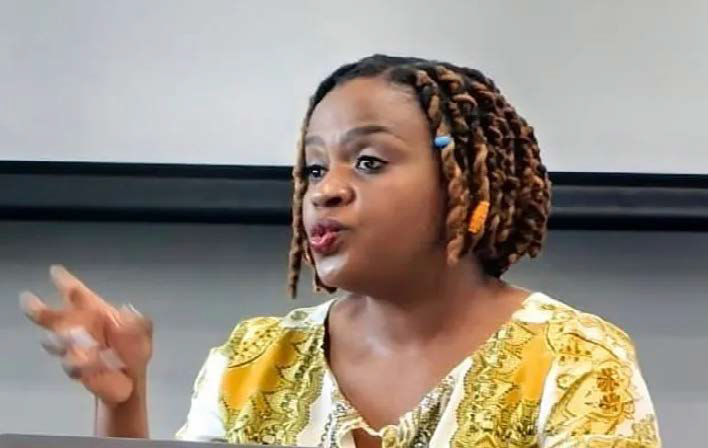
Busisiwe Madikezela-Theu Daily Dispatch
My first real understanding of imbokodo (grindstone/rock) arrived at a male dialogue I attended years ago.
One of the guest speakers, addressing male initiation graduates, said this: “Abafazi are not imbokodo. They became imbokodo by necessity when they had to fight at a time their men were being systematically silenced.”
Traditionally, he continued, abafazi (women) were known as imbali (flowers), valued and protected, while a girl’s father and brothers were the imbokodo, the ones meant to anchor, shield, and enforce consequences.
If you, as a man, touched a girl inappropriately or harmed her, you met the wrath of imbokodo — those men.
That framing jolted me: it repositions imbokodo not as women’s lifelong burden to carry, but as a protective social contract others owe to women.
Of course, language evolves. In 1956, “Wathint’ abafazi, wathint’ imbokodo” (You strike a woman, you strike a rock) entered our political bloodstream, rightly honouring women’s courage against a brutal state.
The problem is what happened next: a slogan hardened into an expectation many of us wear like a yoke. Be rock. Absorb harm. Keep going. Smile. Be grateful.
And when you finally break under the weight of paid work, unpaid care, community activism, and the relentless calculus of safety in a violent society — somehow it gets narrated as personal failure, not social failure.
Enter the so-called “soft life”. Among my generation of women, the phrase signals a refusal to be the family’s permanent shock absorber.
“Soft life” is not champagne and Instagram; it’s rest without guilt, boundaries without apology, and care without a moral invoice.
It’s the audacity to say: I will not earn love through exhaustion. I will not confuse coping with flourishing.
“Soft life” has also been captured by an aspirational, consumption-first aesthetic that drifts dangerously close to dependence on patriarchal provisioning.
We’ve all seen it: softness that’s available only if a man (or a brand) foots the bill; that makes no demands on systems, only on women’s self-presentation.
That version sells a lifestyle while leaving intact the conditions that make women harden in the first place.
Danger in taxis and streets, precarious work, clinics without staff, classrooms without support, homes without reliable electricity or water. Softness without structure is just a filter.
Where does that leave imbokodo? Not in the dustbin, and not on our backs either.
I am arguing for a reframe: imbokodo must move from an identity loaded onto women to a duty borne by men, families, employers, faith communities, and the state.
Let systems be the rock so women can live soft.
What does that look like in real terms?
First, it means rereading tradition with integrity. If imbali names women as worthy of care, then the masculine calling of imbokodo, to steady, protect, and set boundaries should never be a licence to control.
It should be a commitment to intervene against harm enacted by men against women.
Real manhood is not silent when a friend jokes about “disciplining” his partner; it breaks the joke and the cycle.
The post-initiation speech got one thing exactly right: protection is not a poem; it’s a practice.
Second, it means institutionalising softness.
If “soft life” is rest, then employers must normalise flexible work, equitable parental leave, and predictable hours, because burnout is not a personal time-management issue, it’s a structural design flaw.
If softness is safety, then we invest in transport that does not turn dusk into danger.
If softness is care, then clinics, shelters, and social work services must be funded as essential infrastructure, not as charity.
Softness should read like a budget line, not a mood board.
Third, it means politicising pleasure. The right to joy is not frivolous; it is proof of dignity.
We should insist on parks without fear, nightlife without predation, and intimacy without coercion.
Our mothers’ generation fought for legal personhood; ours must fight for a life that feels like it.
Fourth, it demands honest critique of the marketplace of “soft”.
Influencer culture can inspire, but it can also lure us into performance: the candlelit bath as a proxy for a liveable wage.
We need a praxis: support women-owned businesses, yes; but also vote, organise, unionise, and litigate.
A spa day is lovely. A safe, fairly paid, non-exploitive workplace is softness with teeth.
Finally, it calls men back into the story — not as heroes, but as co-builders of conditions.
If imbokodo once meant fathers and brothers confronted anyone who harmed their daughters and sisters, then the contemporary reading must scale that ethic: stand up in boardrooms, taxi ranks, WhatsApp groups, and taverns.
Challenge misogyny in the joke, in the hiring panel, in the budget meeting, in the pulpit.
If you claim initiation conferred manhood, show us the courage and care that title demands.
Here is my synthesis, and my challenge. We honour the women who became imbokodo under duress by making sure the next generation does not have to.
We keep the memory of the rock as collective resolve, our unions, movements, neighbourhood watch groups that protect rather than terrorise, caseworkers who refuse to normalise abuse, prosecutors who treat GBV as the national emergency it is.
And we elevate imbali from a pretty metaphor to a policy principle: women are not ornamental; they are essential, and their wellbeing is non-negotiable in a just society.
So I will not discard imbokodo but relocate it. Let it live in constitutions, budgets, and everyday bystander action.
This Women’s Month and every month after, may our language be brave enough to evolve, and our structures strong enough to make softness ordinary.
Let imbokodo hold the line so imbali can bloom.
Busisiwe Madikezela-Theu is a social work and development intervention specialist, PhD candidate (UFH), master of social work — research (NMU)

