





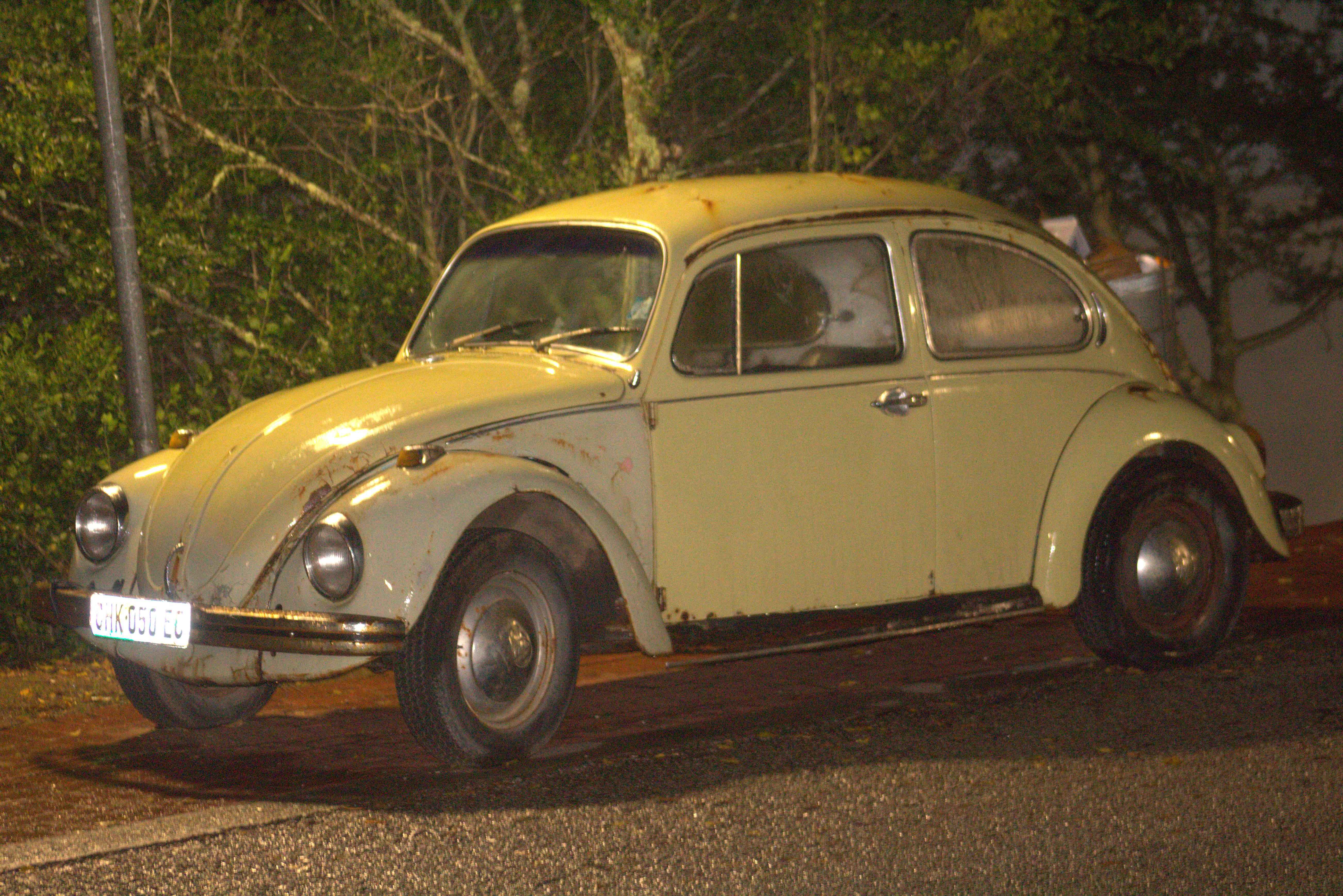
By Siyanda Zinyanga
Even today, when elders lay eyes on a VW Beetle, especially the iconic 6700W, they don’t just see a car. They see a friend. A companion. A stylish bug with more personality than most modern sedans. That little machine, often mistaken for a smiling turtle on wheels, carries with it stories of first loves, road trips gone wrong, and Saturday afternoons spent fixing the engine with nothing but faith and a butter knife.
South Africa’s connection to the Beetle runs deeper than nostalgia. On 31 August 1951, the first VW Beetle rolled off the assembly line at the Kariega plant, then called Uitenhage. That humble moment marked the beginning of a love affair between South African drivers and this German-born car with a stubborn soul.
One proud example still hums on today’s roads, this is the VW 6700W owned by Dr Johan van Rensburg from Kimberley. Remarkably, it still boasts its original engine, proof that Beetles don’t just live long, they endure with pride.

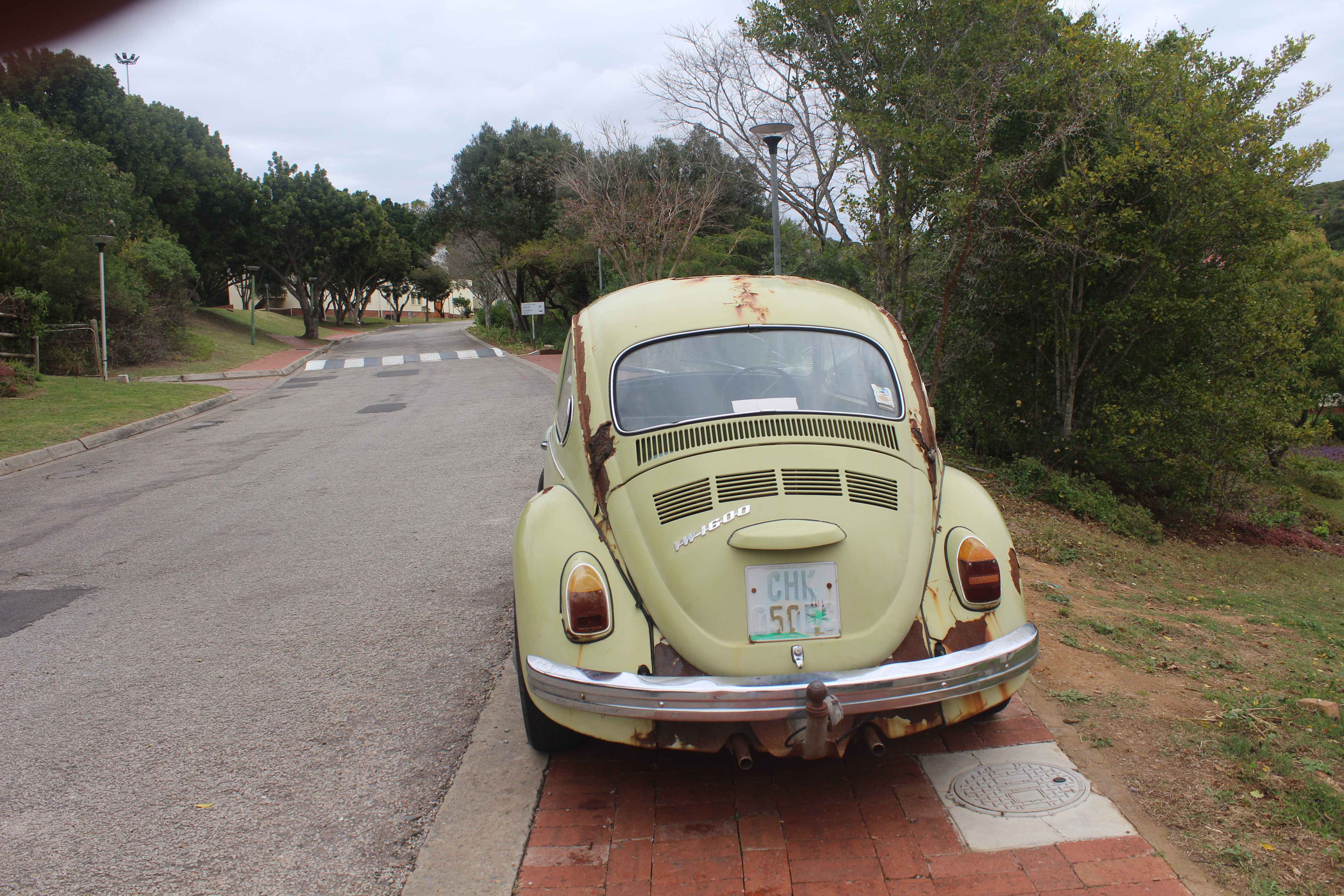
“The Beetle was my father in law’s vehicle and it’s done journeys to Namibia and back, can you believe that? The ball joints haven’t been changed, they’re over 50 years old.” Mathias Chirombo, an artist and warden at Centenary House, Rhodes University, said. That spirit of endurance is something Chirombo understands.
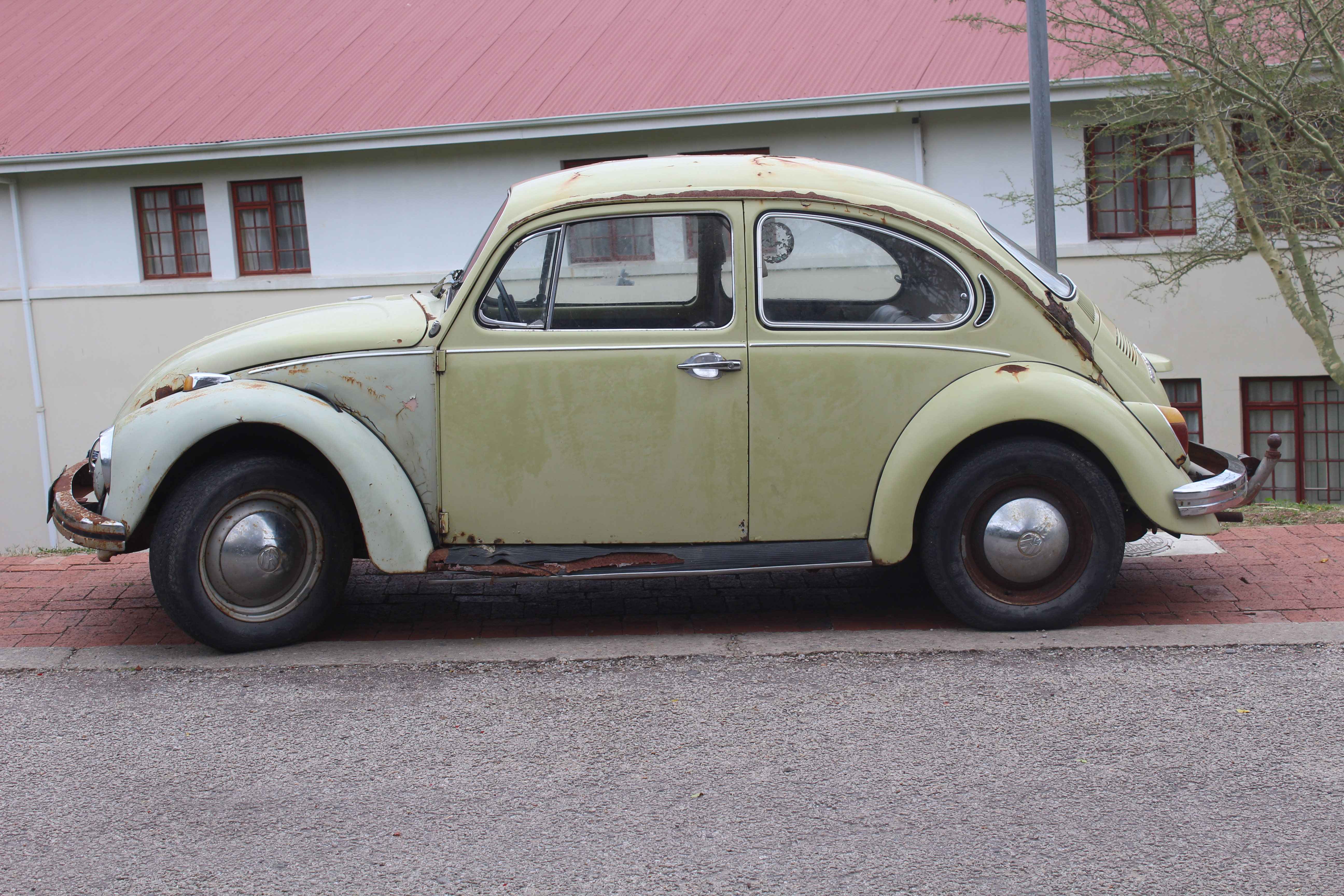
But like many of its kind, Chirombo’s Beetle carries the scars of time. “It’s so expensive to fix it up because the body is a problem. It’s very rusted, but you know, it runs. It just wasn’t starting. So I need to take it to the electrician.”
Despite the rust, the car’s simplicity remains one of its most endearing qualities. “Maintenance is very low. You just put oil, no water which is, you know, amazing,” he added. He noted that some parts can’t be ignored, “I just need to get the brakes, everything sorted out first before I start driving it, because it’s not great. You know, these are old cars, so you just got to get the brakes fixed up properly.”
Fixing, rusting, and remembering
“After Brian and I got married, my mother gave me the Beetle, and we drove it down from Johannesburg to Pietermaritzburg,” Professor Anthea Garman of the School of Journalism and Media Studies at Rhodes University said.
For Garman, the Beetle was more than just a car, it became a thread running through generations. First her mother learnt to drive in the car, then she did. “When my daughter wanted to learn how to drive, we taught her to drive in the Beetle, so three generations of people learnt to drive in that car.”
But as the Beetle aged, keeping it roadworthy became a story of persistence. Brian Garman, Deputy Head and senior lecturer at the same journalism school, explained, “Because it was so old, it became difficult to get spares for it. They became expensive, and very often we had to use second hand spares that someone had got from a beat up old Beetle from somewhere else. It was becoming more and more of a problem, and it started to rust.”
Brian didn’t stop there, he made a sharp observation about modern car design, “If you build cars like that for everyone, then people don’t buy new cars, and then they pass it on to their children. So now, they make cars which have a much shorter lifespan.”
Early models from the 1930s were very tricky to fix, some say you needed divine intervention just to change a gasket. But by the 1960s, designs had improved, they were sleeker, more reliable, and, blessedly, easier to tinker with. The air-cooled engine could be a bit of a diva on long distance drives, but what it lacked in stamina, it made up for in charm and affordability. And let’s not forget that cheerful exhaust note, a sound that signalled not just movement, but memory.
Some loved it. Some didn’t.
Not everyone is a fan, though. Lindokuhle Manyube, a second-year Bachelor of Social Sciences student at Rhodes, offered a blunt take by saying, “If you are a family person, then you should buy a car that has a lot of space in it, not a VW Beetle.”
Other appreciate the Beetle’s quirks. Monty Detroit, a master’s student in the Department of Ichthyology and Fisheries Science at Rhodes, said: “The only VW I’ve personally driven is my girlfriend’s Beetle. The clutch is much better and easier to use. It gave me a lot more visual space than other drivers’ cars.”
And then there are those whose admiration remains undying. Harold Gess, a photography lecturer at the School of Journalism and Media Studies at Rhodes, summed it up with affection when he told Grocott’s Mail: “I love Beetles a lot, and I enjoyed having a Beetle when I had one. Yeah, what can I say, it’s a classic. Fewer and fewer are left ’cause they rust like crazy, but yeah, if I can get another one in nice condition, I would buy it.”
For many, the Beetle wasn’t just transportation. It was rebellion, romance, and resilience all wrapped in steel and sincerity. While today’s cars boast Bluetooth and built in Wi-Fi, the Beetle offered something rare, character.
Sometimes mobility doesn’t come with leather seats, it comes with rust, memory, and the ability to carry three generations on a journey, one bumpy but beautiful kilometre at a time.

