





By Sayuri Persotham
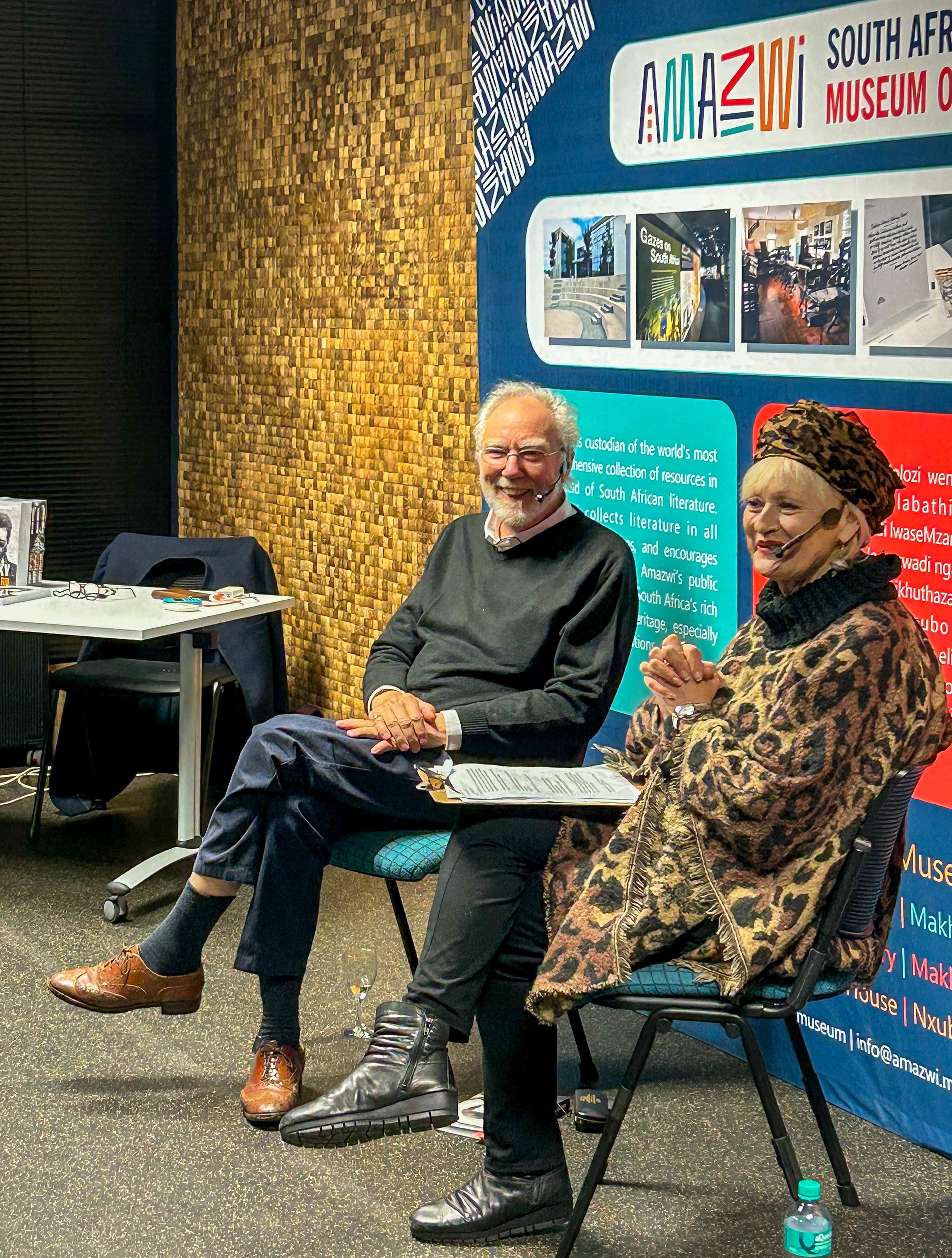
The local launch last week of Lucky Bastard, writer Anthony Akerman’s memoir, introduced Makhanda to this story of adoption, apartheid, and exile.
Akerman’s book traces his South African origins while traversing landscapes of 1980s England and Holland. He roots the epilogue of Lucky Bastard in his biological mother’s painful encounters with adoption. “She took out a few black and white photos of the baby boy. She was expected to put the past behind her and pick up the pieces of her life as if nothing had ever happened.”
Akerman describes the wonderful upbringing he shared with his adoptive parents. He was “a rebellious and obstreperous teenager” and reflects on a letter sent to his parents from Michaelhouse boarding school in KwaZulu Natal. He signed the letter, “Love from your ever-loving alcoholic, duck-tailish, hooligan, drug addict and all-round good-for-nothing-with-no-ambition-in-life son – Anthony Akerman.”
Following a tumultuous adolescence, Akerman resigned himself to the apartheid realities of the South African military. At 17 years old, he avoided conscription by escaping to the English Department of Rhodes University — the beginnings of his alma mater legacy and relationship with Makhanda.
Military training opportunities led Akerman to England. “I thought I would feel very English. It was a big surprise when I got there and found out that I was very South African,” he said. Akerman began to reflect on his upbringing, taking a particular interest in South African history and its depictions through playwriting. He fell into the company of Conny Braam, a chairperson of the Dutch anti-apartheid movement and soon wrote Somewhere on the Border was born, a play swiftly banned in South Africa “for portraying the Armed Forces in a bad light”. In time, Akerman experienced a full-circle moment, showcasing his play at the 1986 National Arts Festival in the Rhodes Theatre — location of his first audition, his first walk-on part, and where he directed his first play.
The mystery of his origins continued to accompany Akerman and, following South Africa’s new adoptive-disclosure legislation, he felt compelled to return to South Africa.
But applying for a visa was not simple. “There was a big file on the desk of all the information they had about me. They had more than I had in my theatre scrapbooks. And in that moment, I could sense it coming. It was inevitable.” The visa was refused.
But Akerman is persistent and eventually discovered the identities of his mother and father, the latter of whom he formed a beautifully healing relationship with, and he discovered the existence of his biological sister. The former is a household name, which all South Africans are privy to, but such details can only be found by reading Akerman’s memoir, Lucky Bastard.

