





By Malebo Pheme
The Judicial Conduct Tribunal investigating Eastern Cape Judge President Selby Mbenenge on allegations of sexual harassment has adjourned until October, following an intense week of testimony and cross-examination. The case, which has stretched over seven months, centres on complaints by former court secretary Andiswa Mengo, who accuses Mbenenge of repeated, unwanted sexual advances.
The proceedings resumed on Monday, 7 July, with Mbenenge taking the stand. He firmly denied the most serious allegations, claiming that accusations of asking for oral sex in his office and sending a photo of his private parts were “devastating lies.” While acknowledging that he had sent Mengo WhatsApp messages that were flirtatious in tone, he maintained the exchanges were consensual and mutual.
“I have been publicly labelled as a sex pest. It’s a campaign to shame me,” Mbenenge said, insisting the conversations had taken place in private and with consent. He emphasised that he had no supervisory role over Mengo, stating, “I was not her boss. I had no control over her work or performance reviews.”
In his testimony, he challenged Mengo’s claim of an incident on 14 November 2022, when she alleged he propositioned her for oral sex in his chambers. Mbenenge presented security records and vehicle tracking information, saying these proved he was not in the office at the time. “I didn’t do it. This is a lie,” he said.
He further denied sending any explicit image, arguing that the time on the photo cited by Mengo did not match her version of events. “I never sent it. It has nothing to do with me,” he told the tribunal.
The tribunal also dealt with procedural issues on Monday, notably rejecting testimony from court stenographer Unathi Sogoni, who had attempted to portray Mengo as a “seducer.” Tribunal chair Judge Bernard Ngoepe ruled that her statements were irrelevant to the matter at hand.
On Tuesday, 8 July, Mbenenge continued with his testimony, defending the content and context of his WhatsApp exchanges with Mengo. He admitted to asking her for personal photos and once remarked that she should “remove the top part” of her outfit in a photo. He claimed the suggestion was about the jacket being “obstructive” and denied any intent to sexualise the image.
Again, Mbenenge insisted the interactions were mutual. “She was happy with the conversations,” he said, “in our culture, it’s understood that you don’t get a ‘yes’ right away. It’s part of the way we interact.”
However, evidence leader Advocate Jennifer Scheepers pushed back, highlighting signs that Mengo had not welcomed the judge’s advances. She pointed out that Mengo sometimes ignored messages, delayed sending requested photos, and gave vague excuses, actions she said indicated discomfort.
“She was cautious because he was a senior judge,” said Scheepers. “She had to respond respectfully, even if she was uncomfortable.”
Mengo previously testified that she felt pressured to go along with the judge’s behaviour, saying, “At his advanced age, it wasn’t my responsibility to teach him right from wrong.”
The question of power imbalance became central to the tribunal’s inquiry. While Mbenenge denied any abuse of authority, saying he was not Mengo’s direct supervisor, Scheepers countered, “It’s not about whether you declared yourself as Judge President. Your status was always part of the interaction.”
Gender-based violence expert Dr Lisa Vetten also weighed in, testifying earlier in the proceedings that Mengo had attempted several times to rebuff Mbenenge’s advances. The judge dismissed that interpretation. “I see no rebuff,” he said. “She eventually sent photos. That means she agreed.”
Scheepers disagreed strongly. “Sending a photo after being asked 11 times in one day is not evidence of consent. That’s pressure,” she said. “You ignored what you didn’t want to accept.”
The hearings also revealed the emotional toll the situation has taken. At one point, Mbenenge appeared visibly upset upon hearing that Mengo had removed his portrait from outside her office, saying the sight of it made her feel ill and had once caused her to faint. Mbenenge called the action “extraordinary,” suggesting she had shown no such distress during the tribunal, prompting sharp objections from Mengo’s legal team.
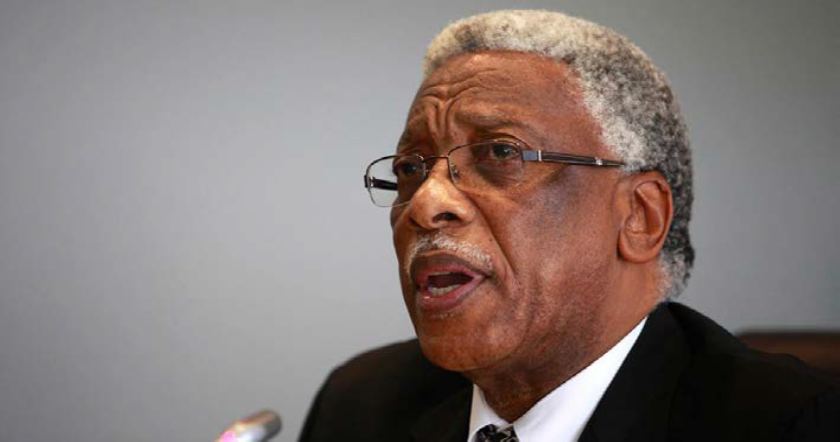

Frustrations also flared during cross-examination, with Mbenenge frequently reading from his affidavit instead of answering directly, leading to repeated requests for simpler, more concise responses.
On Thursday, 10 July, the tribunal concluded this phase of proceedings and announced that it would reconvene on 21 and 22 October.
Once complete, the panel will deliver its findings and recommendations to the Judicial Service Commission, which will determine whether Mbenenge is guilty of misconduct.

