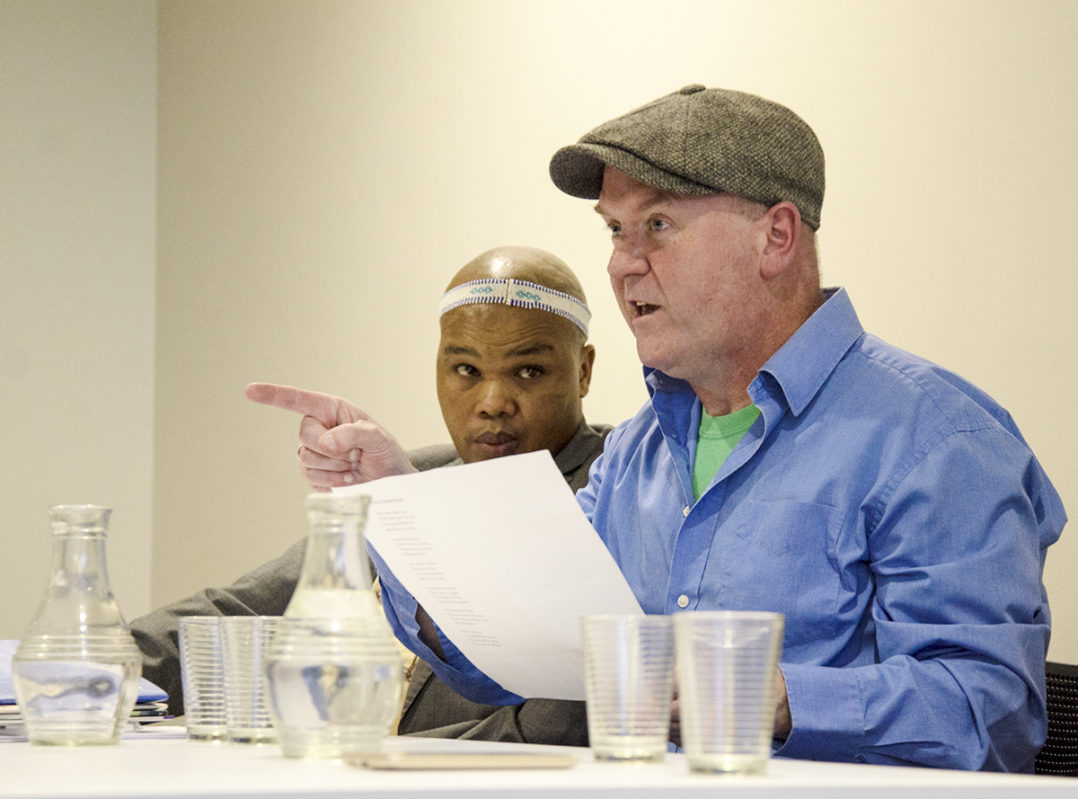
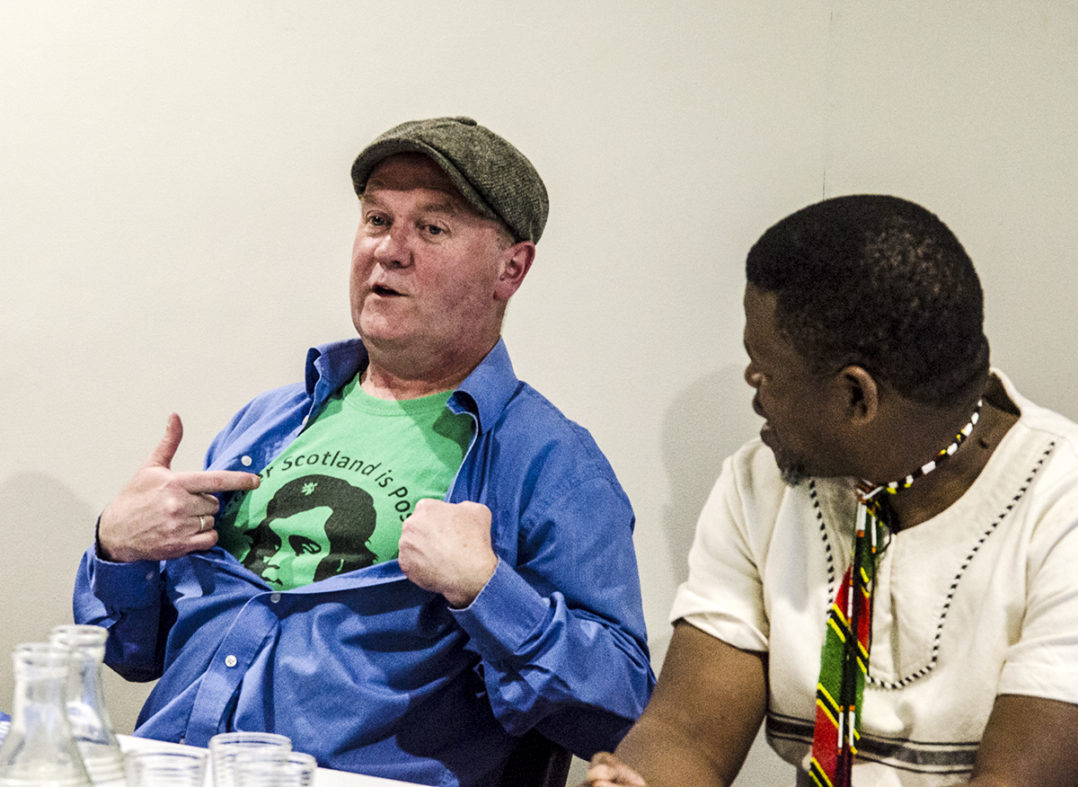
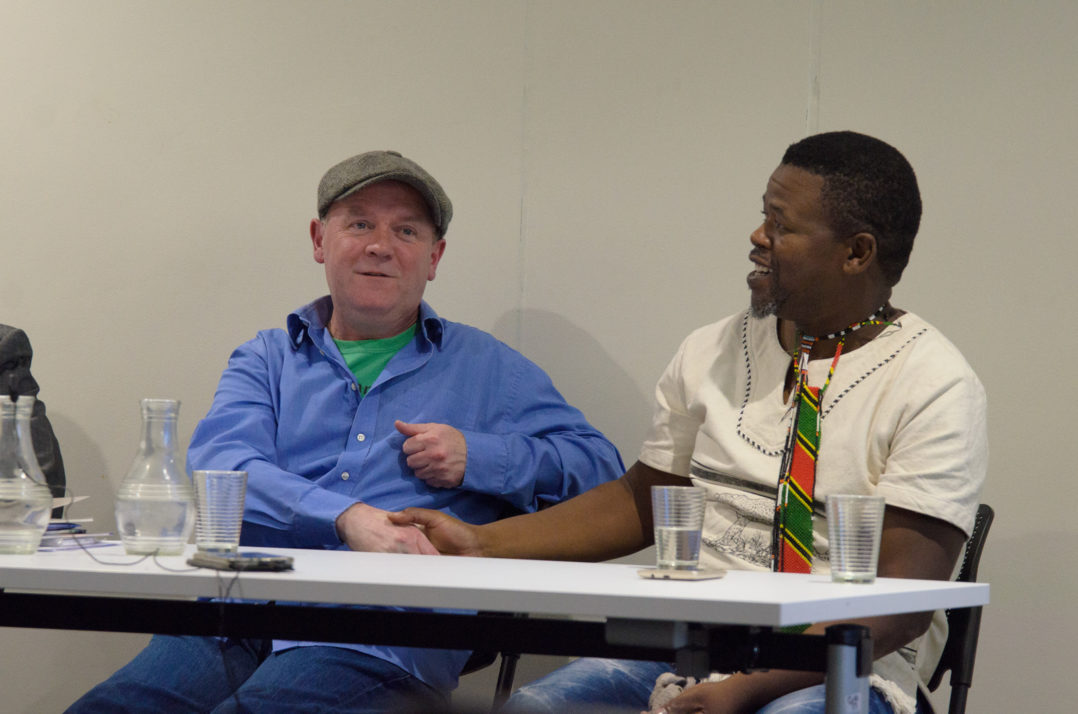
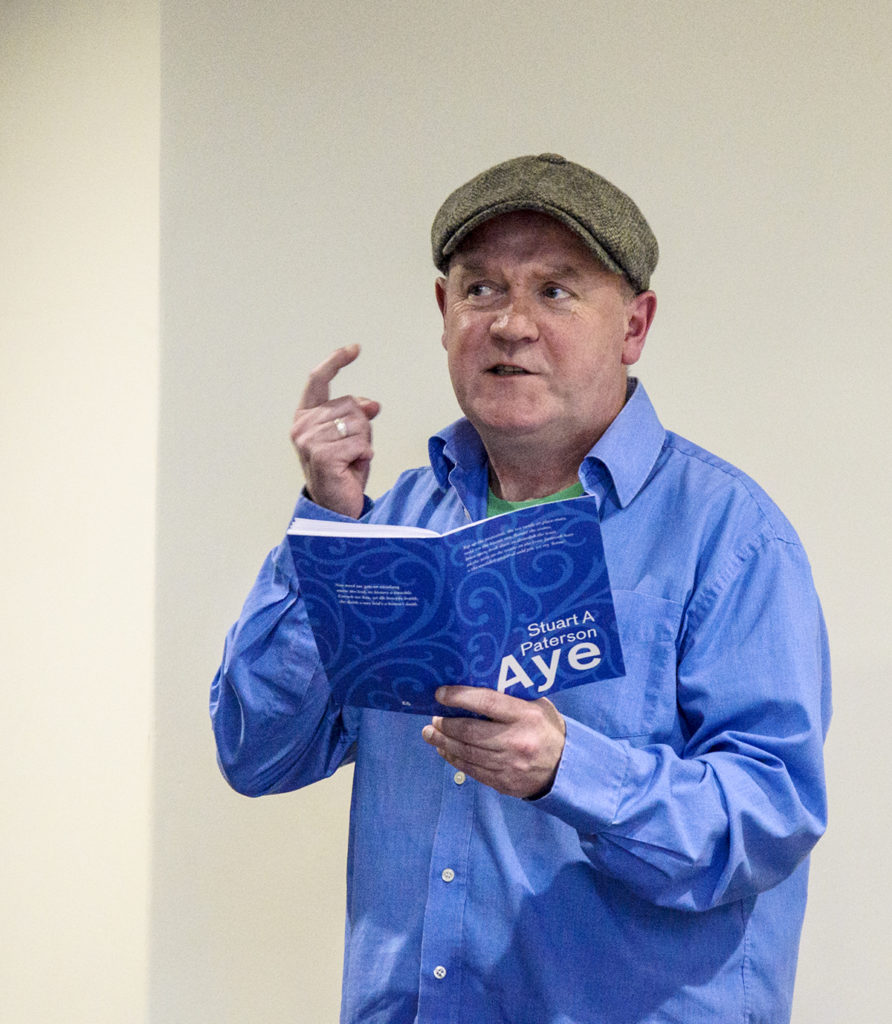
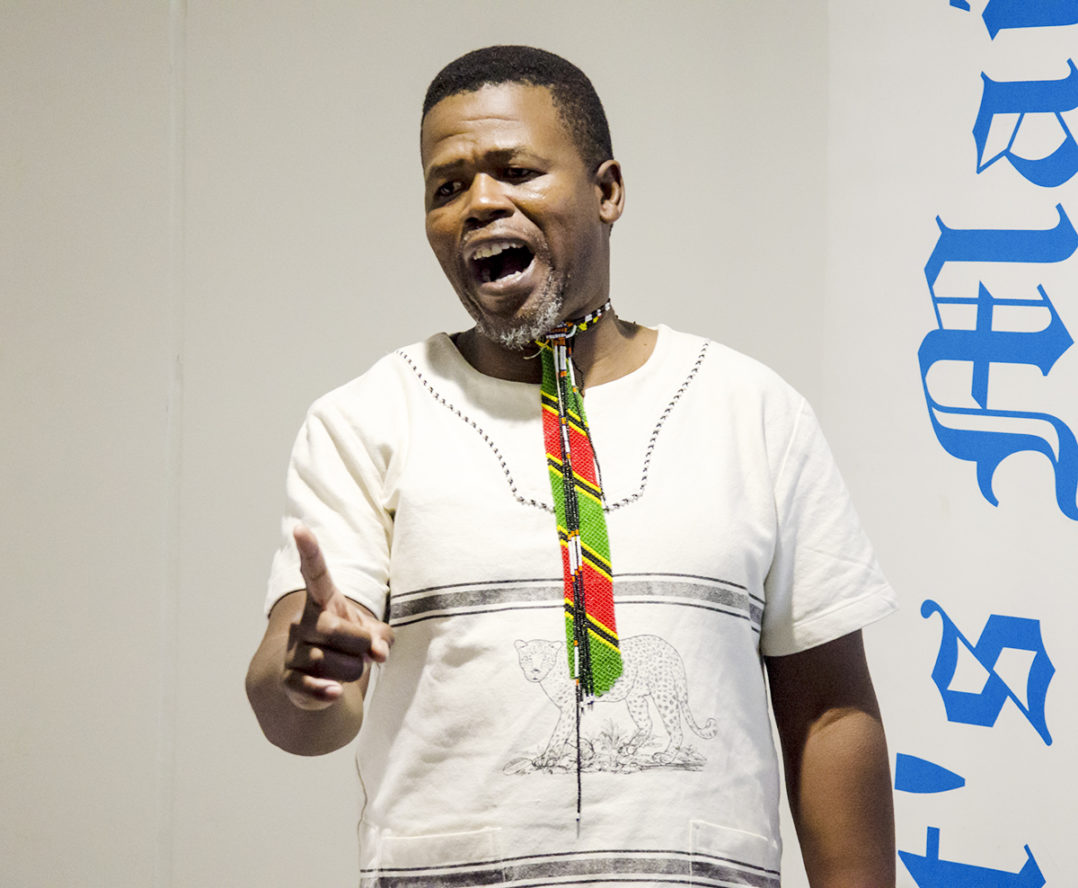
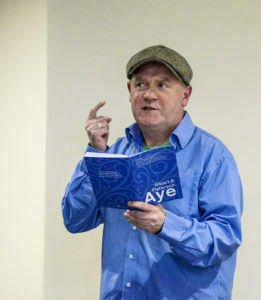
Scottish poet Stuart Paterson reads a poem at the Amazwi/ Grocott's Mail 'Scots meets isiXhosa' pop-up poetry cafe at Amazwi on 7 June. Looking on is Makhanda poet and imbongi Mandla Dyakala. Photo: Tom Jeffery
By HARRY OWEN
As part of Grahamstown’s contribution to the International Year of Indigenous Languages, 2019, a superb collaboration between Amazwi, the South African Museum of Literature (formerly NELM) and Grocott’s Mail took place on Friday 7 June.
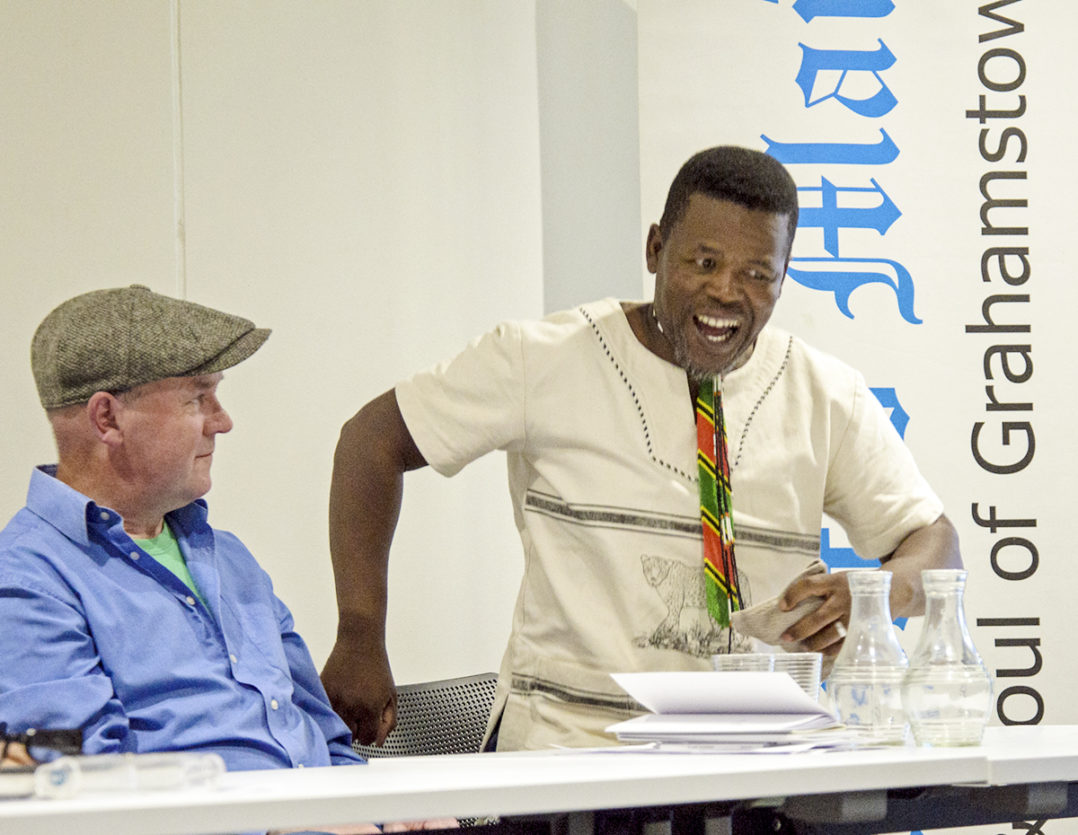
Visiting award-winning Scots language poet Stuart Paterson was filmed in conversation with imbongi Dumisa Mpupha as they shared observations about their work, their mutual passion for language, for poetry, and their activism in promoting their own languages, Scots Leid and isiXhosa.
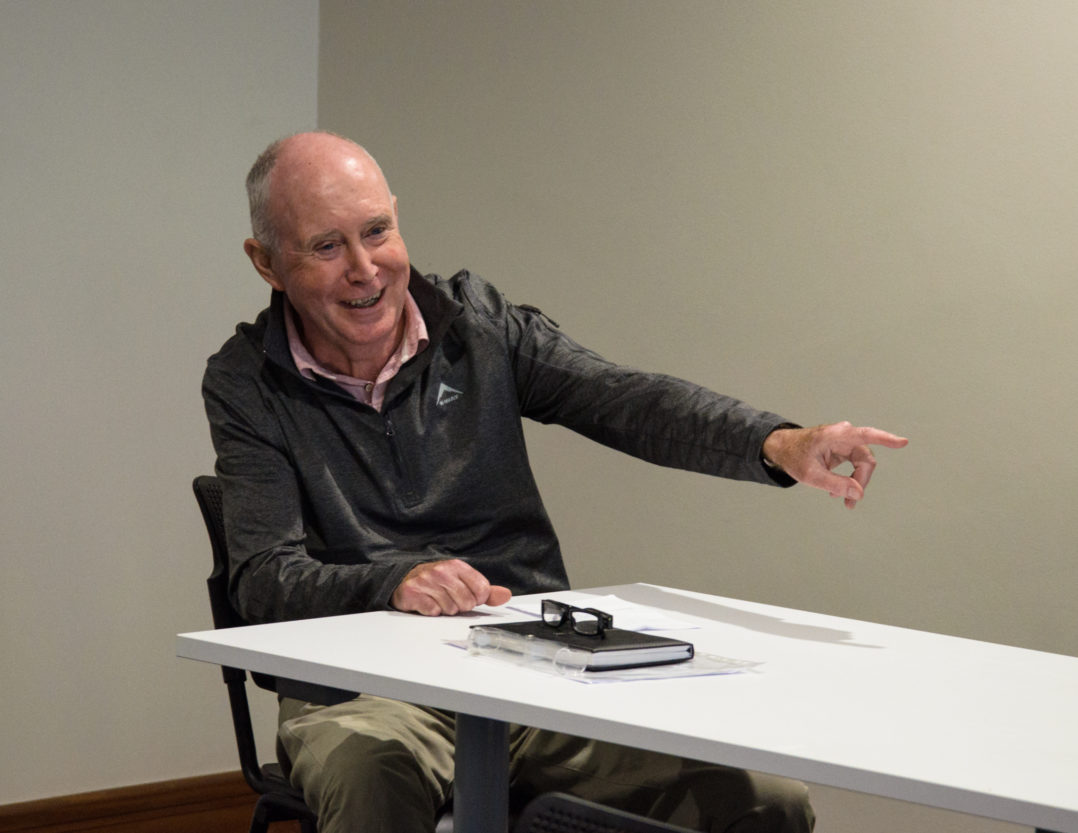
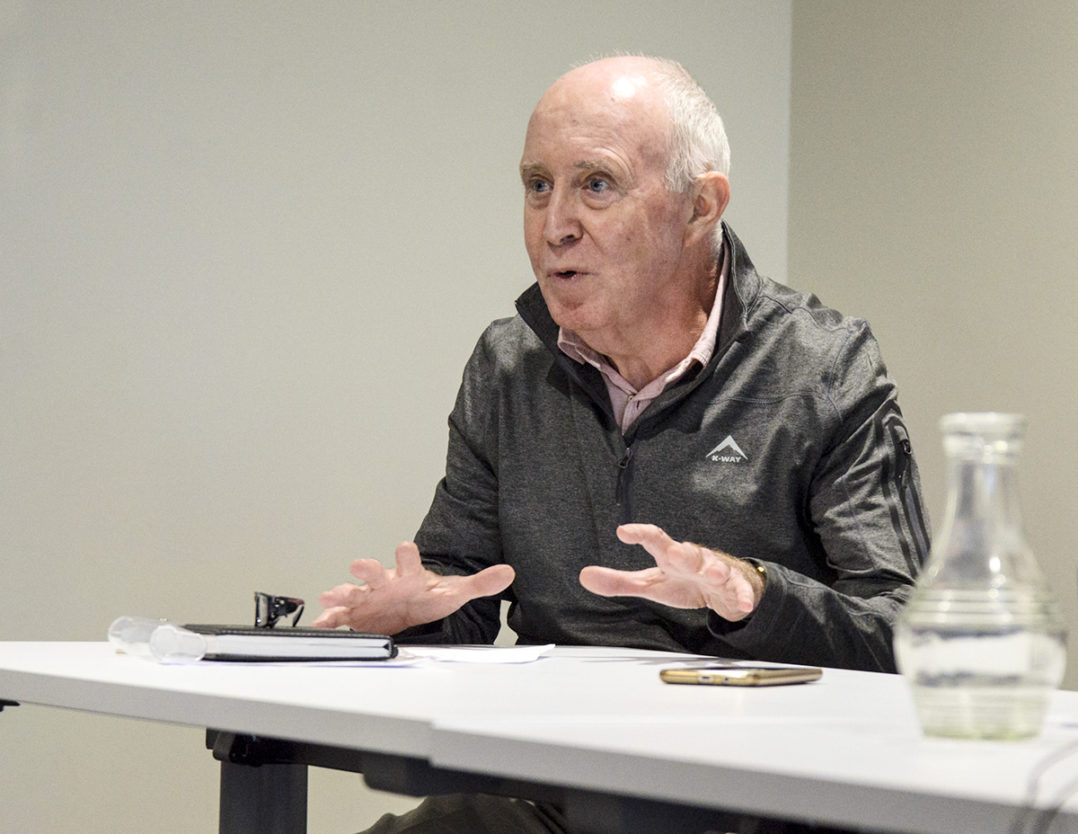
Stuart Paterson, from Galloway in South West Scotland, has been working at various places locally for the past couple of weeks, including on Rhodes University’s MA in Creative Writing and (naturally!) at St Andrew’s College, where he was greeted by their pipe band. He writes both in Scots and in English and is passionate about the power and value of his own language, the language he grew up speaking.
PHOTOS BY TOM JEFFERY
Poetry Amazwi_TomJeffery_2_WEB
Poetry Amazwi_TomJeffery_4_Dudu Saki_WEB
Poetry Amazwi_TomJeffery_5_WEB
Poetry Amazwi_TomJeffery_6_Mandla and Stuart_WEB
Poetry Amazwi_TomJeffery_9_together
Poetry Amazwi_TomJeffery_10_Harry
Poetry Amazwi_TomJeffery_11_with Azlan_WEB
Poetry Amazwi_TomJeffery_12_Mandla Dyakala_WEB
Poetry Amazwi_TomJeffery_13_WEB
Poetry Amazwi_TomJeffery_14_Stuart_WEB
Poetry Amazwi_TomJeffery_Dumisa_WEB
Makhanda imbongi Dumisa Mpupha at the Amazwi/ Grocott’s Mail ‘Scots meets isiXhosa’ pop-up poetry cafe at Amazwi on 7 June. Photo: Tom Jeffery
Grocott’s columnist and imbongi Dumisa Mpupha, well known in Grahamstown/Makhanda, is equally passionate about isiXhosa, his own indigenous tongue, the language in which he composes and delivers his own powerful poetry. His thoughtful, erudite reflections on the importance of isiXhosa as a means of expressing elements of his own upbringing and cultural background provided stimulating and thought-provoking insights for everyone fortunate to have been part of the audience.
This ‘Pop-up Poetry & Conversation’ at Amazwi had promised to be a rich and vibrant occasion, and it more than lived up to its billing. Featuring imbongi Mandla Dyakala and supported by local poet Dudu Saki (who also served as translator when necessary), the conversation ranged over a wide spectrum of fascinating topics, including history, culture, music, family, political activism and differing world views.
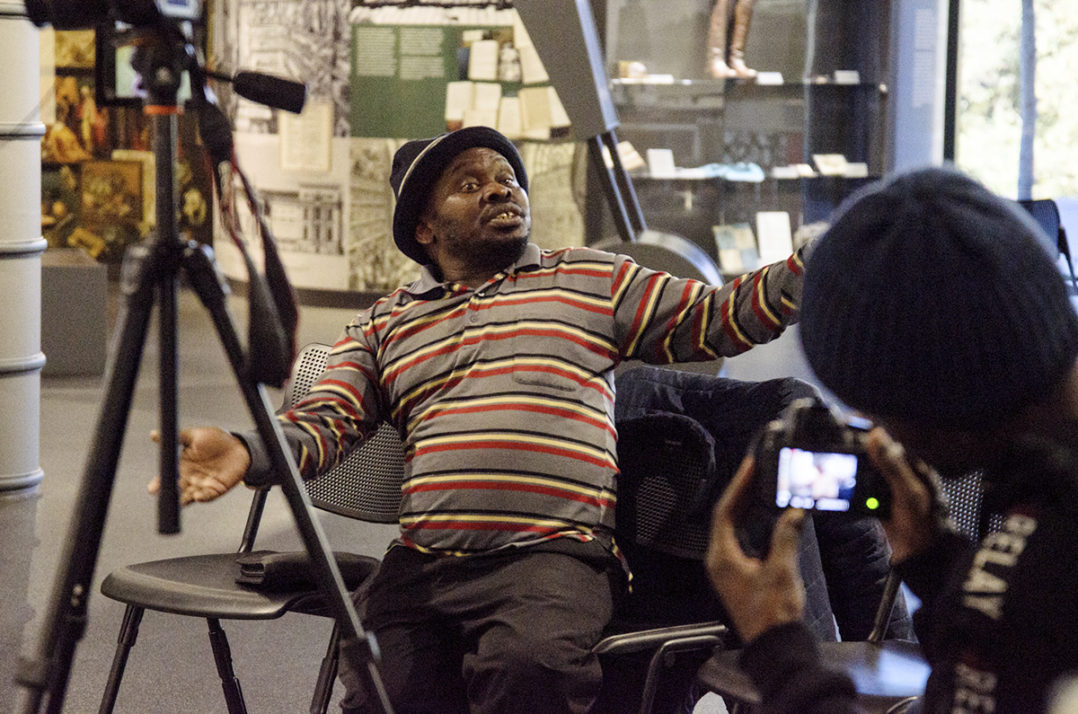
At one point, too, filmmaker and editor Azlan Makalima emerged from behind his camera to add a powerful demonstration of how his poetry – specifically rap – has empowered him to escape dark forces that might otherwise have overpowered him.
It is fair to say that Paterson had never before encountered the sudden, loud effervescence of first Mpupha and later Dyakala as they launched into spontaneous praise poems of genuine force and authority. But it was magnificent. Neither had the local poets ever been exposed to renditions of poetry in Scots, and this too was wonderful to encounter, for the abiding message was not of difference but of similarity. These poets in fact have much in common – as we all have – and we need to celebrate this.
So the coming together of such varying traditions and cultures through the medium of a shared language – that of poetry – made for a truly uplifting and enjoyable occasion. Let us hope that this heartening and inspiring event proves to be the first of many.
WATCH THE VIDEO HERE:
Poet and language activist Stuart Parterson, from Glasgow, Scotland, at the Amazwi/ Grocott’s Mail ‘Scots meets isiXhosa’ pop-up poetry cafe at Amazwi on 7 June. Photo: Tom Jeffery
Here is a Scots language poem by Stuart A. Paterson, with its English translation:
MUNE
The mune sclims heich abuin ilk biggan,
howff an yillhoose, croft an midden,
shawin itsel as thur things micht
in oorie broukit rigs o licht.
The mune sclims pechin heich abuin
the braes o Sancher. Faur ahint
noo’s yillhoose, fowk an howff an toon
whae dinnae tent sic things as mune
nor brae nor muckle tuimit lands
atween thursels an mair nor strand,
an pray tae gods an coorie doon
ablo thon ithergait o mune.
MOON
The moon climbs high above each building,
meeting place and pub, smallholding and rubbish dump,
showing itself as these things might
in strange broken rows of light.
The moon climbs breathing heavily above
the slopes of Sanquhar. Far behind
now’s pub, people and meeting place and town
who don’t pay attention to such things as moon
or slope or large strange lands
between themselves and moor and beach,
and pray to gods and hunker down
below that otherwise of moon.
Grocott's Mail Contributors includes content submitted by members of the public, and public and private institutions and organisations - regular and occasional, expert and citizen, opinion and analysis.