


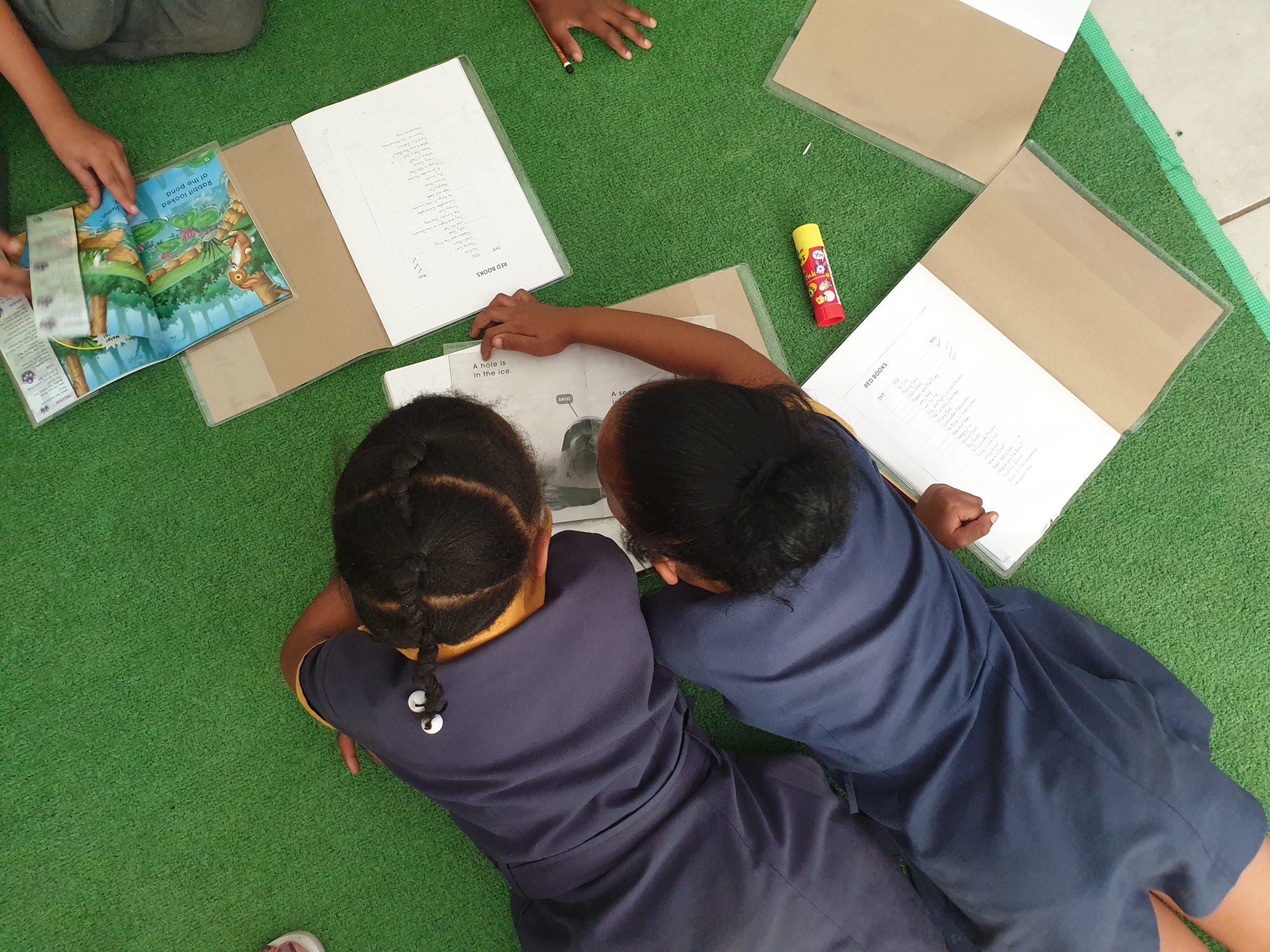
Madeleine Schoeman and Priscilla Glover are two retired Makhanda principals who had a transformative impact on their schools. They are standing up to the Eastern Cape Department of Education in a historic lawsuit that could improve the educational outcomes of millions of learners in no-fee-paying schools. Laney van Wyk and Rod Amner report.
Two of Makhanda’s most successful school principals are key to a case against the Eastern Cape Department of Education (ECDOE), which is scheduled to be heard in the Makhanda High Court in March 2026.
Madeleine Schoeman (former principal of Ntsika Secondary) and Priscilla Glover (retired principal of Tantyi Primary) are exposing how the department has systematically withheld almost R5 billion from the province’s poorest schools since 2020.
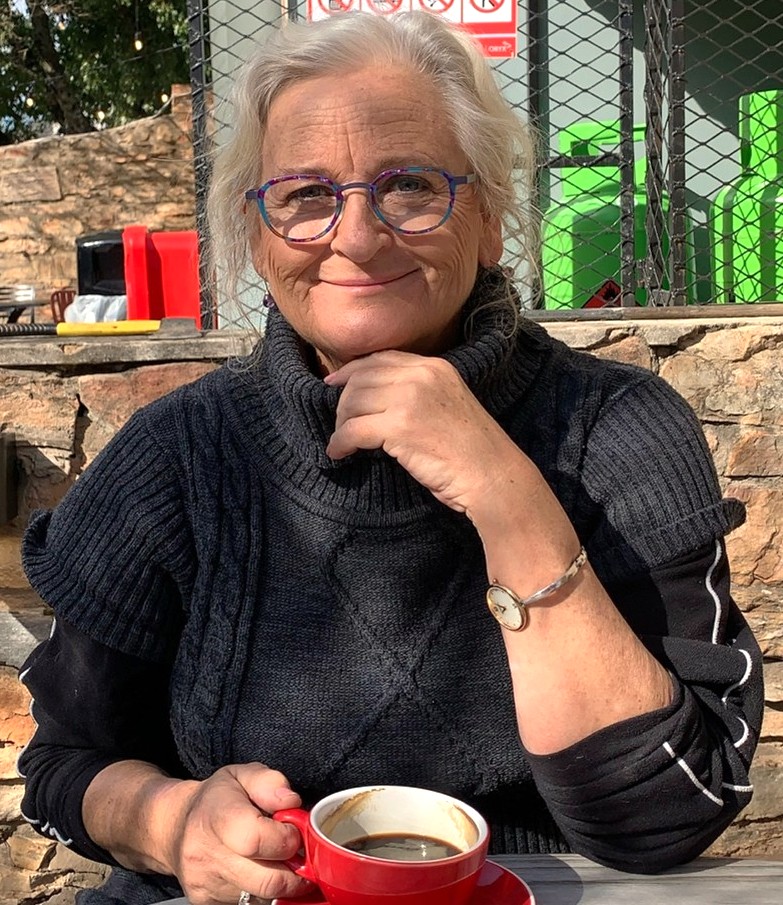
From the start of the COVID-19 pandemic, both women noticed that their school budgets were decreasing. Every year, the Minister of Basic Education sets per-learner National Norms and Standards for School funding. In 2020/21, the amount was R1 390, but ECDOE budget allocations were slashed to 78% of the mandated amount. By 2021/22 and 2022/23, the allocations had plummeted to 50-53% of the set minimum.
When Glover and Schoeman discovered that for the 2023/24 financial year, the Department had budgeted just 38% of the required mandated amount, they had had enough. They reported the situation to the Makhanda Circle of Unity, and in early 2023, the Legal Resources Centre (LRC) was called in to begin taking legal action against the ECDOE.
The ECDOE made a sudden about-turn and announced that it would release additional funds for the 2023/24 school budgets – but, this was still just 66.25% of the mandated amount.
The pattern was repeated in 2024/25, when an estimated R932 million was held back, ostensibly for “centralised procurement”.
The applicants in the case, Ntsika Secondary, Tantyi Primary and PJ Olivier High School governing bodies (SGBs), argue that the retention violates Section 29 of the Constitution, which guarantees an “immediately realisable” right to basic education, and the South African Schools Act, which requires complete transfers to SGBs.
Acting Head for the Department of Education, Sharon Ann Maasdorp, defended the retention, claiming economies of scale, cost savings, and better delivery; however, there’s no evidence that these savings materialised, and the applicants maintain that the nearly R5 billion retained by the Department wasn’t even spent on the centralised procurement she described in her affidavit. Where did this money go? What was procured exactly? From whom? Did it meet the learners’ needs?
Did the money go to ghosts?
The Eastern Cape isn’t the only province to have held back funding from its poorest schools. The KwaZulu-Natal Department of Education has failed to increase its per-learner subsidy since 2015, thereby withholding an estimated R9.2 billion over the past nine financial years.
A recent audit in that province revealed thousands of “ghost employees” and “ghost learners”. The head of the education has committed to opening criminal charges against both ghost workers and the officials on the PERSAL (payroll) system who facilitated the fraudulent payments. KZN Finance MEC, Francois Adrianus Rodgers, said that removing ghost employees could save the department up to R1 billion a year, which could substantially close the school funding gap.
Following the KZN example, the ECDOE is now involved in the nationwide audit of “ghost workers/learners” being co-ordinated by the National Treasury and the Education Labour Relations Council (ELRC). Confirmed figures for the removal of ghost workers and the recovery of money are still pending.
Seven provinces allocate roughly the mandated amount to their schools as a matter of course. The Eastern Cape and KwaZulu-Natal are the only provinces with delinquent records.
Principals paid from their own pockets
Schoeman and Glover said they both subsidised their schools’ operations with their own salaries and pensions. Schoeman and her husband became unofficial school sponsors during her 12-year tenure at Ntsika, funding everything from student meals to infrastructure improvements. Under her leadership, Ntsika’s matric pass rate soared from a dismal 29% in 2012 to an extraordinary 87% by 2016, achieving results that matched those of fee-paying schools despite receiving only a fraction of the mandated funding.
“How can you live with yourself?” Schoeman demands of ECDOE officials in her affidavit. “It really is unconscionable when you know there are children who didn’t get food or proper education because of you.”
Glover’s testimony reveals a similar pattern of personal sacrifice at Tantyi Primary. Along with other committed staff, she found herself buying basic supplies, subsidising substitute staff, extra food and transportation with her own income.

The funding crisis has created a culture of fear and caution among school leaders. “We are not allowed to strike or speak ill of the department because we are the representatives of it,” Glover said. “We are scared to be on the wrong side of it – you can’t complain a lot; at worst, you are at risk of losing your job. It would be so much more constructive to fully engage the most important role players in education, including principals, in decision-making.”
The legal showdown
The principals’ evidence in the case is particularly damning because it comes from successful principals who achieved excellence despite the system, not because of it. Schoeman’s Ntsika achieved a 41% bachelor pass rate in 2022, equalling that of fee-paying Graeme College. Glover protected teaching time at Tantyi despite resource constraints. “You can’t budget for the next year with no idea of what you will be getting,” Schoeman explains in her testimony, outlining how the unpredictable funding makes it impossible to run schools properly.
The case, represented by the LRC’s Cecile van Schalkwyk, has a hearing set for March 2026.
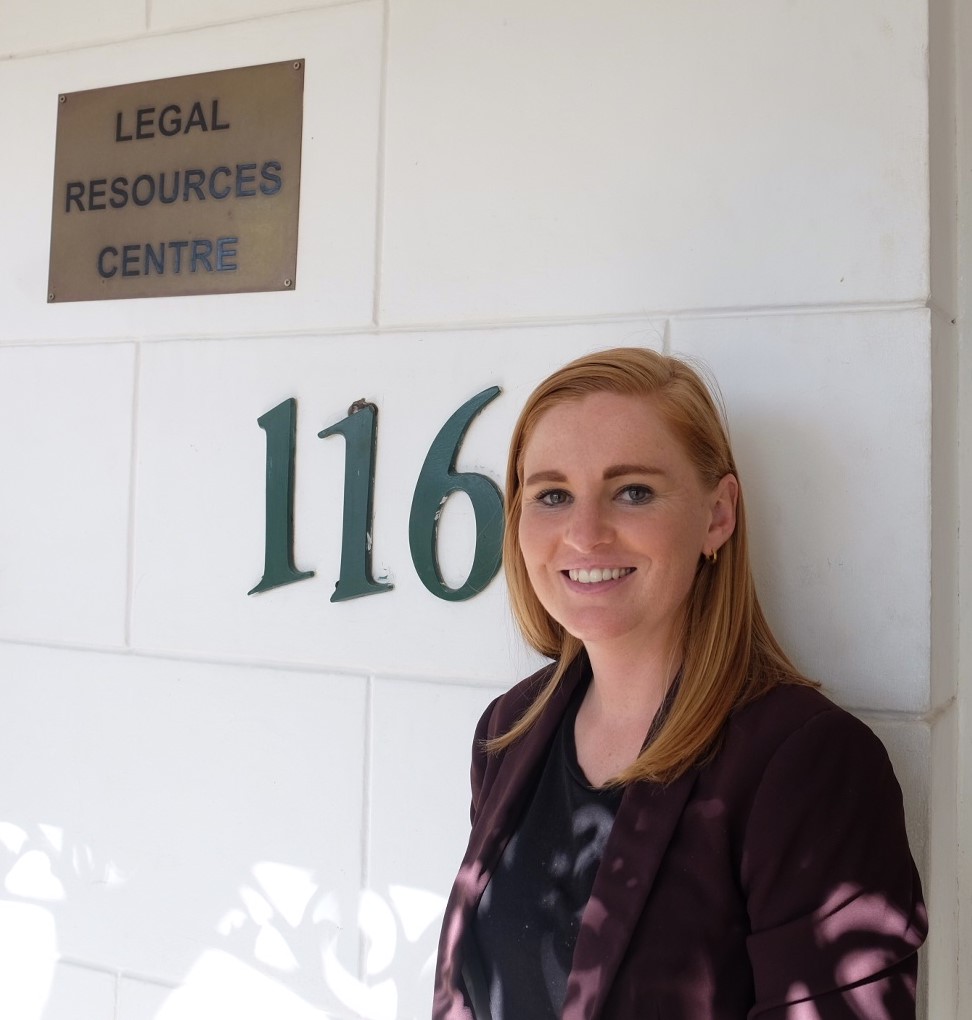
The Legal Resource Centre’s Cecile van Schalkwyk is representing the Makhanda Circle of Unity and three local school governing bodies in their challenge to the EC Department of Education’s persistent underfunding of its fee-exempt schools. A hearing is set for March 2026. Photo: Rod Amner
‘Give schools the money!’
“Give the schools the money!” Schoeman demands. “If the schools are not doing what they should be doing, then put them on the list of the ones who cannot get the full amount and do procurement for them. But for schools that are well run, give them the full amount of money.”
Glover adds a democratic dimension: “It would be so much more constructive to fully engage the most important role players in education, including principals, in decision-making. Decentralise – give us the budget in money, and we will buy the books. Don’t make decisions for us on how to run schools. We are audited every year anyway, so if there’s funny business, it will be picked up.”
What R5 billion could have bought
The principals’ testimony reveals the opportunity cost of the retained funds.
The R5 billion could have:
- Established high-quality, multilingual classroom libraries with 100 books in all 16,950 foundation phase classrooms in the entire province (costing just R340 million or 7% of the retained R5 billion).
- Funded teacher support programmes across the province.
- Provided adequate stationery and learning materials for every child.
Schoeman places this crisis in historical context: “In 1994, a white child in a Model C school was getting around R1 700 a year for education. So we needed to get everyone to the same level – I fully understand that. But what happens is that after all these years since 1994, we still haven’t reached the level of a white child, and that is inadequate.”
Adjusted for inflation, that R1,700 would be worth over R9,596 today. Eastern Cape school children currently receive around R1 000 per learner per year, which is just over one-tenth of what white learners received in 1994.
- This story was produced under the Between the Lines series with financial support from the Henry Nxumalo Foundation.
