


By Benevolence Mazhinji
A powerful evening of solidarity and compassion unfolded last week at Voices for Peace, a fundraising event held for a Rhodes student stranded in Gaza.
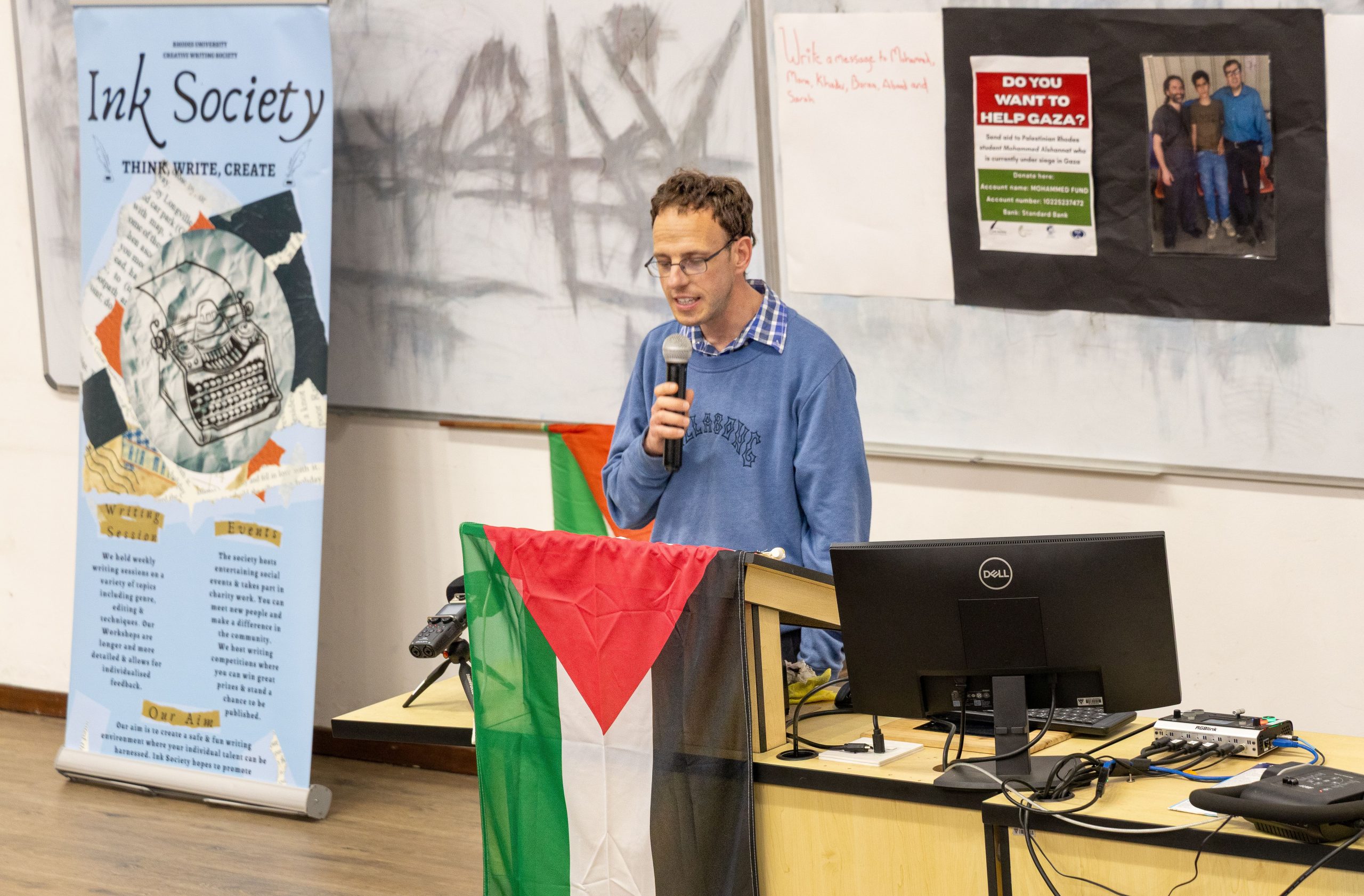
The gathering on Saturday 27 September was made possible through the collaborative effort of the creative writing club, Ink Society, the Journalism and Media Studies department (JMS) and the Rhodes Muslim Student Association. “Tonight, we have come together as the Rhodes student body to support and send aid to our fellow student Mohammed Alshannat who, along with his family, is under siege in Gaza,” said Nia van Niekerk, chairperson of Ink Society.
Alshannat’s supervisor, Dr Ian Sieborger, began with a heartfelt speech about his student who was just four months away from submitting his thesis for examination when the October 2023 attacks began. “I wish you could all have the privilege of meeting Mohammed Alshannat, my PhD student who has become my teacher and friend, so I’m going to let Mohammed tell you his story in his own words as far as possible using documents and messages that he’s sent to me.”
Alshannat’s struggle for survival includes being displaced more than 10 times. He described living in a street tent for over 700 days, losing his olive farm and watching his home and entire neighbourhood being erased from the face of the earth. His family’s current plight is life-threatening, facing the potential end of their lives instantly by a missile strike or slow death due to starvation. “I have survived a hellish starvation, losing over 35 kilograms of my body weight.”
Despite enduring catastrophic loss and injury, Alshannat’s messages conveyed a deep and remarkable commitment to non-violence and reconciliation. “I am more committed than ever to a path of love and forgiveness for all. May God extend grace to those who know not what they do,” he wrote.
The brutal realities Alshannat described in his letters demand to be written and documented by journalists, artists and the poets of our generation, according to keynote speaker Dr Faisal Suliman. He stressed that writers and journalists carry a responsibility to make visible the hidden structures that uphold injustice. This responsibility, he said, is particularly urgent in Gaza, where silencing reporters and restricting narratives has become part of the conflict itself. “Our job is to be for the truth no matter who tells it and no matter who it is for or against,” Suliman said.
In this context, the simple act of writing, of insisting on detail, of naming names and of describing what has been destroyed becomes an act of resistance. That resistance found its sharpest expression in the poems read that evening by members of Ink Society. Several poems interrogated how the war in Gaza has been compressed into soundbites and stripped of its rawness.
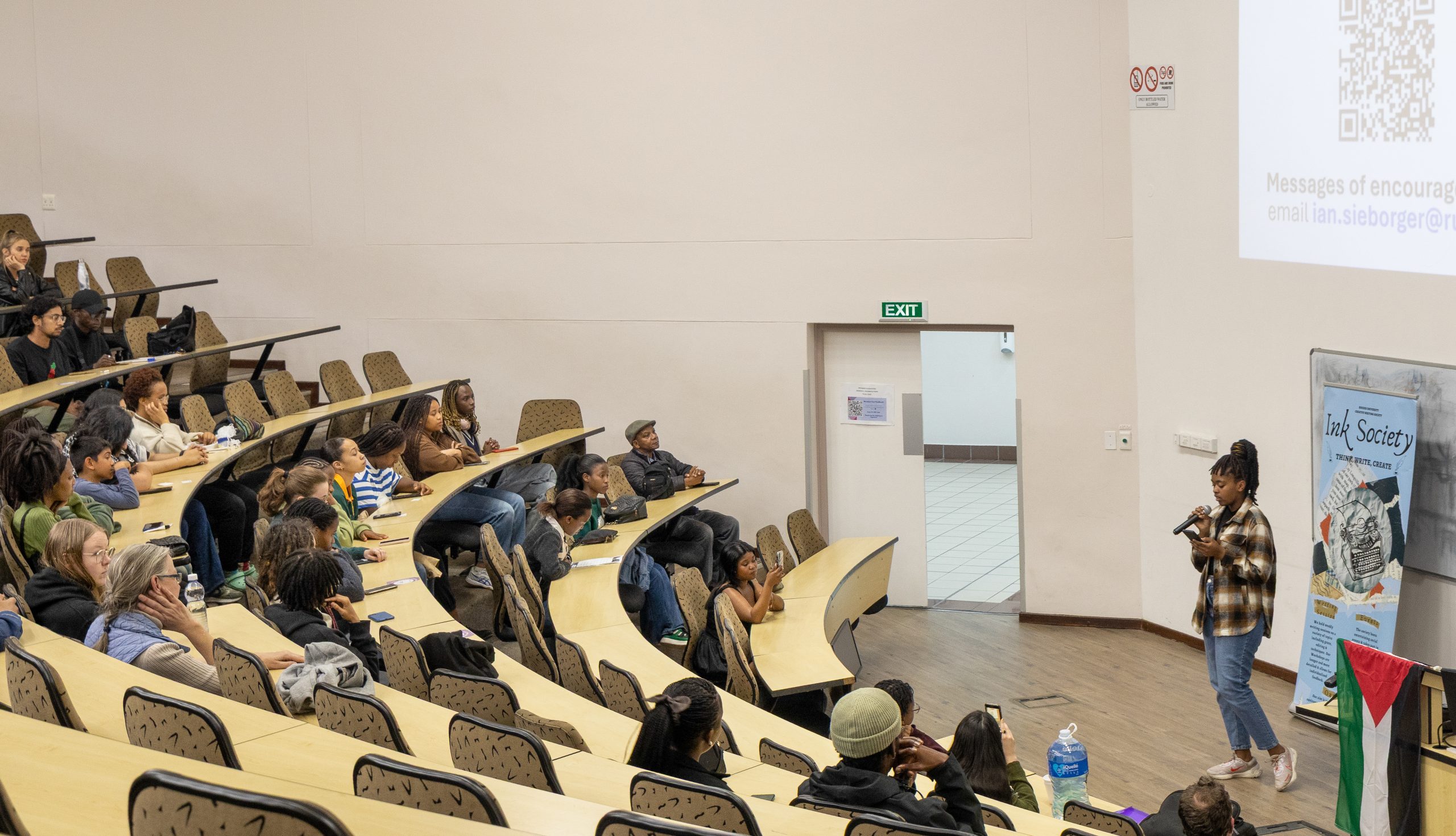
Documentary film screening
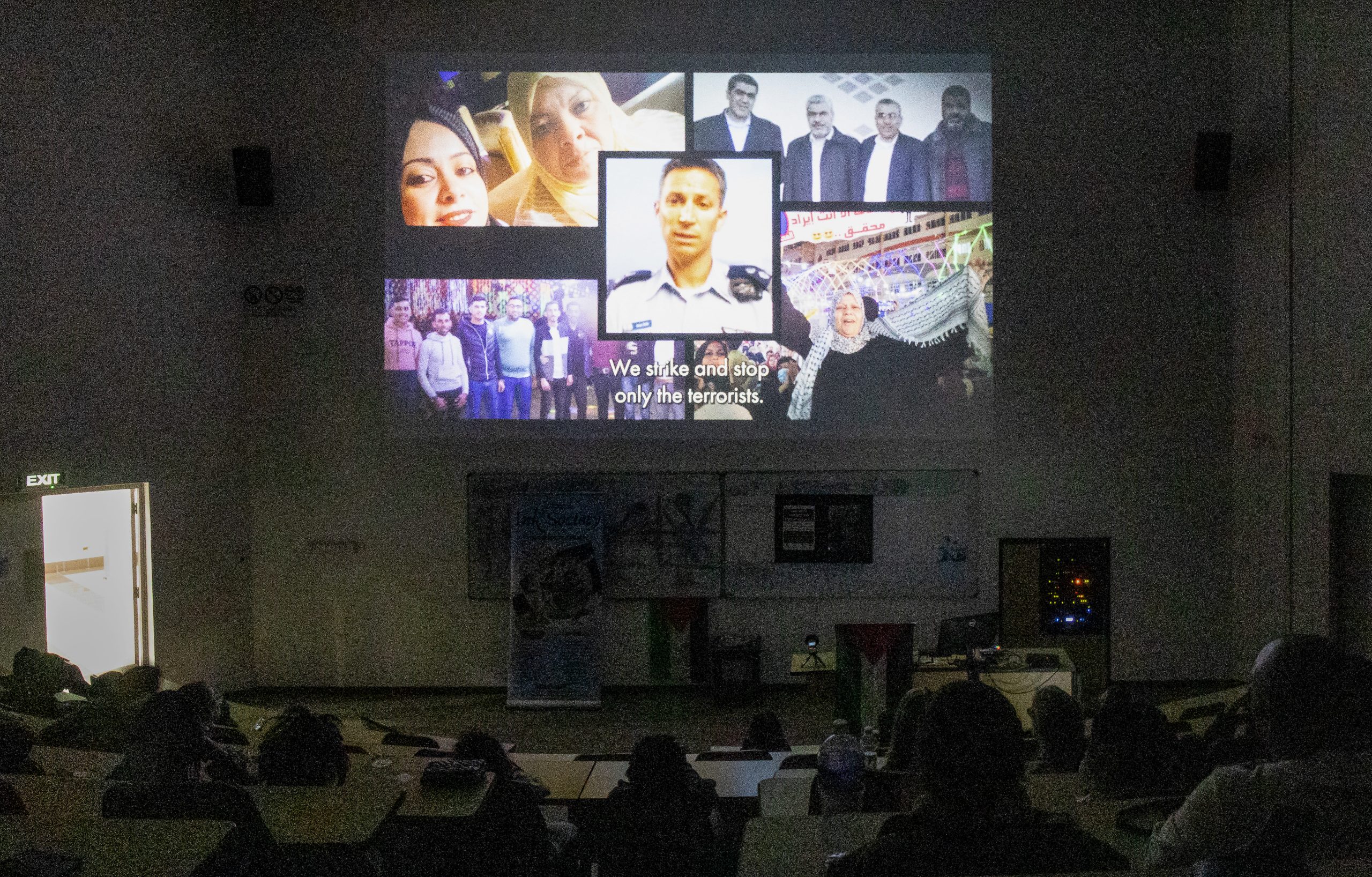
Following this pattern of resistance, Journalism and Media Studies student Chalotte Mokonyane has taken up the task of raising awareness about the deliberate targeting of journalists in Gaza. As part of her current coursework project, she organised the screening of the documentary film, Gaza Journalists Under Fire, at the event. “This project is a committed return in journalistic ethics to bring the reality of the Gaza media crisis directly onto our campus,” Mokonyane said. Saturday’s event was “Phase 1, to educate and raise funds for the Rhodes PhD student from Palestine who desperately needs our resources.”
The documentary, produced by Brave New Films, traces in uncompromising detail the story of three journalists killed in Gaza among the 178 who were killed since 7 October 2023. “These are not just statistics, they are individuals,” said Mokonyane, “people with names, families and stories who knew the risk yet kept the cameras rolling.”
Voices for Peace concluded with students and staff members writing messages of hope to Mohammed Alshannat and his family.
