


By Asemahle Vumsindo
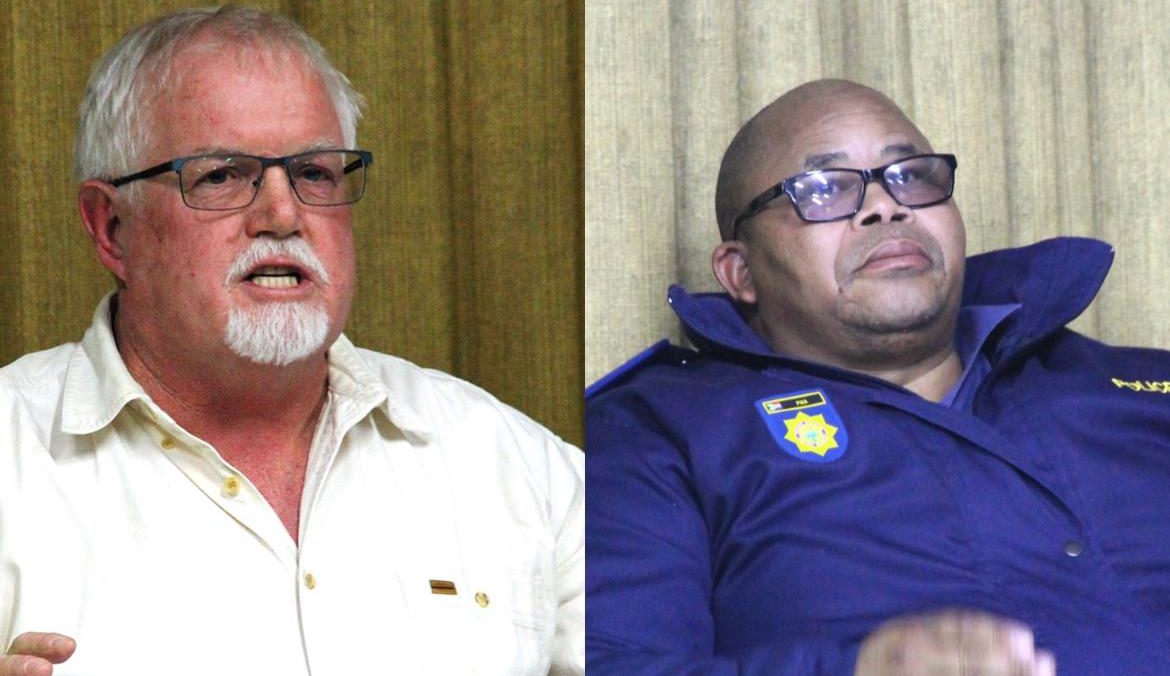
The Makhanda Community Policing Forum executive led by chairperson Andrew Kirk stepped down after completing its five-year term. The executive has spoken public about a breakdown in relations with the South African Police Service at the Makhanda station, describing the relationship with the station leadership as “hostile and toxic”.
They claimed that following an incident in August 2024 Station Commander Colonel Mbulelo Pika ordered the entire CPF executive out of the police station disrupting CPF activities and undermining years of partnership efforts.
According to the CPF’s resignation report, tensions began during the annual general meeting in August 2024, when the commander criticised Kirk for being out of the country for work, despite the executive having collectively agreed that he would continue in his role remotely.
The executive’s report described SAPS as failing to provide adequate support for key community safety initiatives, including high visibility patrols, school interventions, and monitoring of liquor outlets and scrap dealers. The report also highlighted weaknesses among SAPS sector managers and called for better training to ensure sustainable community engagement.
Facing these ongoing challenges, the executive closed the CPF bank account and returned the remaining funds to community partners who had previously supported CPF activities.
Kirk has also raised serious allegations in correspondence, claiming that certain SAPS members were protecting criminal activity in the town. He referred to scrap dealers, drug dealers, and undocumented foreign nationals, suggesting they were being shielded and described a “cyclic economy of crime” enabled by SAPS itself.
Warrant Officer Majola Nkohli, spokesperson for the police commissioner of the Eastern Cape, responded saying that the information provided by the former executive is not accurate. The SAPS member said the CFP executive had resigned at the end of their term. After resigning, they occupied a police station boardroom without notification and, because they were no longer official CPF members, were asked to leave the police station.
Nkohli said Kirk had been offered the option to remain involved in the CFP as a member rather than as chairperson of the CPF because of concerns that his remote participation was hindering the forum’s operations, attendance at meetings, and ability to carry out CPF functions. Nkohli said Pika was concerned that CPF operations might not run smoothly during Kirk’s absence.
He said the situation would be referred to the Civilian Secretariat of Police.
The CFP executive said they have escalated their concerns to the Civilian Secretariat of Police and the Department of Community Safety but the response has been slow and ineffective.
They expressed gratitude to private security companies and community members who supported their work over the past five years, highlighting their role as critical first responders in many local incidents.
The resignation of the entire executive leaves Makhanda without an active CPF structure, raising questions about how community policing will continue in the absence of a functioning forum.
