


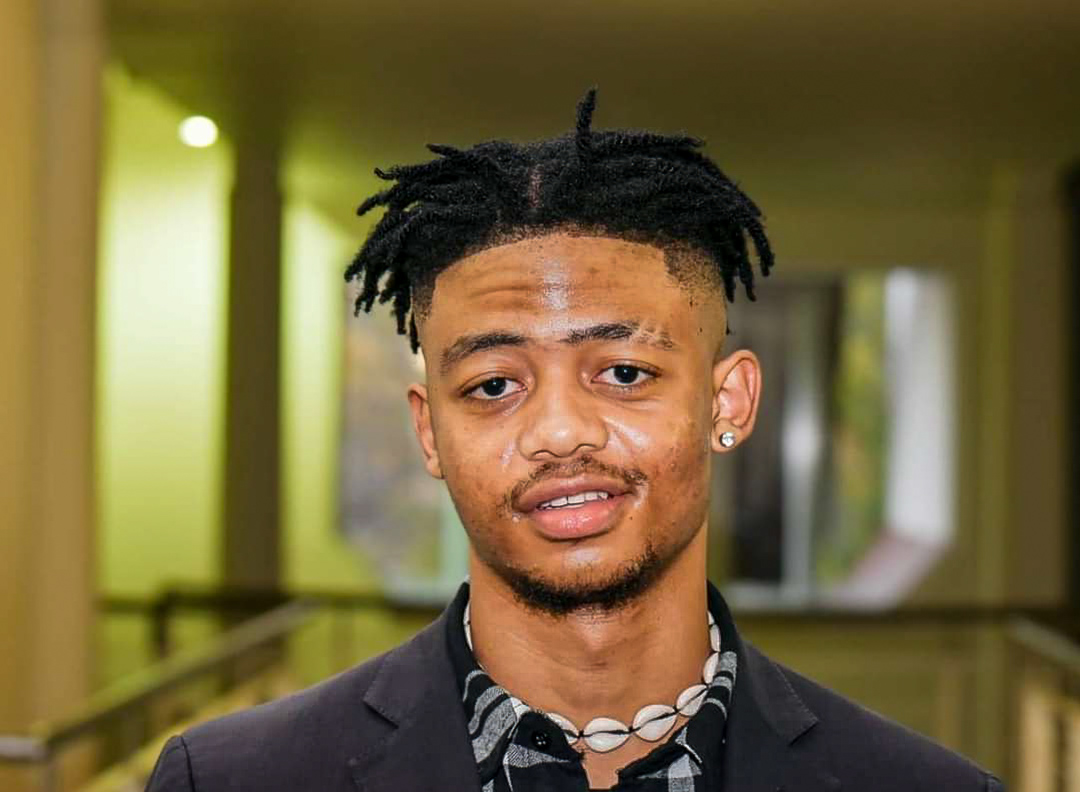
By Andile Mbesa
When I was little, I was a statistic waiting to happen, well on my way to becoming one of the four in five South African Grade 4s unable to read for meaning.
I was hesitant with the letters of the alphabet. Reading seemed like a superpower to me.
By contrast, Dylan, a dark boy in my class, wielded his reading superpower with ease.
I didn’t envy him. Reading was his domain – a world I hadn’t been initiated into.
Yet!
…
I’m seven. I am playing with my friends on the streets of Umlazi till the roads are pitch black, unbothered by my curfew, nor the fact that I have an ungodly amount of homework sitting there untouched.
On my way home, my heart beats faster and faster than a patient with diabetes as I finally gather the courage to enter my house.
The court was in session.
Before I can close the door behind me, my mother starts shouting, visibly furious. If I had drunk water in the last hour, I would be urinating right now.
On the bright side, my father isn’t here tonight; wetting my pants would be the least of my concerns if he were here.
My mother wastes no time. She checks my books and helps me with my homework. “Funda leli gama!” (“Read this word”). Pha, pha (Slapping sounds). My mother shouts, her usual soothing voice cracked in two with the sharp edge of a frayed bottom, losing the lullaby I had once known.
I tasted the warm scent of pap and stew, which turned bitter in my mouth as a shame flickered hot across my skin. My hands trembled above the book, and the letters failed to form the words. Each failure pricking anew like an open wound, adding a small tear in the fabric of my self-worth.
Reading was transfigured that night. It was not a skill, but a weapon wielded against my inadequacies and a symbol of my failure.
…
As I matured, I perfected the art of avoidance. Reading was not a magical world, but a weighty object, a whispered reminder of my inadequacy.
Dylan’s fluency contrasted with this profound absence in my life. What I had learned focused on more than just looking at those puzzling letters; it was also about the significance of fitting in, and most importantly, of avoiding the crushing blow of disappointment and the heavy weight of my mother’s disapproval.
School turned into a minefield. I perfected pretending to read while my eyeballs skittered across the words on the pages, my mind drifting to safer, more comfortable spaces. No one knew about this, so I kept it between me and the page. Studying at home was a form of torture. Unlike today, I always contrived impossible excuses to escape “study time”. I’d much rather walk along the dusty streets of Umlazi than delve into a book’s overwhelming, indecipherable pages. Even the thought of reading constricted my stomach in anxiety. Many years later, in the sixth grade, fate turned its nose up at me in the Natural Science project.
…
We have been tasked with preserving food and critically writing down what we do and how we do it. My cousin, Thando, is my group partner for this project; fortunately, my mother is around for guidance, and the three of us work side by side like bees in a hive. Everyone is clear about exactly what they need to do. However, the dreaded written part looms like a storm cloud over me. Describing the ingredients and shining a spotlight on my illiteracy sounds exceedingly nauseating.
Thando, God bless him, leaps into action. He takes hold of the pencil, fluent and assured, tracing letters that always felt like a foreign and inky tongue. I look on into the silent awe, this knot tightening in my gut — not for shame this time, but something else. A spark. A question. What if I could do this, too?
For the first time, I don’t just see reading as a hindrance; I see it as a link. It is not a sudden epiphany, no blinding revelation, but a shift — a soft, persistent whisper to keep going. Perhaps I don’t need to be on the outside anymore. Maybe, just maybe, I could learn to wield this power myself.
…
I started to read slowly, tentatively. Anything I could get my hands on — newspapers, magazines, even the backs of cereal boxes. And the fear passed into something more like tentative curiosity and feeble pride. The journey isn’t over yet. I feel its weight like all the waves of shame of those early years, reminding me of that fight. But I am no longer fleeing from the page. I am walking towards it, one word, one sentence, one story at a time. But the magic, it turns out, was never about talent. It was about courage, persistence and the slow, steady unlocking of the world through faith that I, too, would eventually master this superpower one word at a time.
