


By Benevolence Mazhinji
For decades, Sangoma was the only record by Miriam Makeba that Professor Tsitsi Jaji owned. It had not arrived in her life through a conscious pursuit or scholarly intention; instead, it was just a CD she had received in the 1990s through a subscription series, long before streaming replaced the ritual of opening a jewel case and placing a disc onto a stereo.
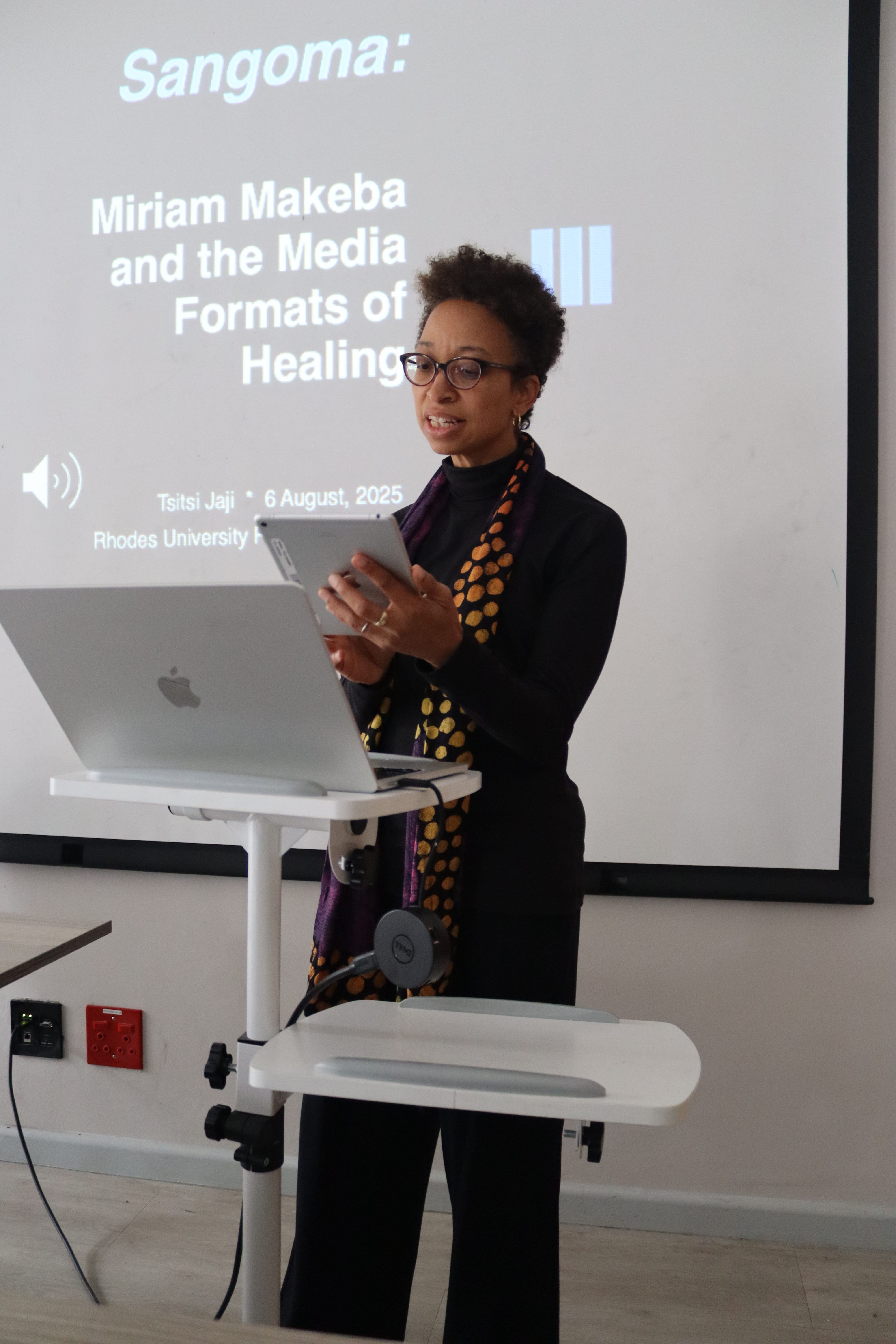
Jaji, speaking at the Confucius Institute this week, and a musician herself, said that she did not own many records at the time. Yet, this unassuming album would dramatically re-enter her life when a professor at Yale University invited her to write a book about it.
She said, “The contract for writing this book arrived in my email when my mother had just been put in the final transition point of hospice, and she passed away the next day. So, when you ask me about my personal connection to this album, it is quite literally matrilineal, it is spiritual, and it is important to me.”
Hearing her speak with such delicate vulnerability and even with glimmers of tears in her eyes expressed the embodied weight which the album held in her life during a season of long suffering. “When my mother was diagnosed and entered into hospice with late-stage kidney disease, I had this album as one of the things to listen to, it was exactly what I needed.”
Interestingly, the sonic lineage of Sangoma extends through the very act of artistic creation; it also comes from a place of grief because it was born after the death of Miriam Makeba’s daughter. The songs on this record are rhythms Makeba learned from her mother, which are grounded in healing rituals and spiritual traditions carried through sangoma practice.
In her seminar, Jaji reflected on how Sangoma, in both its sound and intent, becomes a powerful site of mediation. Not just in the technological sense of how music circulates, but in how music, voice, and memory serve as conduits between generations, between the living and the dead. The album, she said, invites us to listen with a kind of ancestral awareness and an attunement to the transmission of ancestral knowledge.
This transmission is deeply embodied because the song begins in the body, lungs pushing air, vocal chords vibrating, a mouth releasing sound, and in this way, the body becomes a media format. And Makeba, who often entered trance states while performing and sometimes had no memory of what she had sung, understood herself as a healer too, only that her medicine was music. Consequently, listening to this album becomes a way for Jaji to commune with her own mother and with the women who came before her.
To listen then, is not only to remember, but it is also to receive, and in receiving, we are called to respond. Jaji closed her seminar by saying, Miriam Makeba is not just a historical figure; she is a mother figure for this moment, and her music is a living frequency of resistance and remembrance. And when we sing, our voices too become vessels to honour our mothers, our grandmothers, and the ancestral lineages that carried us here. So, we must allow ourselves to be moved, and we must allow ourselves to be made porous.
Jaji is the Helen L. Bevington Associate Professor of Modern Poetry in the English and African/African American Studies departments at Duke University. She is also a senior research associate in the Department of Literary Studies in English at Rhodes University.
