By Gcina Ntsaluba
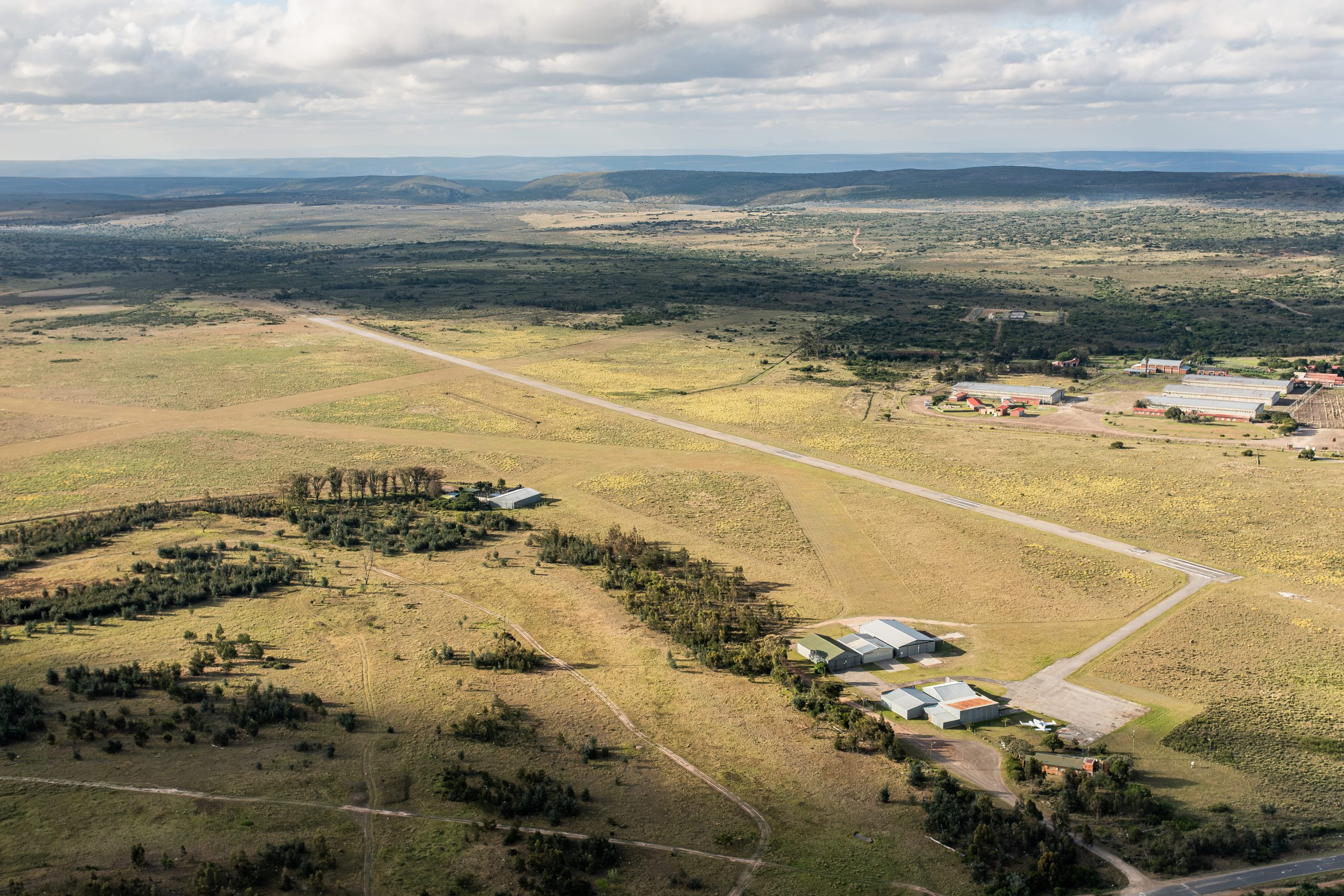
The Grahamstown Flying Club has raised urgent safety concerns over two major infrastructure projects that could jeopardise the continued operation of Makhanda’s only registered airfield and severely limit the city’s air access.
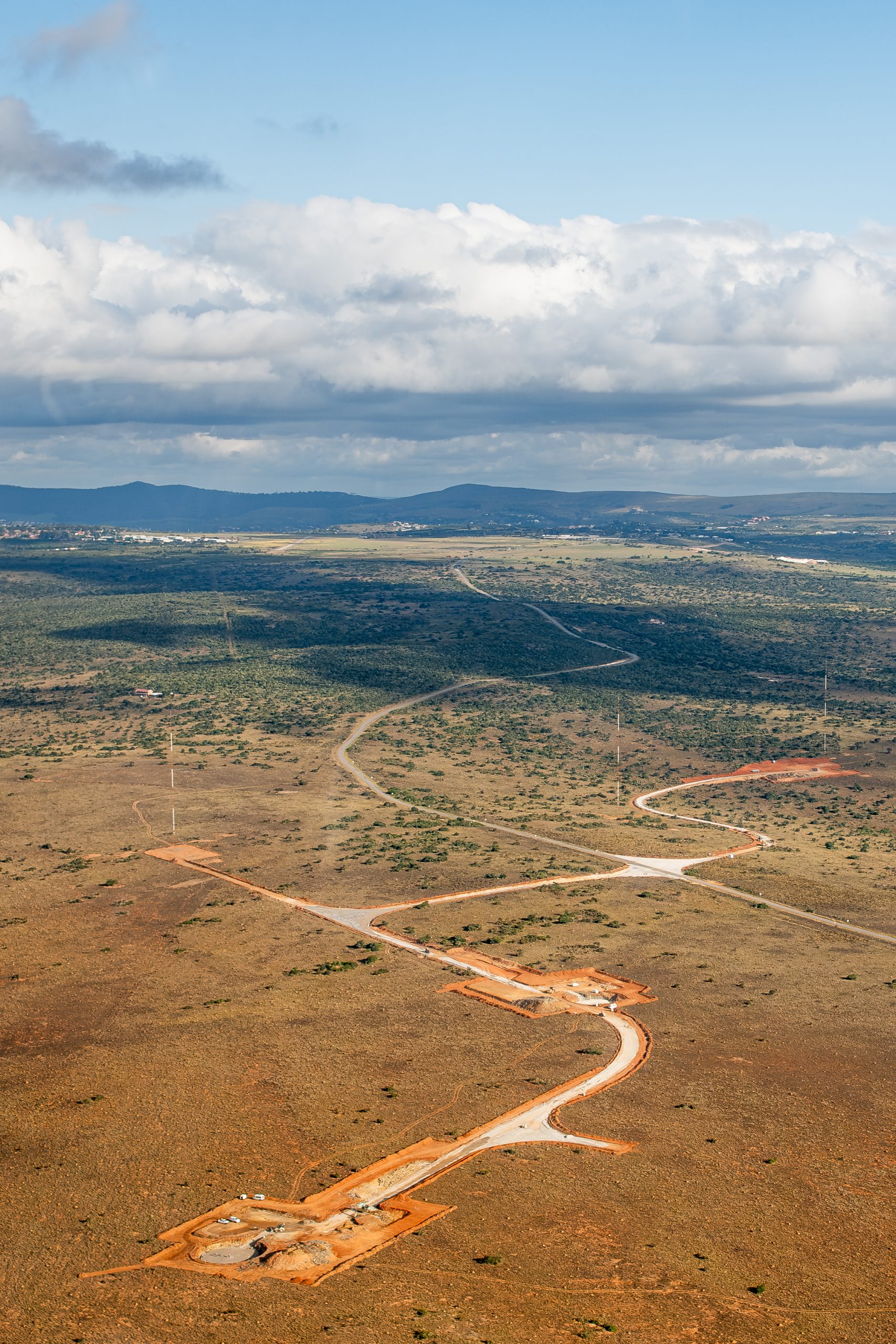
The club warns that a proposed wind farm development north-west of the aerodrome, featuring turbines reaching heights of up to 187 metres, combined with the Grahamstown 400/132kV Substation Integration Project, could effectively “sterilize” the airfield’s approach environment and compromise future safe aviation operations. Such operations include any expansion of the airfield for scheduled traffic, which would require greater compliance with aviation standards.
Boxed in
The height of the proposed wind turbines is roughly equivalent to a 60-story building, and 65 metres taller than existing turbines on the south ridge. Their planned positions puts them directly within the climb-out and approach corridors for two of the aerodrome’s runways.
“Turbines of that size are not only intimidating and a safety concern, but a moment’s distraction, an engine failure, or a problem can become unrecoverable because you are boxed in by 600-foot machines,” said Peter Cotterrell, a qualified flight instructor at the club.
“The electricity transmission project adds another layer of risk, with 40- to 60-metre pylons and suspended cables near runway thresholds -– infrastructure that is notoriously difficult to see, especially at dusk, in haze, or low cloud conditions,” said Bruce de Jager, a commercial pilot with over 15 000 hours of experience.
Learning by example
The club has pointed to several South African aviation accidents involving powerlines and similar obstacles. In 2021, a Zlin Savage Cub struck an Eskom line near Rietvlei, KwaZulu Natal (KZN), inverting and burning with one fatality. That same year, a Quad City Challenger II hit powerlines on approach at Wingfield Loch Vaal, causing serious injuries. Similar wire-strike incidents in Worcester (2010) and Alldays (2011) proved fatal.
“Every one of these reports tells the same story: you rarely get a second chance when powerlines and, by extension, turbines are in your flight path,” said Darren Olivier, club chairperson, adding that one of Grahamstown aerodrome’s three runways has already been decommissioned by the Civil Aviation Authority due to existing turbines on the ridge.
More at stake
The aerodrome serves far more than recreational aviation. Its users include emergency medical evacuation services, the South African Police Service, search and rescue operations, the Eastern Cape Parks & Tourism Agency for conservation patrols, business commuters, tourism operators, flight schools, and Rhodes University visitors.
If the aerodrome becomes unsafe for operations, medical evacuations would need to divert to airstrips at Kwandwe or Port Alfred – adding 45 minutes of road travel time compared to the current five-minute distance from the city centre.
“This isn’t a choice between energy and the interests of a local flying club,” the club members emphasised. “A misplaced turbine or powerline doesn’t only threaten pilots, it compromises access, expansion, conservation, emergency services, tourism, and training flights that serve the entire district.”
It’s about public access
The club warns that losing reliable air access would further isolate Makhanda from tourism, education investment, and economic opportunities at a time when road conditions are challenging and rail service is negligible.
“The danger is not immediate, but it is the start or continuation of functional extinction. The field stays on the map but becomes unsafe, uninsured, and unused. Airfields are lost by inches, then all at once,” Olivier said.
The Grahamstown Flying Club was established in the late 1930s, and operates under a lease from Makana Municipality. It is maintained through member fees and donations, hangar levies, and landing fees.
The club stresses it is not opposing development or renewable energy infrastructure but rather calling for smart coordination that respects established transport corridors – a requirement already embedded in national policy.
“Think of the aerodrome as part of Makhanda’s public access network, just like the N2 or the Settlers Dam road,” the club argues. “If you wouldn’t build a substation in the middle of those routes, you shouldn’t build obstacles in the city’s air access path either.”
What to do?
The club is encouraging residents to:
- Support an independent review of air traffic navigation services approval for the wind farm project
- Ensure the aerodrome is properly recognised in Makhanda’s Integrated Development Plan
- Support visible safety measures such as wire-marker spheres and lighting
More information is available at www.fagt.info, where residents can also learn about club membership – which does not require aviation involvement but supports the facility’s continued operation.
“If residents understand that safe air access underpins emergency response, tourism, and investment,” Olivier said, “then protecting the aerodrome stops being a flying club issue and becomes, as it should, a Makhanda issue.”