


By Sinesipho Geca
“Dear Teacher, the fact that a child is not fluent in English says nothing about that child’s intelligence. Are we clear?”
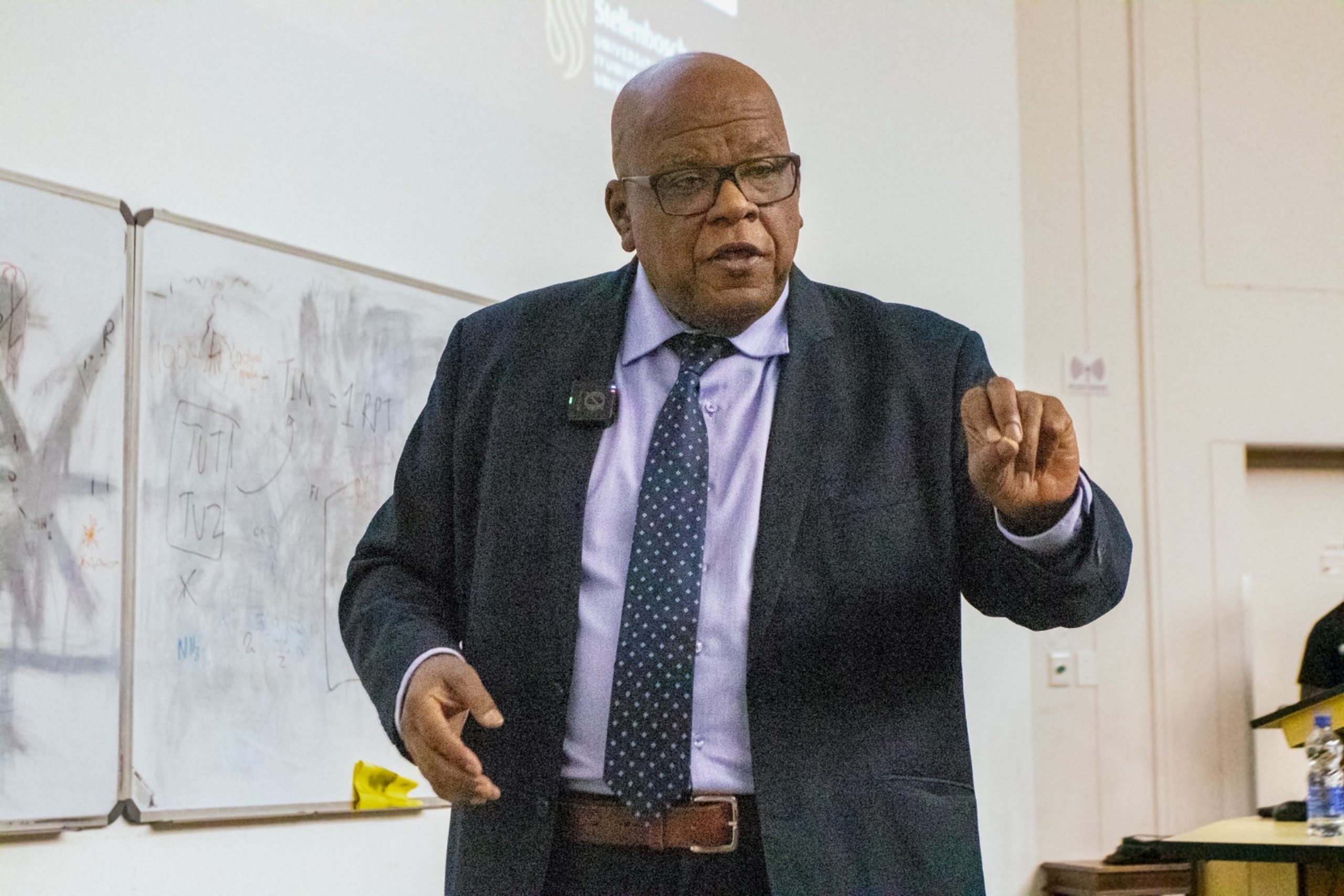
Concerned about how teachers and lecturers often blame students for poor academic performance, Professor Jonathan Jansen, a South African education expert from Stellenbosch University, co-hosted the “First Principles” seminar talk at Rhodes University, examining why students disengage from teaching.
As a distinguished educator and leader, Professor Jansen’s interventions in public discussions about education have consistently called for social reforms and transformation in South African schools and institutions.
Teacher negligence at the root of disengagement
Jansen argued that the negligence of educators is the underlying cause of student disengagement from teaching, particularly in schools with dysfunctional structures.
According to his “First Principles”, the root of student disengagement begins in high school because of the negligence of teachers who are trained not only to teach content but to connect with their learners.
“Like one of the schools I visited in Cape Town, Crestway High School, it’s one of the dysfunctional schools with a lack of connection between the teachers and the learners,” he said.
Jansen explained that teachers are not only responsible for delivering content in class but also for setting the tone of the learning environment. This is why some educators mistakenly adopt the role of a dictator rather than facilitating learning. Therefore, Jansen calls for a change in the education system.
“Teaching is about connection, not coverage”
“Teaching is about connection, not coverage,” he said, revealing why students often have no relationship with their educators.
Jansen explained that this raises the issue of teachers being focused only on their paychecks rather than on inspiring young minds, becoming neglectful when it comes to class engagement. He proposes that teachers worldwide connect with their students to facilitate full cooperation in the learning environment. Physical presence is key to a productive class because the teacher’s presence matters to learners.
The seminar was not only about discussing social factors affecting students but also served as a call for change; a reminder of the need to address the issues contributing to student disengagement.
The same applies to higher education institutions, Jansen said. Lecturers provide notes which lack clarity and seem useless to students. “What is the need for lecture slides if they confuse students?” he asked.
However, Professor Jansen emphasised that “intellectual exchange is necessary in the classroom”, revealing how students would never disengage from teaching if there were improved engagement in the learning environment.
Professor Jansen’s insights in an interview
After the seminar, Jansen sat down with Grocott’s Mail to discuss his journey and how his experiences shaped his outlook on both education and leadership.
“On one hand, I would say this is my spiritual upbringing, because having been a teacher for years in a poor community shaped my outlook on education. I had the priority to be committed to my work to bring change,” he said.
In most cases, teachers blame students for poor performance without realising how much they themselves have failed, not only as teachers but also as role models. This is where the professor argues that these children are not the problem; the teachers are. This is why teachers must be the key to bringing social reform in the learning environment.
Jansen’s concerns serve as a reminder that learning venues are not just spaces for obtaining education but also spaces where teachers, schools, institutions, and students shape the social development of South Africa.
“There is no simple solution to how teachers conduct themselves, but since I was once motivated by one teacher, surely all teachers can shape someone’s future; but only if there are connections and intellectual exchanges in the classroom,” he said.
