By Gcina Ntsaluba
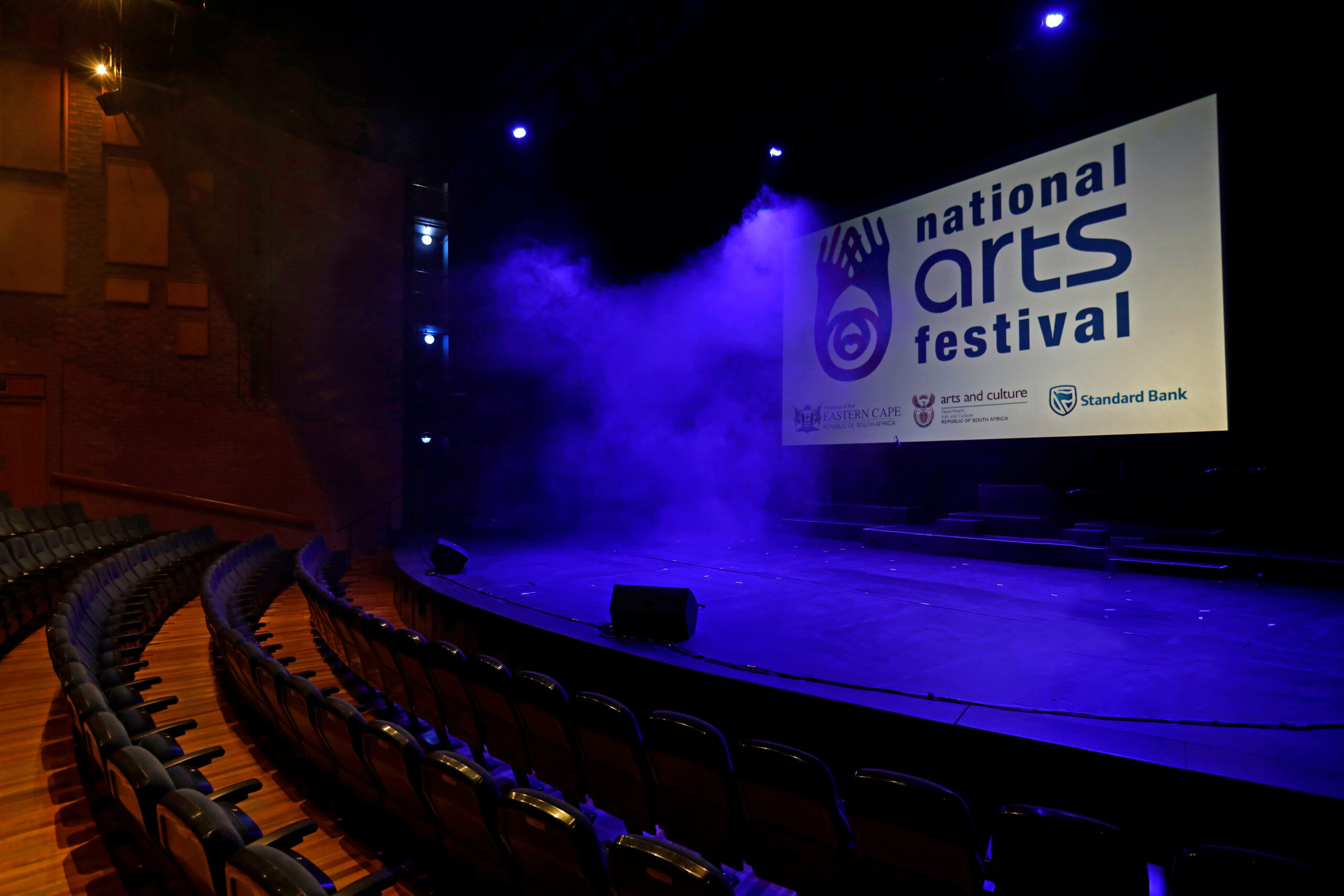
The National Arts Festival has lost R5.5 million in government funding after Minister Gayton McKenzie’s Department of Sport, Recreation, Arts and Culture withdrew support from the country’s flagship cultural events, leaving thousands of jobs at risk and threatening South Africa’s cultural heritage.
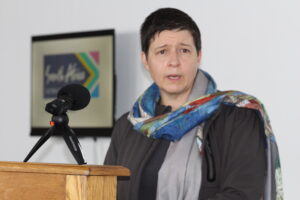
Monica Newton, CEO of the National Arts Festival, revealed that the 50-year-old event was excluded from the new Mzansi Golden Economy (MGE) funding model because it fell outside the department’s narrow time requirements, despite having a productive three-year partnership with the national government until 2024.
“Unfortunately, the national Department of Sport, Recreation, Arts and Culture was not a partner of the NAF in 2025,” Newton said. “The total value of the three-year contract from 2022 to 2024 was R5.5 million.”
The funding crisis has put approximately 3 000 jobs directly at risk, with Newton warning of a domino effect on Makhanda’s broader economy. “The primary jobs at risk are those that are created through festival programming for technicians, creatives and artists. Less funding means a smaller programme and fewer venues, which will also impact the number of visitors to Makhanda and the jobs created indirectly,” she explained.
Bureaucratic timeline excludes major festival
The festival’s exclusion from government support stems from bureaucratic timing requirements that Newton describes as poorly planned. After being informed in March 2024 that flagship festivals would need to apply through an open-call process, the National Arts Festival submitted applications to the MGE fund, only to discover the funding was restricted to projects starting in July 2025 or later.
“The NAF started in June this year. We therefore received no funding from the Department of Sport, Arts and Culture in 2025,” Newton said. Only one former national flagship project received government funding this year under the new system, she said.
Throughout 2024, the Department issued contradictory signals, initially suggesting that flagship festivals would continue to receive support through the new open-call process. Ultimately, however, they implementing restrictions that effectively excluded established events.
“The Department’s strategy was not clear in this instance,” Newton said. “No large-scale national festival can be funded for R2 million, so the MGE funding would only be one part of a funding package with contributors from other funders in the public and private sector. We don’t see anyone in a position to do that right now.”
Economic impact threatens Makhanda
According to a 2024 study by the South African Cultural Observatory, the National Arts Festival generates R131.8 million in economic impact for the Eastern Cape, with R57.9 million spent directly in Makhanda. The loss of national government funding represents approximately 10% of the festival’s budget, but Newton emphasised that the symbolic value extends beyond the financial contribution.
“It is important for other sponsors and donors to see the festival as a credible event which is aligned to national government funding,” she said.
The festival typically features around 2 000 performances, and attracts visitors from across South Africa and internationally. Newton warned that ongoing funding challenges would “definitely reduce the number of opportunities for performers, technical crew, casual staff, with a knock-on effect for the supporting businesses in Makhanda”.
Cultural heritage at stake
Beyond the immediate economic impact of this cut, Newton highlighted the cultural significance of potentially losing a festival that has shaped South African arts for half a century.
“If the National Arts Festival were ever to close down, aside from the devastating loss of jobs and economic opportunities, we would lose half a century of cultural heritage,” she said. “The NAF has the country’s most diverse artistic programme in terms of genre, language, content and place of origin.”
Newton described the festival as a crucial launching pad for artistic careers and a space for cultural reflection. “It is frequently referenced as the catalyst for careers, collaboration and success and a place to which many artists long to return when they experience success. Losing the Festival would mean this opportunity to reflect on our culture and identity, as well as its significant emotional value for artists and performers, would be gone.”
Minister remains inaccessible
Despite repeated attempts to engage with Minister McKenzie, Newton said the festival has been unable to secure a meeting. “Despite ongoing attempts, we have unfortunately not been able to meet with the Minister. We have now approached the Minister within a collective of festivals, and we hope that we will soon receive engagement from his office.”
This represents a stark contrast to the festival’s previous relationship with the national arts department, which Newton described as “good, and based on the understanding that the National Arts Festival was an important national asset”.
In November 2024, the department had acknowledged in correspondence that it had “enjoyed a productive and constructive relationship that made a meaningful contribution to the Cultural and Creative Industries”.
Provincial support continues
While national funding has been withdrawn, Newton said other spheres of government have maintained their support. “The Eastern Cape province continued to support the Festival generously,” she said, with the Sarah Baartman District Municipality actually increasing its support for 2025.
The festival has also maintained partnerships with Standard Bank and the Eastern Cape Development Corporation, among others.
Festival will continue despite cuts
Newton confirmed that the National Arts Festival will proceed despite the funding challenges. “The show will go on, however!” she said, though acknowledged that “the format, scale and scope of the festival will need to be reconsidered if we are not able to secure additional funding”.
The organisation is actively pursuing alternative funding sources, including corporate sponsors and international partners. “We have reached out to corporates and we continue to maintain and build very strong relationships with theatres and international intermediaries who co-fund many works that come to the National Arts Festival,” Newton said.
However, she warned that continued funding cuts would inevitably affect the festival’s scope. “Ongoing funding cuts will continue to affect the scale of the Festival we can produce.”
The National Arts Festival joins a growing list of major South African cultural events affected by the department’s funding overhaul, including the Cape Town International Jazz Festival, Klein Karoo Nasionale Kunstefees, and Cape Town Carnival, raising questions about the future of the country’s cultural landscape under Minister McKenzie’s new approach.