By Garikai Chaunza
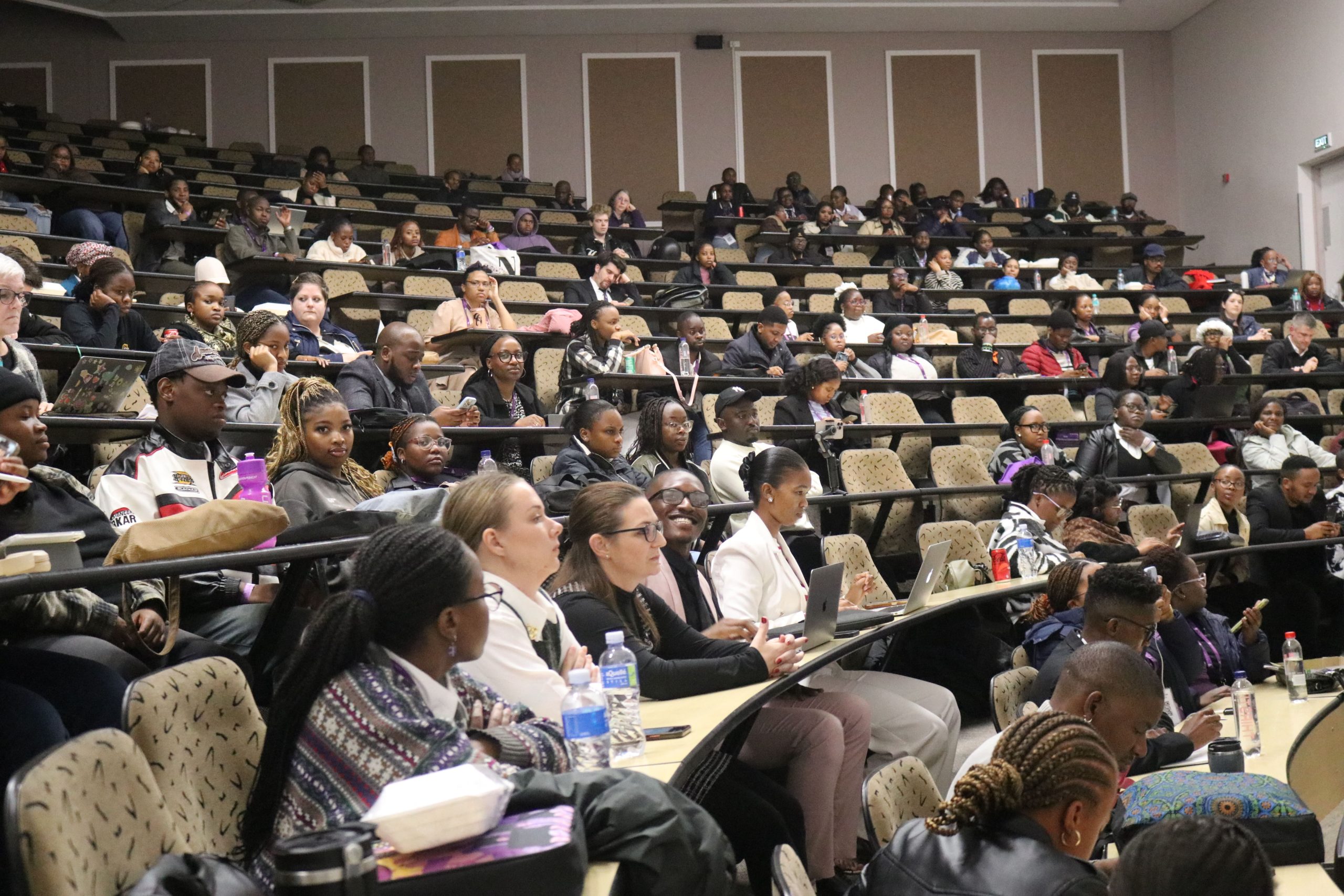
The 2025 Rhodes University postgraduate conference ended on a high note last weekend with students and academics taking stock of the gains and setbacks in South Africa’s higher education sector a decade after the #FeesMustFall protests. Held over two days the event attracted more than 300 students from across the Eastern Cape, under the theme “Reimagining research futures: ten years after #MustFall – local and global shifts”.
For many participants, the conversations rekindled memories of the 2015–2016 student uprisings that shook universities across the country and forced the government to act on tuition fees, funding structures, and questions of transformation. But while access to higher education has expanded, deep concerns remain about inequality, financial exclusion, and the slow pace of institutional change.
Azile Galaweni, a second-year master of arts in history student at Nelson Mandela University, said the legacy of #FeesMustFall is mixed. “Ten years on, we can say that the movement opened doors for more black students to enter universities that have historically been eurocentric. That was a significant victory. However, these same students are still being subjugated in other ways – particularly through financial exclusion. Many students gain admission, but the high fees mean they lack bursaries or financial aid, and some end up dropping out. Even those who finish their studies often graduate with debt hanging over them.”
Galaweni’s words echo broader frustrations about the National Student Financial Aid Scheme (NSFAS), which has been dogged by corruption scandals, administrative failures, and a controversial direct-payment system that has left thousands of students stranded without allowances. In 2023, the scheme’s leadership was rocked by revelations of irregular tenders worth billions, while students across multiple campuses staged demonstrations after payments were delayed. For many, NSFAS has become a symbol of both progress and betrayal: an essential lifeline undermined by poor governance and political meddling.
Sithembele Isaac Xhegwana, a Rhodes University PhD student in sociology and research curator at Amazwi Museum, argued that universities still refuse to fully decolonise. “On the one hand, we have seen progress. Some institutions are making an effort to reach out to disadvantaged students and bring people from the margins into the academic space. On the other hand, there is still a lot of resistance. For example, our own university has refused to change its name, despite strong calls to do so. So, while there are victories, the struggle for full transformation continues.”
Yet not all participants agreed with this pessimistic outlook. Rhodes University journalism PhD student Moromogolo Amelia Mmalebane Loreke said it would be wrong to suggest that nothing has changed.
“Personally, I don’t think it is accurate to say nothing has changed. Universities are talking about transformation. For example, I am conducting research on multilingualism in university teaching. Even in today’s sessions, I heard presentations on curriculum reform and related issues. It is not possible to expect large institutions with so many demands to change overnight. Change requires resources, planning, and implementation. Even this conference itself is part of that change. Here, participants are critically reflecting on the past 10 years since #FeesMustFall, and they are also proposing solutions going forward. That in itself is transformation at work.”
Conference host and organiser, Professor Sybert Mutereko, Director of the Centre for Postgraduate Studies, described the gathering as a success. “We organised not just an interdisciplinary postgraduate conference, but an inter-university one, bringing together postgraduate students from across the Eastern Cape.
“The idea was to move beyond creating institutional excellence within a single university and instead build what we call a research corridor across the province. One key takeaway is that we need to broaden participation to include not only honours students but also third- and fourth-year undergraduates. History shows that some students even publish while still undergraduates, so we should nurture that potential early,” he said.
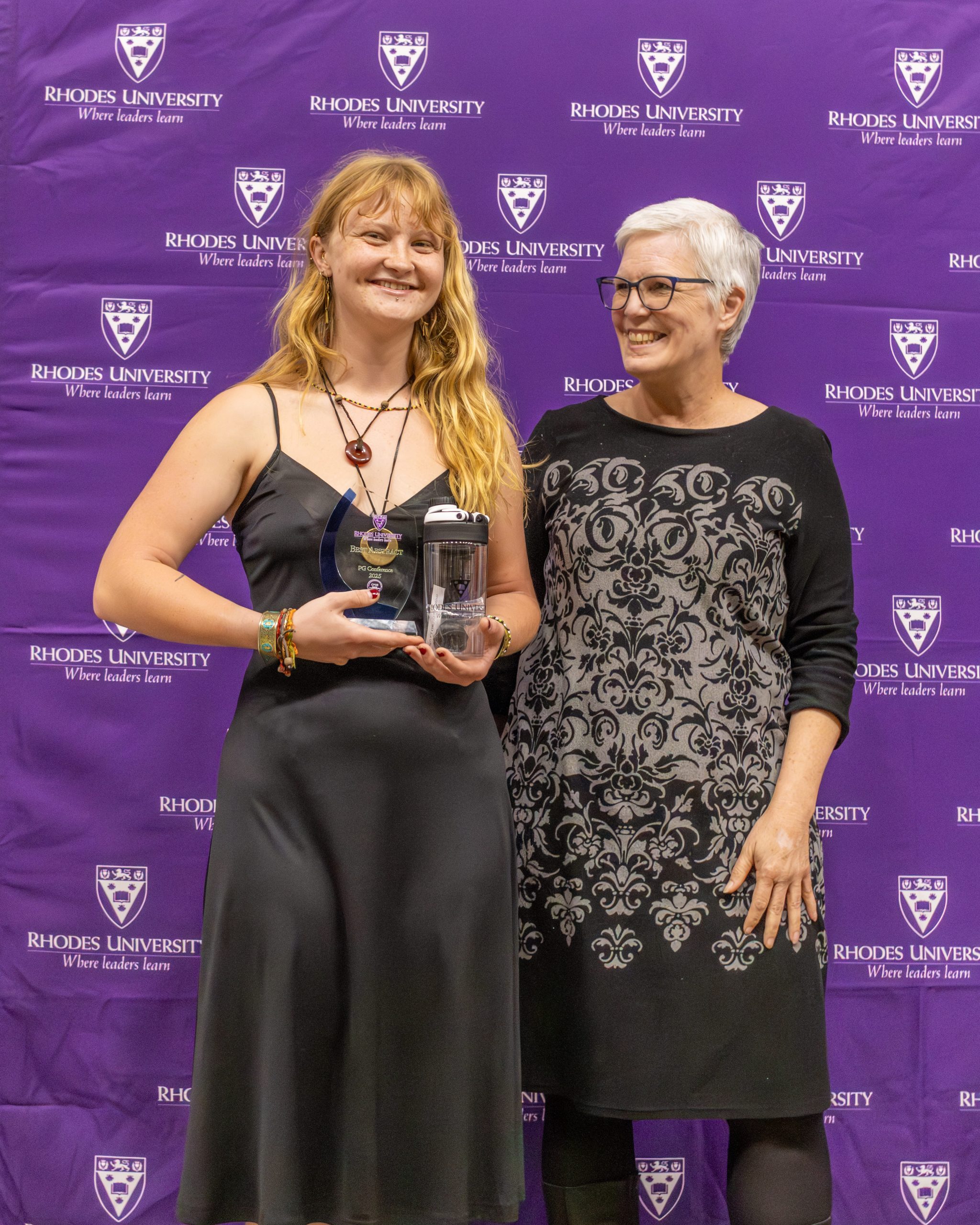
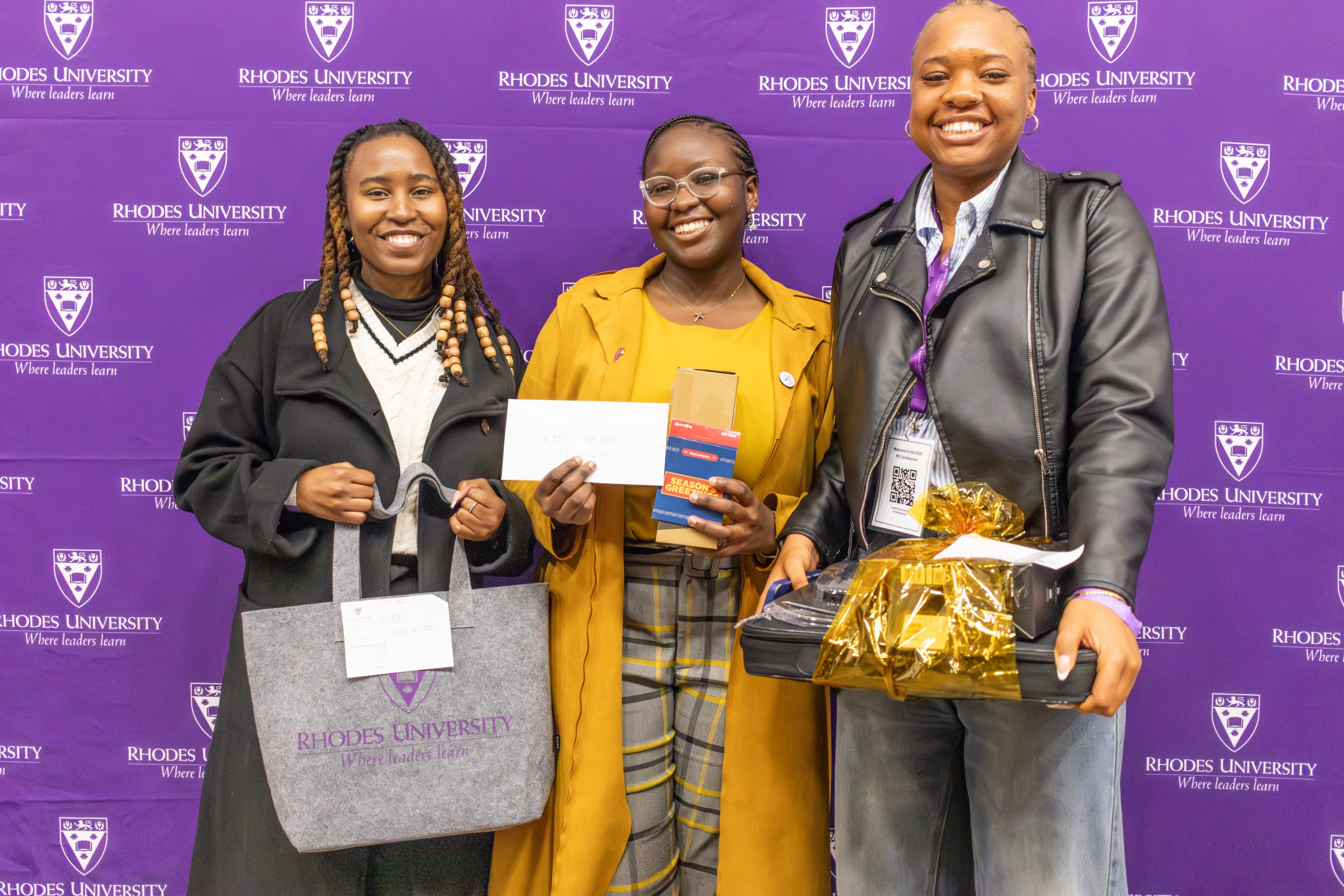
A highlight of the conference was the Three Minute Thesis (3MT) competition, where students summarised their research in three-minute videos. Deborah Akintola from the pharmacy department scooped first prize, walking away with R10 000 and the viewers’ choice award. Marlene Angwafor, also from pharmacy, came second, winning a laptop, headphones, and a router, while Lungelihle Dlamini from the Institute for Water Research took third place, receiving a tablet and Rhodes University merchandise. Honours student Mia Hattingh from zoology and entomology was recognised as the overall best presenter.