


By Siyanda Zinyanga
Walking through Makhanda in the Eastern Cape, whether past Rhodes University, the quiet suburbs, or the hillsides, you will notice certain plants standing tall, sharp, and unbothered by the weather. They are the spiky guardians of the town: Aloe ferox, Yucca aloifolia, Torch cactus, and Senecio barbertonicus. Each tells a story of resilience, survival, beauty, and the relationship between people and nature. Together, they shape the green face of Makhanda and remind us that plants are more than decoration; they are part of our identity, culture, and future.
Aloe ferox
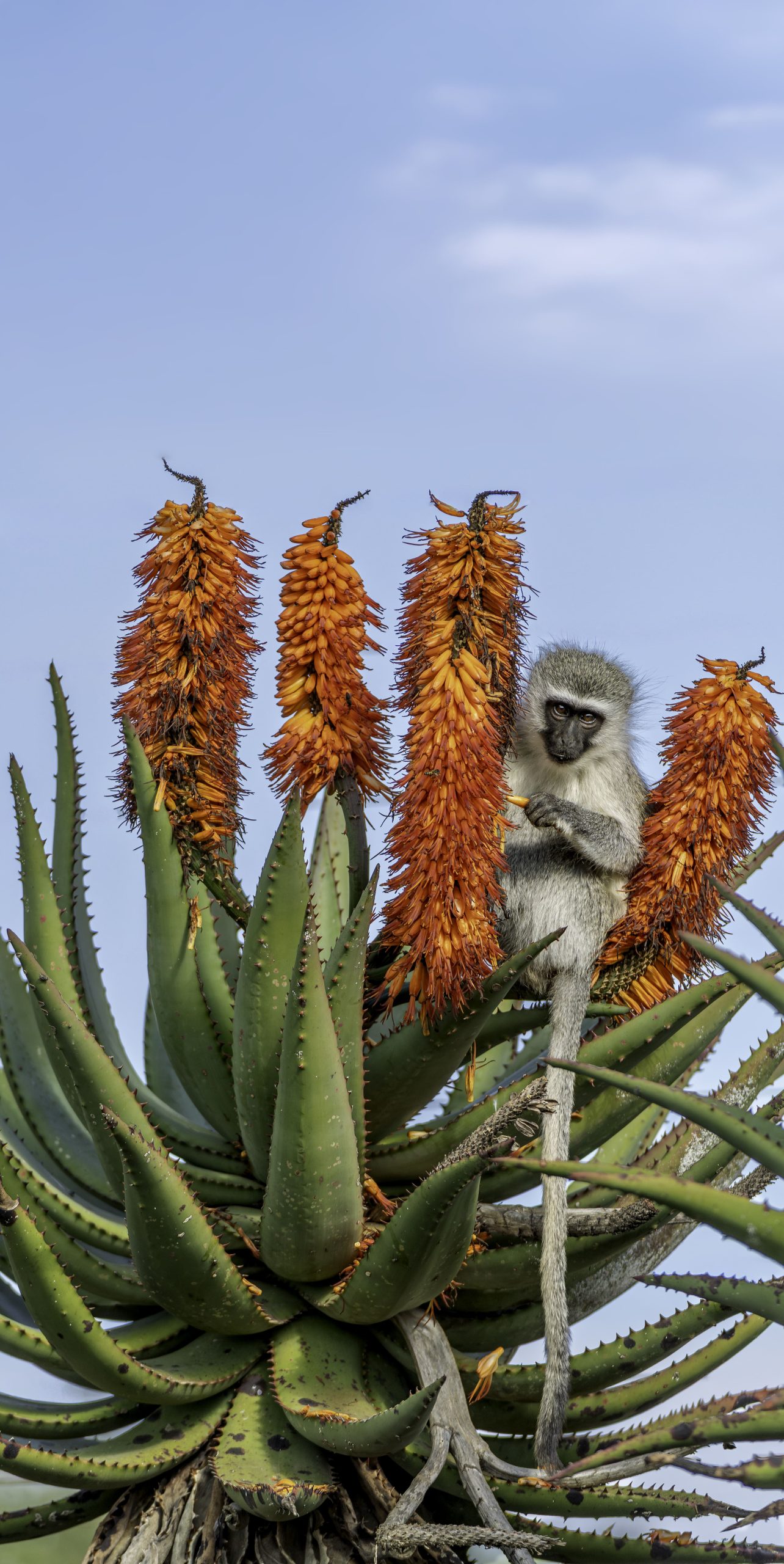
In winter, the hills around Makhanda glow red and orange with the fiery blooms of the Aloe ferox. This plant is indigenous to the Eastern Cape and is loved for its beauty and usefulness. The thick green leaves hold a bitter gel used in traditional medicine to heal burns, cuts, and stomach problems. Today, Aloe ferox is also harvested for creams, juices, and health products sold across South Africa and overseas.
But beyond medicine, the aloe is a symbol of survival. Every winter, when the land seems dry and lifeless, the aloes explode into colour, attracting sunbirds and bees. For locals, it is a reminder of hope that beauty and strength can rise even in hard times.
Yucca aloifolia
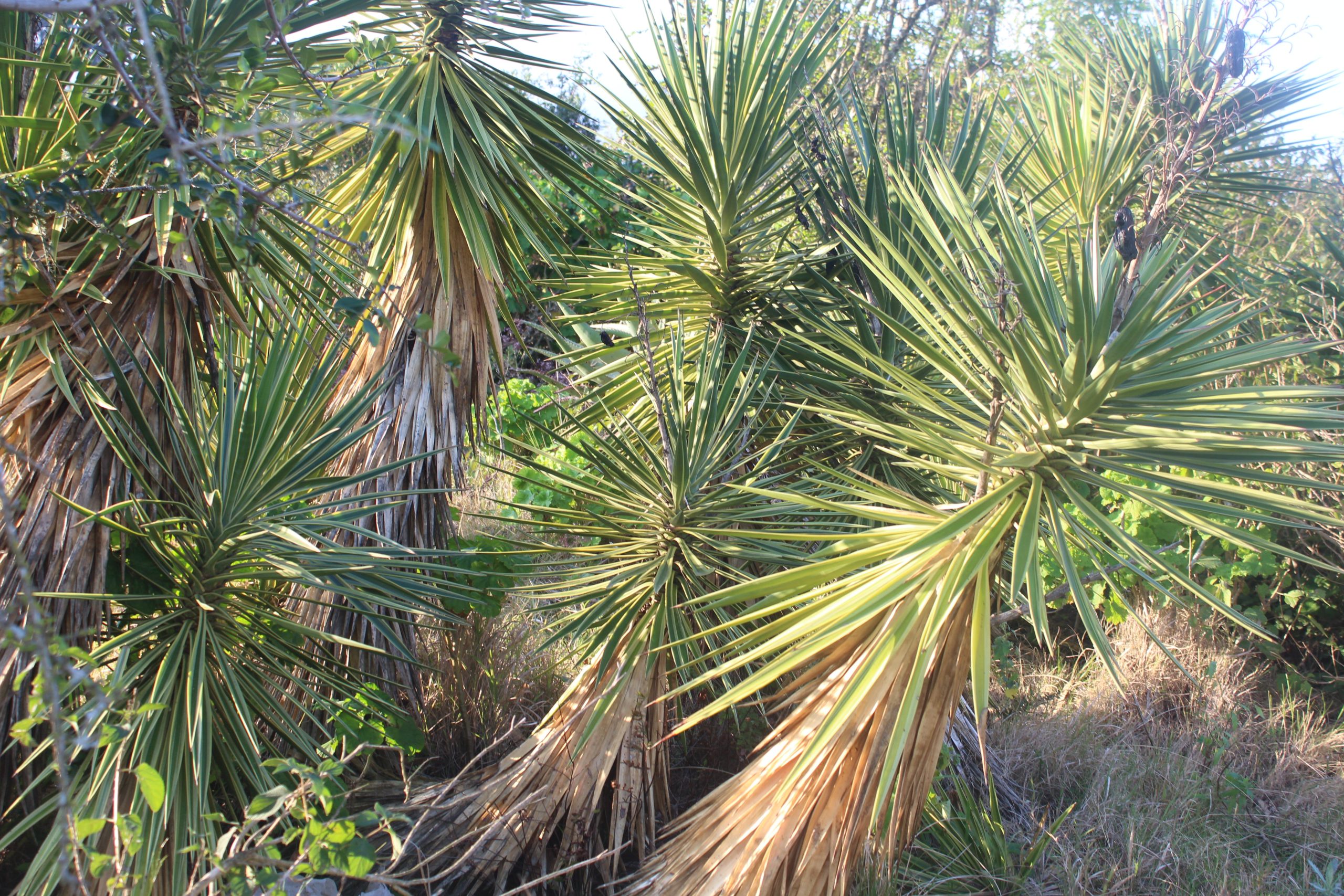
Not all of Makhanda’s plants are local. The Yucca aloifolia, also called the Spanish Bayonet, came from the Americas. Its stiff, sword-like leaves are are tough and evergreen. It does not need much care and stands proudly through heat and drought.
But its beauty comes with danger: the sharp leaves can cut skin like a blade. Children and pets risk injury if they play too closely to it. Unlike the aloe, the yucca has no deep cultural meaning in South Africa. It is more of a visitor, an exotic plant brought into our gardens to add structure and design. Still, it shows how Makhanda has become home to plants worldwide, mixing local and global identities in one landscape.
Torch cactus
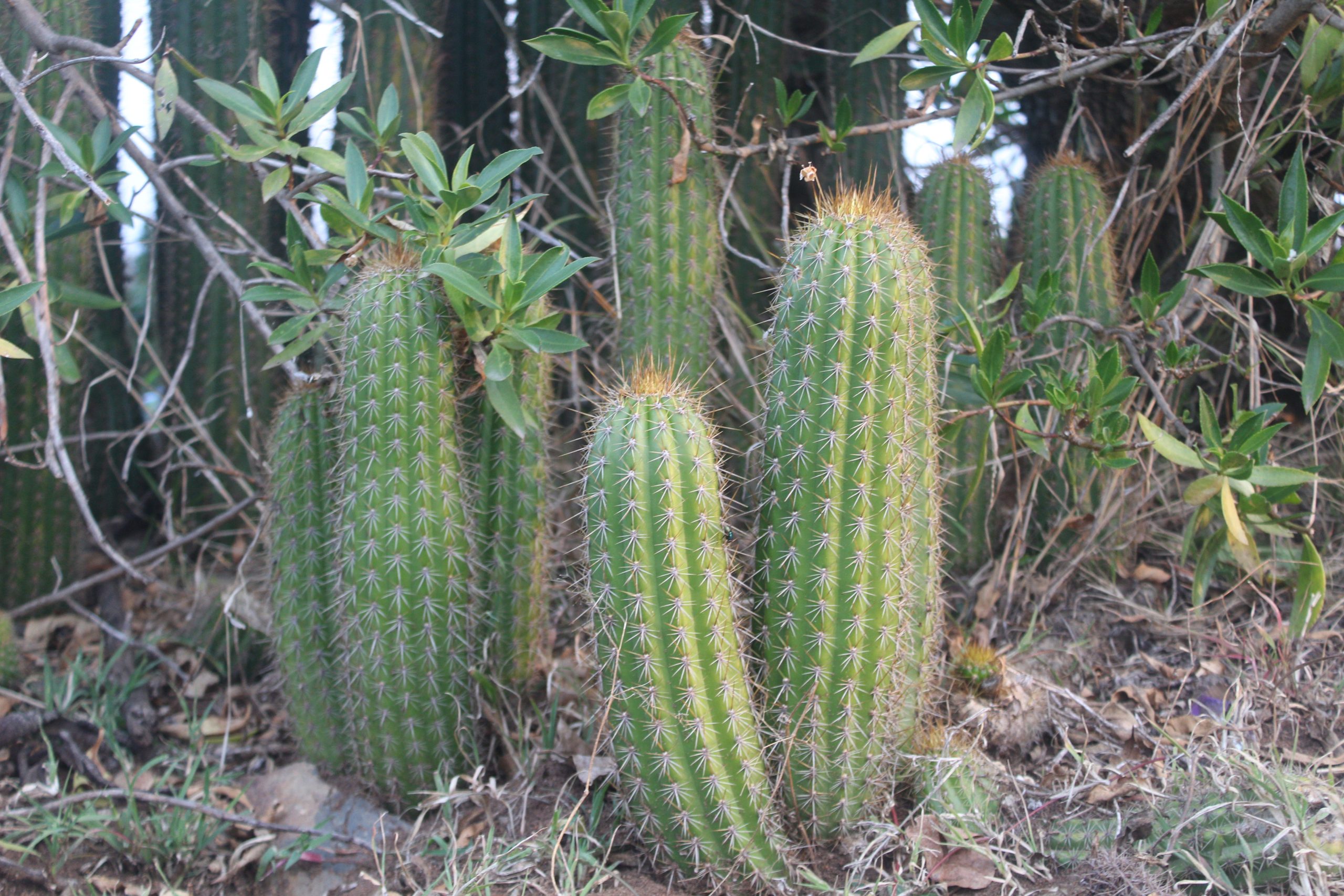
Walk past particular stone walls or dry corners and you may see a tall, upright cactus reaching for the sky. This is the Echinopsis spachiana, a South American native that has found comfort here. It grows in green columns, sometimes as tall as a person or higher.
The Torch cactus is most famous for its flowers: large, white, and sweet-smelling. They open at night and last briefly, like a secret gift to the town. These flowers attract night creatures, moths and bats, showing how even a foreign plant can join in the rhythm of local life.
Senecio barbertonicus
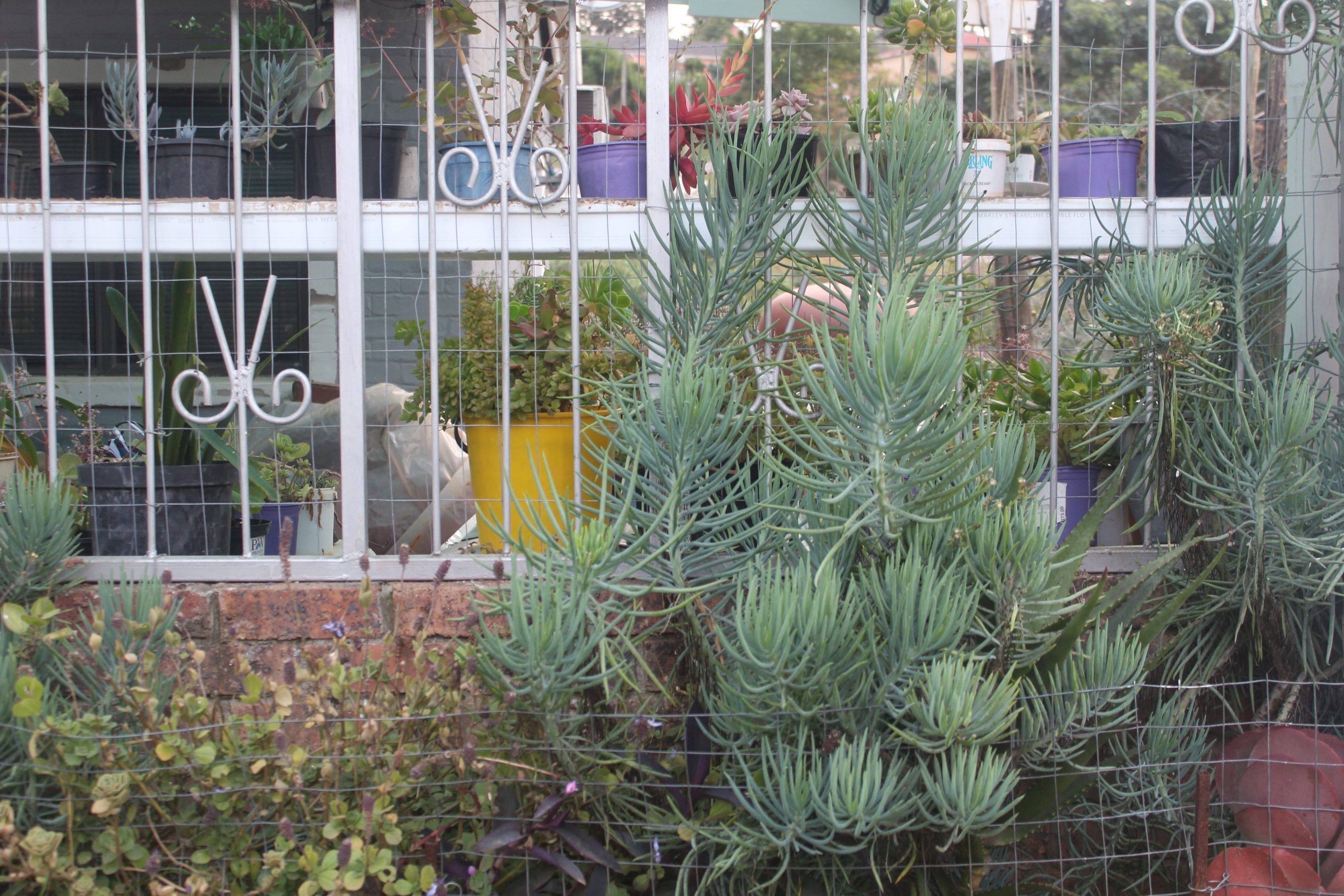
Another indigenous plant that adds colour to the rocks and gardens during the cold months is Senecio barbertonicus, also known as the Succulent Bush Senecio. Its finger-like green leaves store water, making it strong against drought. At the same time, its yellow, daisy-like flowers brighten the winter landscape. Bees and butterflies love it, feeding on its sweet nectar when few other flowers bloom.
This plant is more than just a pretty sight. As a native species, it belongs here. Planting Senecio in our gardens helps protect local biodiversity, supports pollinators, and keeps the natural balance alive.
These four plants, Aloe ferox, Yucca aloifolia, Torch cactus, and Senecio barbertonicus are not just background scenery but living actors in the town’s story. They play an essential role in the environment by preventing soil erosion, providing food for birds and insects, and thriving with little water in the semi-arid climate. For culture, Aloe ferox and Senecio barbertonicus are symbols of local identity. At the same time, Yucca and the Torch cactus show how Makhanda blends the local with the global. For people, each plant has its own gift: Aloe ferox offers healing, Senecio feeds pollinators, Yucca adds strength and structure to gardens, and the Torch cactus provides rare beauty with its short-lived night blooms.
Even the toughest plants can face threats from over-harvesting, habitat loss, or climate change. To make sure these species do not disappear, we need to act wisely. One step is to plant more indigenous species like Aloe ferox and Senecio barbertonicus in gardens and public spaces. These plants are not only beautiful but also support local ecosystems.
Use sustainably
Another step is to use plants responsibly. When aloe is harvested for medicine or commercial products, it must be done sustainably, giving the plants enough time to recover. Protecting open land is just as important, since Makhanda’s hills and rocky areas are the natural homes of these plants. The plants will continue to thrive if these spaces are kept free from over development.
And then education plays a decisive role. Schools, community gardens, and local groups can spread awareness about the value of these plants and why they matter.
In the end, the plants of Makhanda are more than just green shapes scattered across the land. They are beauty reminders and tradition keepers. The Aloe ferox burns bright with Eastern Cape pride, the Yucca aloifolia brings a global touch, the Torch cactus surprises us with its night flowers, and the Senecio barbertonicus shines yellow in the heart of winter.
Together, they form a living heritage. To walk past them is to walk past history and medicine. Suppose we care for them today, planting, protecting, and learning from them. In that case, they will still be here tomorrow, telling the story of Makhanda in every leaf and flower.
