


By Siyanda Zinyanga
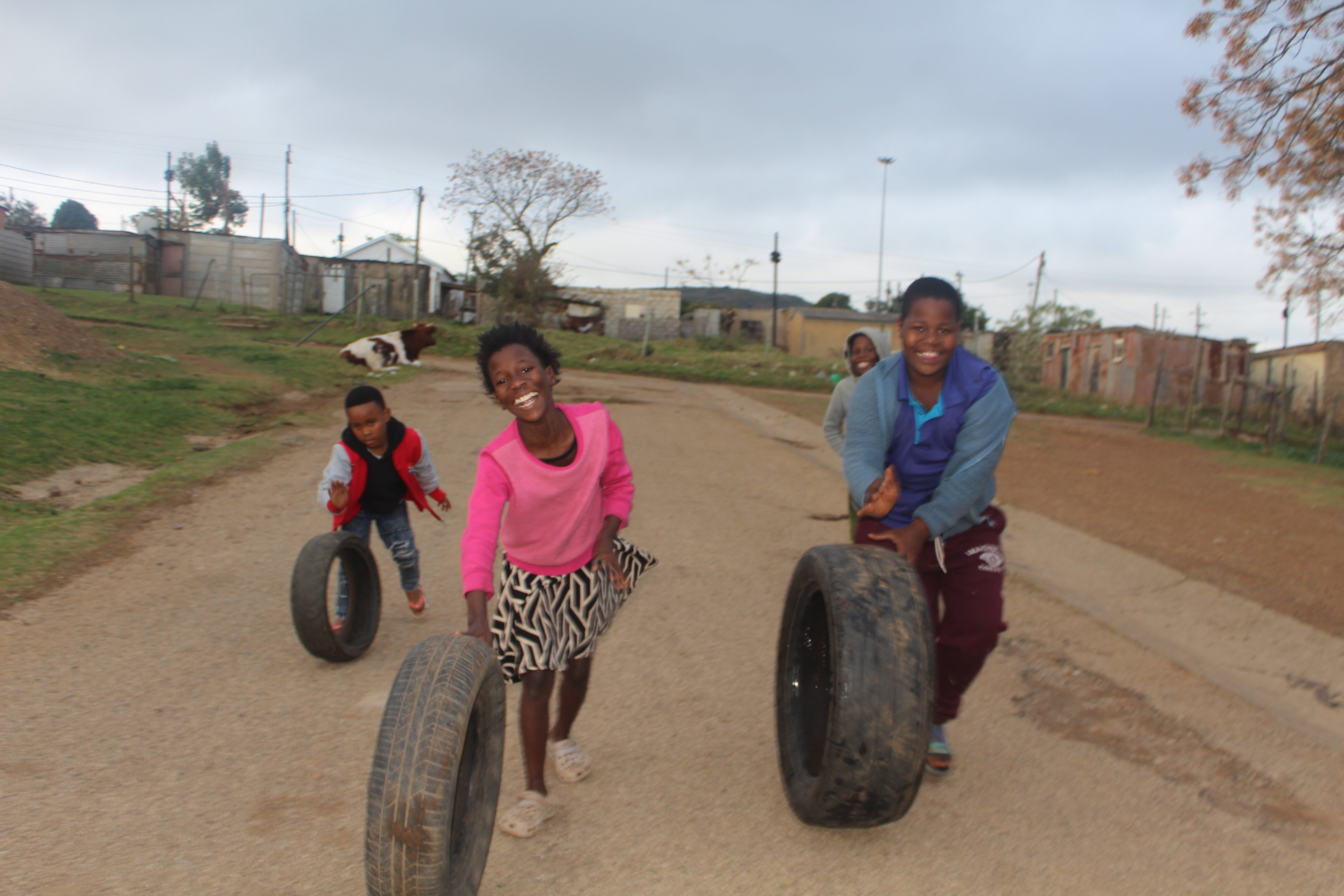
In Kandancama Street, the afternoon clouds gather above as adults gather indoors for conversation and rest. But outside, children stood in the road, with their scrap tyres like athletes at the brink of a final. With one push, their tyres spun faster than the gale.
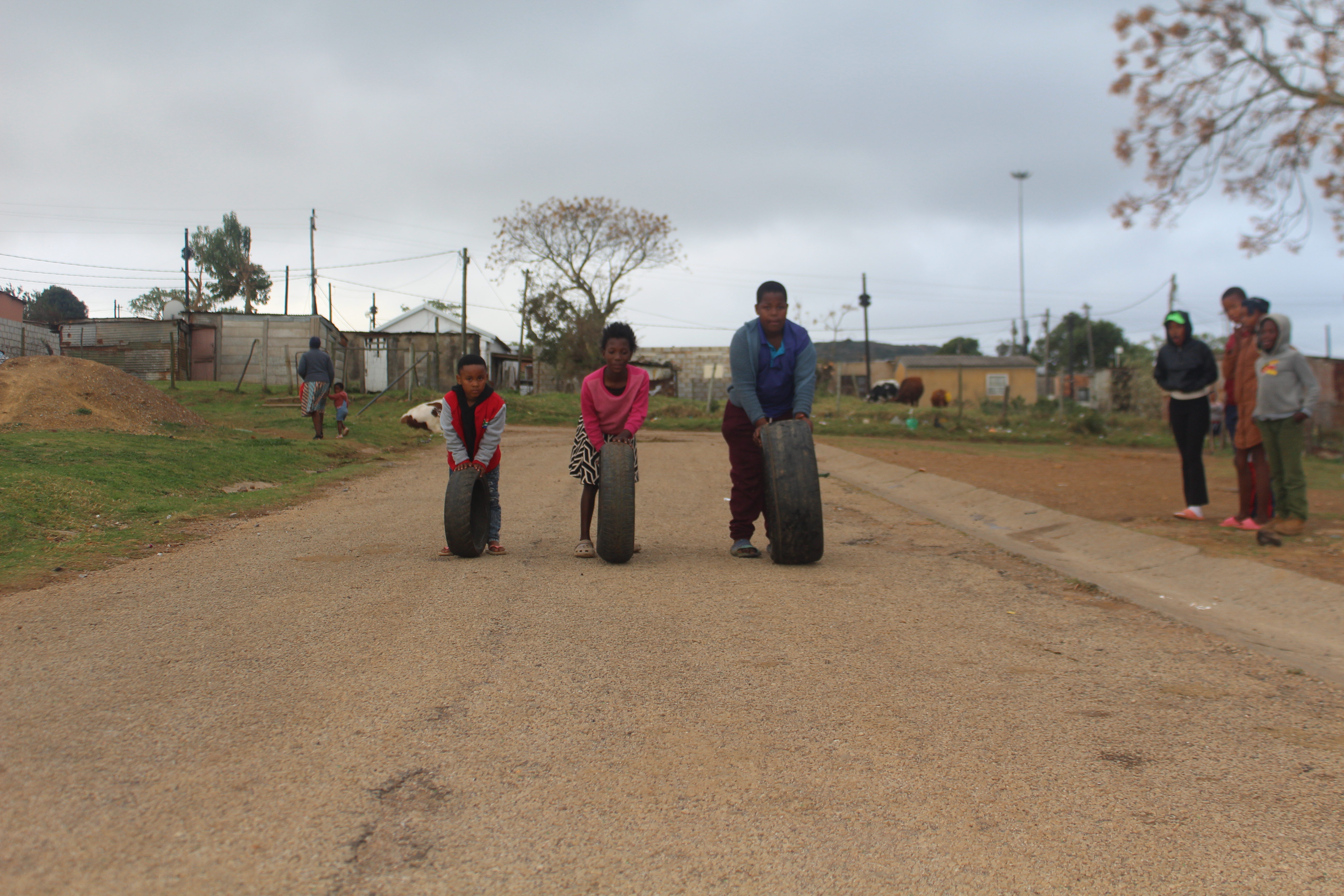
This is not an ordinary race. It is a race of survival and imagination. Where others see waste, disposed tyres, broken streets, and long hours, children see possibility. And at that moment, the Kandancama children proved once again that the best things in life are free.
“No, no, don’t go yet, the race hasn’t begun,” Iviwe Mlambo, a 10-year-old, said as he stood with his tyre at the starting line. Around him, three tyres were waiting to be released. Behind these young racers, cows grazed calmly. Then came the call from a young man who stood on the sidelines: “Go!”
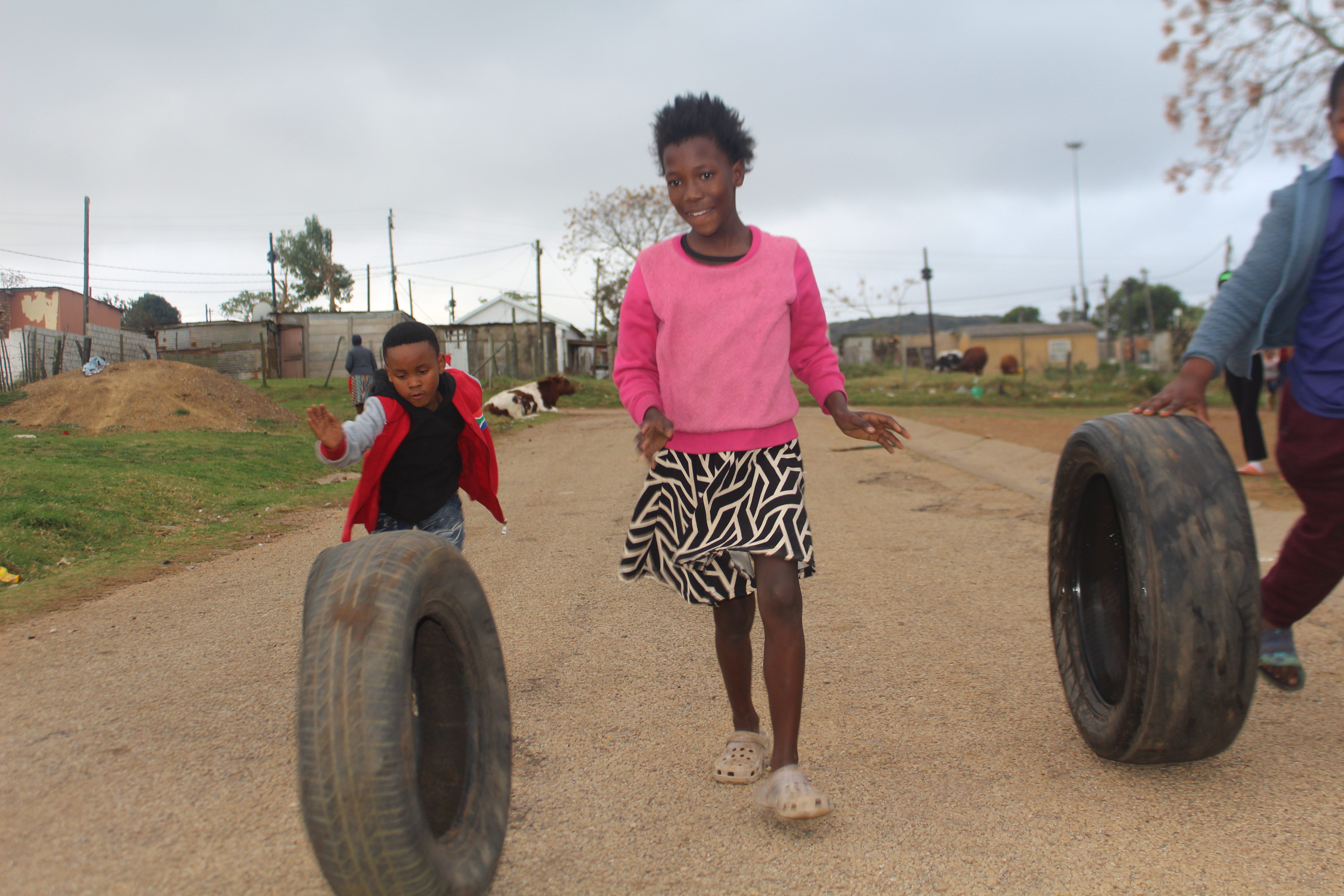
The tyres rolled. Feet moved. And through it all, one figure pulled ahead, 11-year-old Lingomso Sanka. Filled with determination, she sprinted, her laughter cutting sharply through the air, and was the first to cross the invisible finish line.
Her victory was decisive. Her joy was unmistakable. When Grocotts asked how it felt, she laughed again: “Yoh, they always think they stand a chance because I’m a girl. I always beat them. But sometimes I lose when I’m tired.” It was a statement as playful as it was political. On the surface, it was a child’s taunt. But beneath it, a declaration, girls are not just equal to boys, they can outrun them, outlast them, and outshine them.
Childhood as freedom
“It’s nice to be a child; they don’t have to worry a lot,” Phakamani Mbele, a third-year politics student at Rhodes University, said as he watched from the sidelines. Students are busy with exams, and parents worry about money, clothes, medicine, and survival. But children, no, all they need is to listen to their parents. And even that, sometimes, is not so easy.
Children’s play can come with their dangers. The children of Kandancama Street know that roads can be cruel. “Few cars pass here, but we are always on the lookout,” Dinaye Mapholoba, a 12-year-old, noted. “At six o’clock, they know it’s finished,” added Nomzamo Njwagha, a guardian, explaining the unwritten rule that play must end before the sun sets.
Lingomso’s victory is a symbol, small, simple, yet profound. In a country where women still fight for equal recognition, safety, and opportunity, Lingomso’s playful defiance shows that the next generation of girls is already learning to stand, sprint, and win. She may not know it yet, but her laughter and her race are part of the same story that binds together mothers, students, workers, and leaders, a story of women insisting that they, too, belong at the front.
